Baby Silicone Teether Toy Guide: Safety, Cleaning & Relief
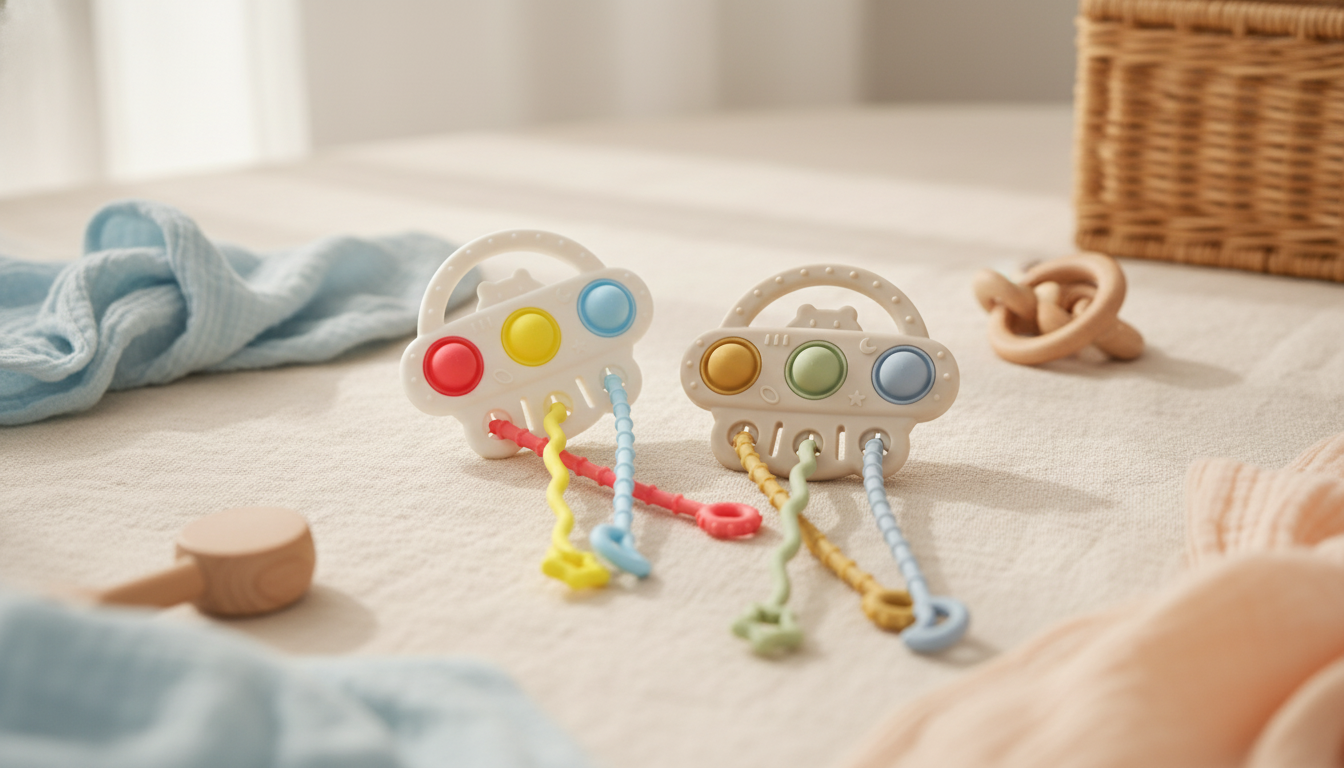
Baby Silicone Teether Toy: Safe Soothing for Sore Gums
Teething can bring sore gums, extra drool, and lots of chewing. A well-made silicone teether can give babies a safer, more comfortable way to explore and self-soothe while also supporting early sensory play. This guide focuses on practical details that matter day to day—materials, safety checks, cleaning, and realistic routines—so caregivers can feel more confident during those fussy teething weeks.
Why a silicone teether helps during teething
Babies instinctively look for pressure and texture when gums feel tender. Silicone teethers are popular because they balance softness with enough resistance to satisfy that chewing urge.
- Provides a chew-safe surface that can reduce gum discomfort through gentle pressure.
- Supports hand-to-mouth coordination as babies grasp, mouth, and reposition the toy.
- Offers sensory variety (softness, texture) that can keep babies engaged without relying on hard objects.
- Can be chilled (when allowed by the manufacturer) for added soothing—always check instructions and supervise.
For general teething expectations and what’s typical, the American Academy of Pediatrics offers a helpful overview: American Academy of Pediatrics – Teething.
What to look for in a baby silicone teether
Not all teethers are made the same. A few quick checkpoints can help narrow options to safer, longer-lasting picks that are easier to keep clean.
- Material clarity: Food-grade silicone is commonly preferred; avoid products with strong chemical odors or unclear material labeling.
- Size and shape: Large enough to reduce choking risk, easy to grasp for small hands, and designed to prevent deep insertion into the mouth.
- Texture design: Multiple raised textures can massage different gum areas and keep interest longer.
- One-piece or secure construction: Minimize parts that can detach; inspect seams and joins regularly.
- Age guidance: Follow the seller/manufacturer age range and discontinue if the toy shows damage.
Quick comparison: common teether materials
| Material | Pros | Watch-outs | Best use |
|---|---|---|---|
| Silicone | Soft, flexible, easy to wash, gentle on gums | Can tear if chewed aggressively; verify material claims | Daily use, texture play, soothing pressure |
| Rubber | Soft chew, often very grippy | Latex allergies possible; can degrade over time | Short soothing sessions with close inspection |
| Wood | Firm pressure, simple design | Harder on tender gums; must be kept very clean and dry | Older babies who like firmer pressure |
| Plastic (hard) | Durable, lightweight | Less gentle; avoid cracked items; check for safety compliance | Light play (not ideal for sore gums) |
Safety checklist before each use
Even the “best” teether becomes a risk if it’s worn down or used in an unsafe setup. A quick scan before handing it over takes only seconds and helps prevent avoidable issues.
- Inspect for tears, cracks, loose parts, or sticky surfaces; discard if damaged.
- Confirm the teether is large enough and shaped to reduce choking risk; never attach long cords or strings.
- Supervise chewing—especially when baby is tired or falling asleep.
- Keep teethers separate from pet toys and store them clean and dry.
- Avoid sharing teethers between children unless fully sanitized and in good condition.
For guidance on safe sleep practices (including keeping loose objects out of the sleep space), see: Centers for Disease Control and Prevention – Infant safe sleep.
Cleaning and care that fits real life
Teethers get dropped. They get pocketed. They roll under couches. The goal isn’t perfection—it’s a simple cleaning rhythm that keeps the toy comfortable and reduces grime buildup.
- Wash with warm water and mild soap; rinse thoroughly to remove soap residue.
- Sanitize as directed by the product instructions (some silicone items can be boiled or placed in a dishwasher; verify first).
- Air-dry completely before storage to reduce odor and residue buildup.
- Rotate two teethers if possible—one in use, one cleaned and ready—soothing is easier when the next option is always available.
- Replace if the surface becomes rough, develops a persistent smell, or shows bite marks that could worsen.
If considering teething gels or medications, the FDA’s safety notes are worth reviewing: U.S. Food & Drug Administration – Teething tips and medicine safety.
Simple soothing routine for tough teething days
Teething discomfort can come and go quickly, so it helps to keep soothing options simple, repeatable, and easy to do even when everyone is tired.
Product spotlight: Baby Silicone Teether Toy
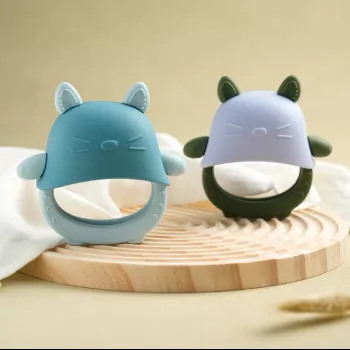
If a simple, everyday teether is the goal, the Baby Silicone Teether Toy is an easy starting point for routine soothing. Silicone is typically lightweight for little hands, and textured designs can give babies a satisfying “chew target” without resorting to harder household items.
At-a-glance details
| Item | Price | Availability | Link |
|---|---|---|---|
| Baby Silicone Teether Toy | $9.67 | In stock | View product |
Helpful add-on for messy teething moments
Consider pairing teething days with a tidy feeding station like the 6PCS Silicone Baby Feeding Set with Lion Plate, Bib, Cup, Spoon & Fork. For households juggling multiple schedules during these phases, the Using AI to Organize Kids’ Schedule | Digital Guide for Parents on How to Use AI to Organize Family Schedule can also help streamline routines like feeding, naps, and cleaning rotations.
FAQ
Can a baby sleep with a teether?
It’s safest to use teethers during supervised wake time and remove them before sleep. Avoid leaving a teether in the crib unsupervised and follow safe sleep guidance; ask a pediatrician if there are specific concerns.
How often should a silicone teether be cleaned?
Clean it daily when used frequently, and wash it immediately if it drops on the floor, comes along on outings, or looks dirty. Only sanitize using methods allowed by the product’s instructions.
Is it safe to chill a silicone teether?
Many silicone teethers can be cooled in the refrigerator for gentle soothing if the product directions allow it. Skip the freezer unless the manufacturer explicitly says it’s freezer-safe, and always check temperature before offering it.









Leave a comment