Wooden Animal Press & Bounce Toy for Toddlers: Pop Play
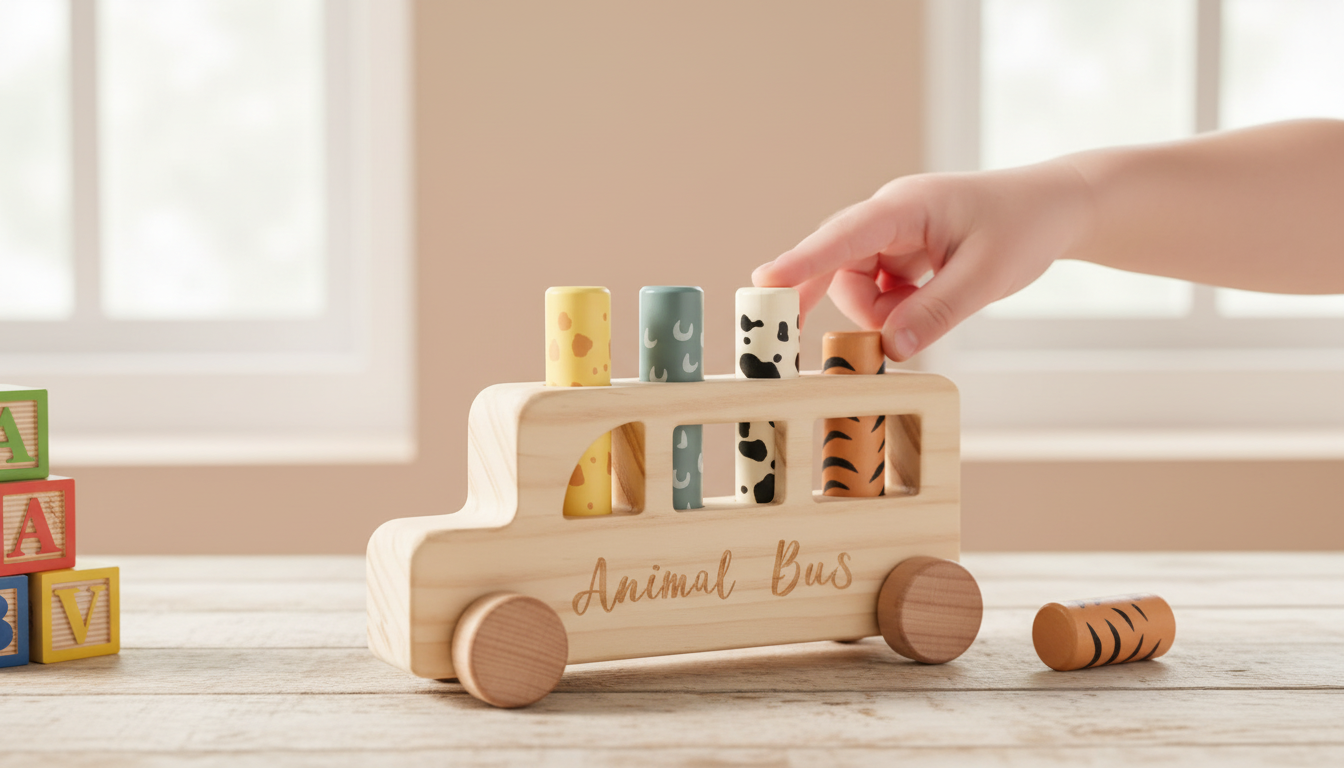
Wooden Animal Press & Bounce Toy: A Simple Cause-and-Effect Playtime Favorite
A press-and-bounce wooden toy brings instant feedback to little hands: push down, watch it pop, and repeat. This kind of action helps toddlers explore cause and effect while practicing controlled hand movements. With a friendly animal design and a compact size, it also fits easily into everyday play routines—floor time, play mats, or a quiet corner with a few open-ended toys.
What It Is and How Play Works
A wooden animal press-and-bounce toy is a small, hand-held (or floor-friendly) cause-and-effect toy that “pops” or bounces when your child presses down. The reward is immediate and easy to understand, which makes it a go-to option when a toddler wants something they can control.
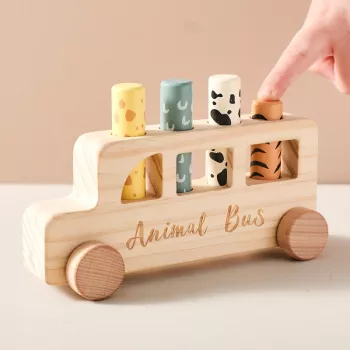
- A wooden animal-themed toy that bounces or pops when pressed, rewarding a child’s push with movement.
- Invites repeated experimentation: pressing harder or softer, trying one finger vs. the whole palm, and testing different angles.
- Works for short independent play bursts or caregiver-guided play with simple action words (“press,” “down,” “pop,” “again”).
- A low-noise alternative to many battery-operated cause-and-effect toys, especially for apartments or quiet hours.
Why Toddlers Love Press-and-Bounce Toys
Toddlers gravitate toward toys that feel “doable” but still interesting. Press-and-pop play is predictable, yet it leaves room for small discoveries—like learning how much pressure is “just right” to make the toy bounce.
- Predictable, satisfying motion that supports early problem-solving through repetition.
- A quick success loop (try, pop, try again) that can encourage persistence.
- Minimal demonstration needed, which helps when attention spans are short or siblings want to join in.
- Animal styling can spark story play: pretend the animal jumps, add sounds, or pair it with an animal board book.
Skills Supported During Play
Simple toys often do a lot of heavy lifting developmentally. Press-and-bounce play focuses on controlled movement, hands working together, and language that matches what your child is doing in real time.
- Fine motor control: pressing with fingertips, coordinating wrist position, and refining pressure.
- Hand strength and pre-writing readiness: repeated pressing can support the finger and hand muscles used later for crayons and utensils.
- Bilateral coordination: one hand stabilizes the toy while the other presses.
- Early language building: action words (press, push, bounce, jump), counting pops, and turn-taking phrases (“my turn/your turn”).
- Attention and self-regulation: rhythmic, repetitive motion can be calming for some children during quiet play.
Quick Guide: Play Benefits and Simple Ways to Use It
| Play moment | What it builds | Try saying/doing |
|---|---|---|
| Single-finger presses | Finger isolation and control | “Use one finger—press, pop!” |
| Slow vs. fast presses | Force control and timing | “Slow push… now a quick push.” |
| Stabilize + press | Bilateral coordination | “One hand holds, one hand presses.” |
| Count the pops | Early numeracy and rhythm | “Let’s do five pops together.” |
| Take turns | Social skills and patience | “Your turn to press, then mine.” |
Safety and Materials: What to Look For
Wooden cause-and-effect toys should feel solid, smooth, and comfortable for little hands. Before offering any toy, do a quick “hands-on” check—especially if it’s going to be used daily.
- Look for smooth sanding and rounded edges to help reduce splinters and sharp contact points.
- Choose non-toxic finishes and paints; many families prefer toys aligned with common safety expectations such as ASTM F963.
- Prioritize sturdy construction so repeated pressing doesn’t loosen parts quickly.
- Confirm age-appropriate sizing; avoid very small components for younger toddlers and supervise if mouthing is common.
- Do regular checks and stop using if cracks form, pieces loosen, or the toy no longer returns safely after pressing.
For broader toy safety guidance, review resources from the U.S. Consumer Product Safety Commission (CPSC) and the American Academy of Pediatrics via HealthyChildren.org. You can also learn about the ASTM F963 toy safety standard.
Everyday Play Ideas (No Extra Toys Required)
Because the play pattern is simple, it’s easy to build little “games” around it without adding more stuff. These ideas work well at home, in a waiting room, or as a quick reset between activities.
Care and Storage
Product Spotlight: Wooden Animal Press & Bounce Toy
If you’re looking for a compact, screen-free activity that delivers satisfying cause-and-effect play, the Wooden Animal Press & Bounce Toy is a simple pick. It’s an easy size for everyday play and a budget-friendly option for gift baskets, stocking stuffers, or a small refresh to the play shelf.
For a coordinated gift bundle, pair a small toy with a cozy outfit like the Girls Knit Sweater Dress with Heart Print & Ruffle Collar—a practical add-on that still feels special.
At-a-Glance Details
| Item | Info |
|---|---|
| Product name | Wooden Animal Press & Bounce Toy |
| Price | $11.97 (USD) |
| Availability | In stock |
| Product page | https://babyjoyboutique.com/wooden-animal-press-bounce-toy/ |
FAQ
What age is a wooden press-and-bounce toy best for?
Many children enjoy this style of toy from around 12 months through the preschool years, with the “sweet spot” often in the toddler stage when cause-and-effect play is especially motivating. Development varies, so supervision is important for younger toddlers—particularly if mouthing or throwing is common.
How can this toy support fine motor skills?
Pressing encourages finger isolation, controlled pressure, and hand strength, while stabilizing the toy with the other hand supports bilateral coordination. Try prompts like “one finger press,” “slow push, fast push,” and “one hand holds, one hand presses” to guide the movement without making play feel like practice.
How should wooden toys be cleaned safely?
Wipe with a slightly damp cloth, avoid soaking, and dry promptly to protect the wood and finish. Over time, check for cracks, rough spots, or loosened parts, and pause use if the toy no longer feels smooth and secure.








Leave a comment