Teach Toddlers Emotions: Simple Scripts & Calm Tools
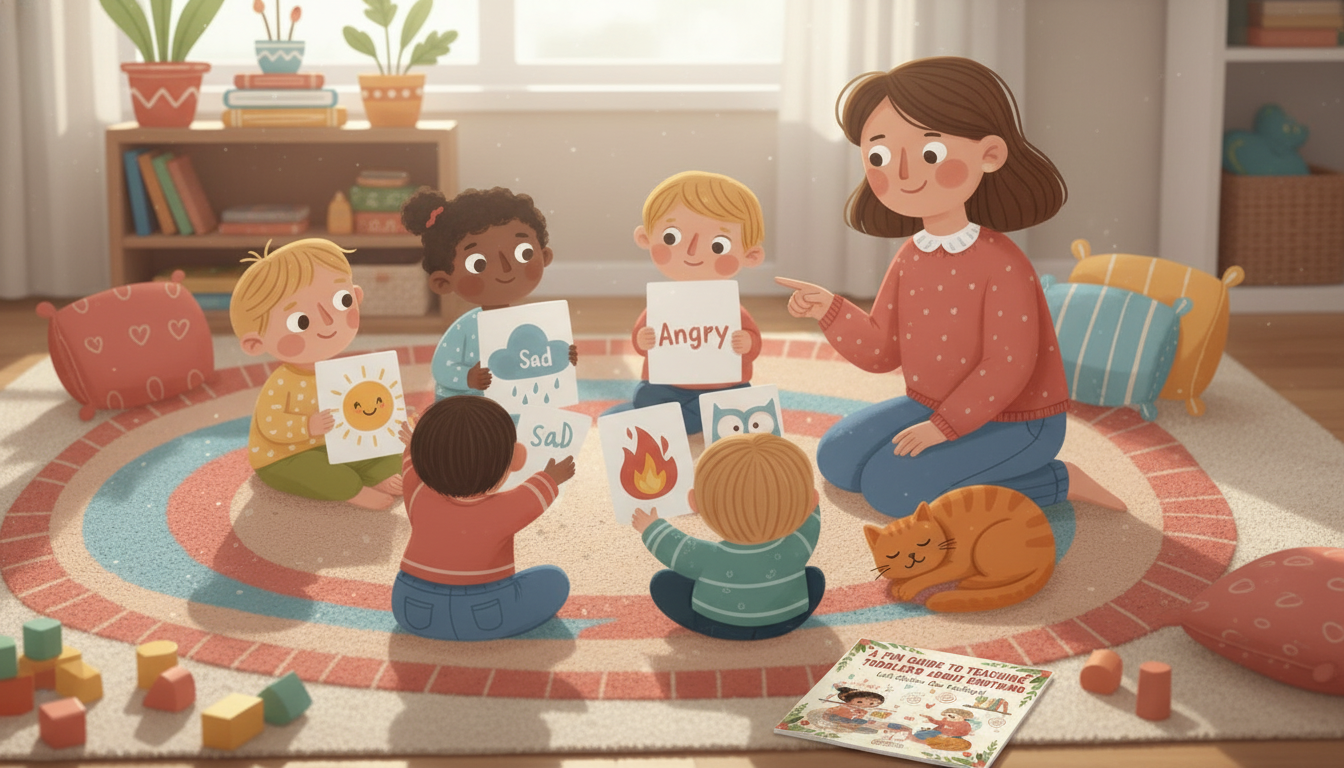
Why Emotion Skills Matter in the Toddler Years
Toddlers feel everything loudly—joy, disappointment, fear, anger—often before they have enough language or impulse control to explain what’s going on. That’s why emotions usually show up as behavior: grabbing, yelling, clinging, flopping, or hitting. The goal isn’t to stop feelings; it’s to help your child recognize them and move through them safely.
When you name a feeling (“mad,” “sad,” “scared”), you give your toddler a simple handle for an inside experience that can otherwise feel overwhelming. Over time, emotion coaching supports empathy, early problem-solving, and smoother transitions at home and in childcare. Progress is usually small and steady: a brief pause, a label, a tool, and (when needed) a repair after the tough moment.
For more parenting basics that align with gentle, consistent routines, the CDC’s Essentials for Parenting and American Academy of Pediatrics resources are helpful references for what’s typical at this age.
Start With a Small Feelings Vocabulary (and Repeat It Everywhere)
Start small so your toddler can actually use the words. Four core feelings are plenty at first: happy, sad, mad, scared. Once those are familiar, add a few more that show up often in toddler life—excited, frustrated, worried, embarrassed—one at a time.
Consistency matters more than variety. Try a steady phrase pattern your child will hear again and again:
- “You look mad.”
- “It’s okay to feel mad.”
- “Hands stay gentle.”
Avoid turning it into a quiz during a meltdown (“What are you feeling?”). In the peak moment, toddlers can’t access the part of the brain that labels and reflects. Instead, offer calm support and label the emotion once the intensity drops. Practice during everyday moments—spilled snacks, leaving the park, meeting a new friend—so the words feel familiar when they’re needed most.
Body Clues: Helping Toddlers Notice What Emotions Feel Like
Toddlers learn best when feelings are concrete. Teach simple body signals they can notice:
- Tight fists
- Hot face
- Fast heart
- Tummy “butterflies”
- Watery eyes
Pair body clues with feelings words: “Your fists are tight—your body is telling you you’re mad.” Keep it short. A toddler won’t absorb a long explanation, but they will absorb the same brief script repeated for months.
Try playful check-ins: “Show me your calm body” versus “Show me your stormy body.” Then guide them back: “Let’s help your body get calm—breathe with me.”
Quick Scripts for Common Toddler Moments
Scripts reduce decision fatigue for adults and give toddlers predictable language. Keep your tone calm and your sentences short.
- When a toy is taken: “You’re mad. Say: ‘My turn next.’ Let’s take a breath together.”
- When leaving the playground: “You’re sad to go. Park is done. Choose: walk or be carried.”
- When a sibling is bothering them: “You’re frustrated. Use words: ‘Stop’ or ‘Space please.’”
- After hitting/throwing: “You’re mad. I won’t let you hit. Feet on the floor—hands squeeze this pillow.”
- Repair (after the storm): “That was a big feeling. Let’s help your friend—gentle hands, say sorry, and try again.”
A Simple Daily Routine: Name, Validate, Guide
When emotions rise, a three-step routine keeps you grounded and helps your toddler learn what to do next.
- Name: Label the feeling and the trigger in one sentence. “You’re disappointed the cracker broke.”
- Validate: Normalize the feeling without giving in to unsafe behavior. “It’s okay to feel disappointed.”
- Guide: Offer one small choice or tool. “Do you want help fixing it, or a different snack?”
Practice this during calm times (books, pretend play, bedtime) so it feels familiar when emotions run high. The APA’s child development topics also highlight how emotional regulation skills build over time with adult support and repetition.
Play-Based Activities That Teach Feelings (No Extra Supplies Required)
Calm-Down Tools Toddlers Can Actually Use
Common toddler feelings and what to try in the moment
| Feeling | What it can look like | Words to use | A quick tool |
|---|---|---|---|
| Mad | Hitting, yelling, throwing | “You’re mad. I’m here. Hands stay safe.” | Wall push (10 counts) |
| Sad | Crying, clingy, whining | “You’re sad. It’s okay to miss that.” | Comfort hug + slow breaths |
| Scared | Hiding, freezing, refusing | “You feel scared. I’ll stay close.” | Count 1–5 + hold a comfort item |
| Frustrated | Giving up, shouting “no!”, stomping | “That’s hard. You’re frustrated.” | Try again with help + “one more time” |
| Excited | Running, grabbing, loud voice | “You’re excited. Let’s use a quiet body.” | Jump 5 times, then freeze |
When Emotions Spill Into Behavior: Firm Limits With Warm Support
Digital Download Guide: An Easy Way to Practice Feelings Every Week
Busy families do best with routines that are quick and repeatable. A Fun Guide to Teaching Toddlers About Emotions (digital download) is designed for short practice sessions: choose one feeling, use a simple script, try one game, then repeat the same language during real-life moments.
If schedules and transitions are a frequent trigger, Using AI to Organize Kids’ Schedule (digital guide) can support a predictable rhythm—often the hidden ingredient behind fewer emotional blow-ups.
FAQ
What’s a good age to start teaching toddlers about emotions?
You can start as soon as your child shows clear reactions—smiling, crying, clinging, or protesting. Keep it simple: label the basic feeling and repeat it during calm moments and everyday routines.
How many feelings words should a toddler learn first?
Start with four: happy, sad, mad, and scared. Add new words gradually (like frustrated, worried, or proud) once your toddler recognizes the basics in real life.
What should be done if a toddler melts down when asked to name a feeling?
Pause the question and focus on co-regulation: safety, comfort, and a simple calm-down tool. Gently label the emotion for them, and revisit naming practice later when their body is calm enough to listen.








Leave a comment