Stop Sibling Fights Fast: Scripts, Visuals, and AI Help
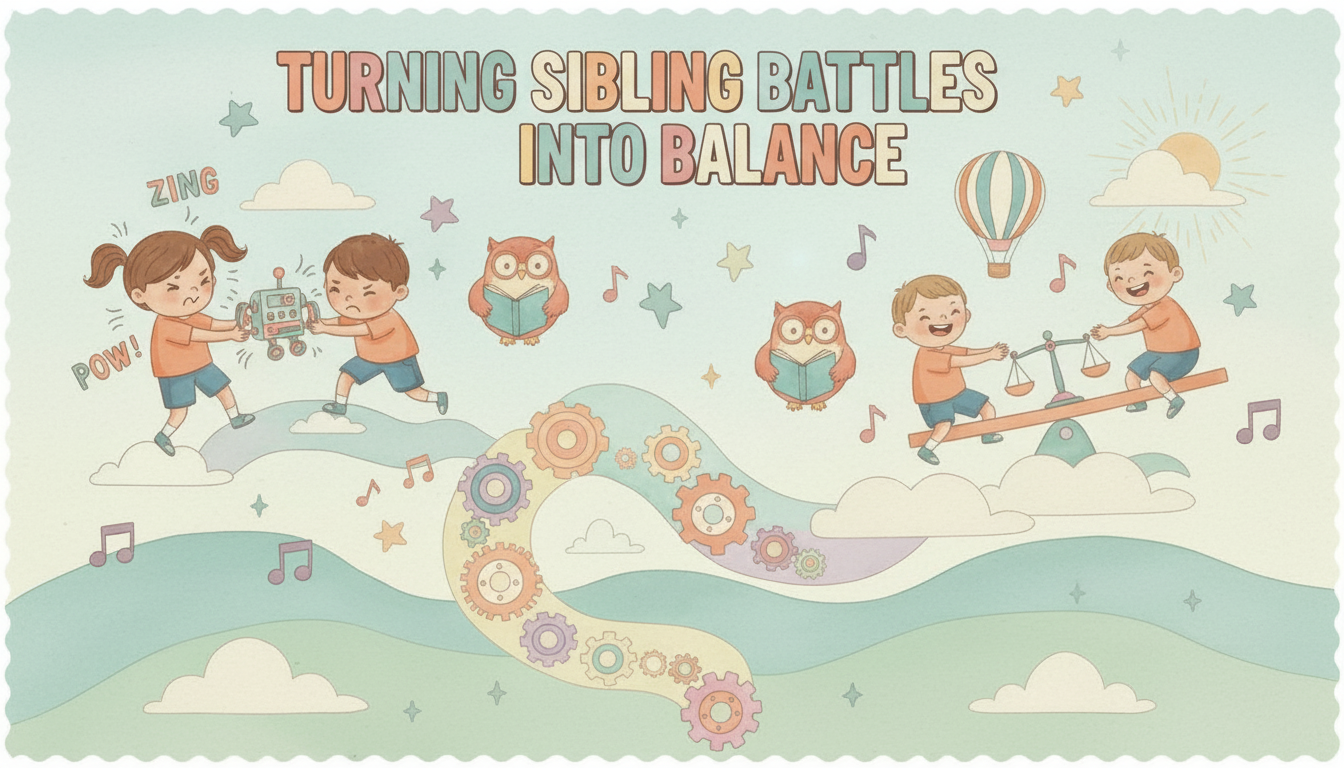
Sibling fighting can feel nonstop—especially during transitions, shared play, or when kids are hungry, tired, or craving attention. The good news: most sibling conflict is both common and coachable. With a few repeatable scripts, simple visual supports, and a plan for high-risk moments, it becomes easier to stop the harm quickly and teach the skills that prevent the next round.
Why siblings fight so much (and why it’s not always a bad sign)
Sibling conflict is often a messy form of practice: practice negotiating, handling disappointment, and learning personal boundaries. Frequent bickering can be normal, but certain patterns call for a different response.
- Normal conflict vs. harmful patterns: Everyday arguing is common; intimidation, injury, coercion, or persistent targeting isn’t. If one child seems afraid or repeatedly gets hurt, prioritize safety and outside support.
- Common drivers: Competing needs (rest, space, attention), uneven skills (one child more verbal or more physical), limited impulse control, and mismatched play styles.
- The attention loop: Kids repeat what reliably gets a parent’s energy—sometimes even negative attention feels like “connection.”
- The “fairness trap”: Kids often mean “equal right now,” while parents are aiming for “needs met over time.” Naming that difference can reduce the courtroom-style arguing.
- Mindset shift: Focus on coaching skills and shaping the environment rather than identifying a “bad kid.”
For more parenting guidance grounded in child development, credible starting points include American Academy of Pediatrics (HealthyChildren.org) and the CDC’s Essentials for Parenting.
The peaceful parenting response: stop the harm, then teach the skill
When a fight starts, the goal isn’t to run a full courtroom trial. It’s to lower intensity, keep everyone safe, and teach one small skill that makes the next conflict easier.
- Pause and regulate: Soften your voice, slow your body, and keep your face neutral. Your calm is contagious.
- Safety first: Separate if needed. Block hitting. Remove thrown objects. Use minimal words.
- Name what’s happening (no blame): Describe what you see: “Two kids want the red truck.”
- Validate feelings, hold the limit: “You’re mad. I won’t let you hit.”
- Teach one micro-skill: Taking turns, asking for space, offering a trade, or using a repair phrase.
- Reconnect and reset: A brief repair, then a clear next step (“Choose: blocks here or coloring at the table”).
| Moment | What to say | Goal |
|---|---|---|
| When voices rise | “Pause. Hands to self. I’m here.” | Lower intensity and prevent harm |
| When someone grabs | “Stop. Ask for a turn or offer a trade.” | Replace taking with requesting |
| When it turns physical | “I won’t let you hurt each other. Separate.” | Immediate safety boundary |
| When a child feels wronged | “Tell your sibling what you want, not what they are.” | Shift from labels to needs |
| After calming | “What can you do next time instead?” | Build a specific replacement plan |
Set up the environment so fights are less likely
Many sibling battles are predictable: the same toy, the same doorway, the same transition. A few environmental tweaks reduce how often you have to intervene.
If you want a ready-made set of tools (scripts, visuals, and calm routines) to print and reuse, Turning Sibling Battles into Balance (printable eBook with AI tools and visual aids) is designed for quick setup—especially during the busiest seasons.
Turn fights into coaching moments: the 3-part sibling problem-solving routine
Part A—Each child gets a turn to be heard
Part B—Name the problem in one line
Part C—Offer choices for solutions
Printables and visual aids that reduce arguing (because kids can “see” the plan)
Using AI tools to support calmer routines (without replacing parenting)
For families who want help organizing routines beyond conflict moments (like smoother mornings and less end-of-day chaos), Using AI to Organize Kids’ Schedule (digital guide) pairs well with sibling conflict tools.
When sibling conflict needs extra support
Coordinate with your child’s school and pediatrician and ask about parent coaching or family therapy options. General parenting resources are also available through the American Psychological Association.
Helpful picks for calmer routines
- Turning Sibling Battles into Balance | Peaceful Parenting Digital Guide for Moms & Dads | What to Do When Siblings Fight All the Time | Printable eBook with AI Tools & Visual Aids
- Using AI to Organize Kids’ Schedule | Digital Guide for Parents on How to Use AI to Organize Family Schedule
- Creative Hollow Star Desk Organizer – Pen & Brush Holder for Office or Study (handy for storing turn cards, a visual timer, calm-down menus, and “repair coupons” in one grab-and-go spot)
FAQ
Should parents intervene in every sibling fight?
No—minor squabbles can build skills if everyone is safe and the power balance is relatively even. Step in when there’s hitting, throwing, intimidation, repeated targeting, or escalating aggression; try “Pause. Hands to self. I’m here,” then separate if needed.
How can siblings learn to share without constant arguing?
Sharing improves faster with turn-taking systems than with lectures: use a visual timer, “my turn/your turn” cards, and role-based play, and duplicate the most fought-over items when possible. Coach short scripts like “Can I have a turn when you’re done?” and “Do you want to trade?”
What should a parent say when one child hits the other?
Use a calm, firm safety limit: “I won’t let you hit. Separate.” After everyone is calm, validate the feeling (“You were mad”) and practice one replacement (“Stomp feet in the corner” or “Say: I need space”).








Leave a comment