4PCS Baby Feeding Set: Silicone Bowl + Steel Utensils
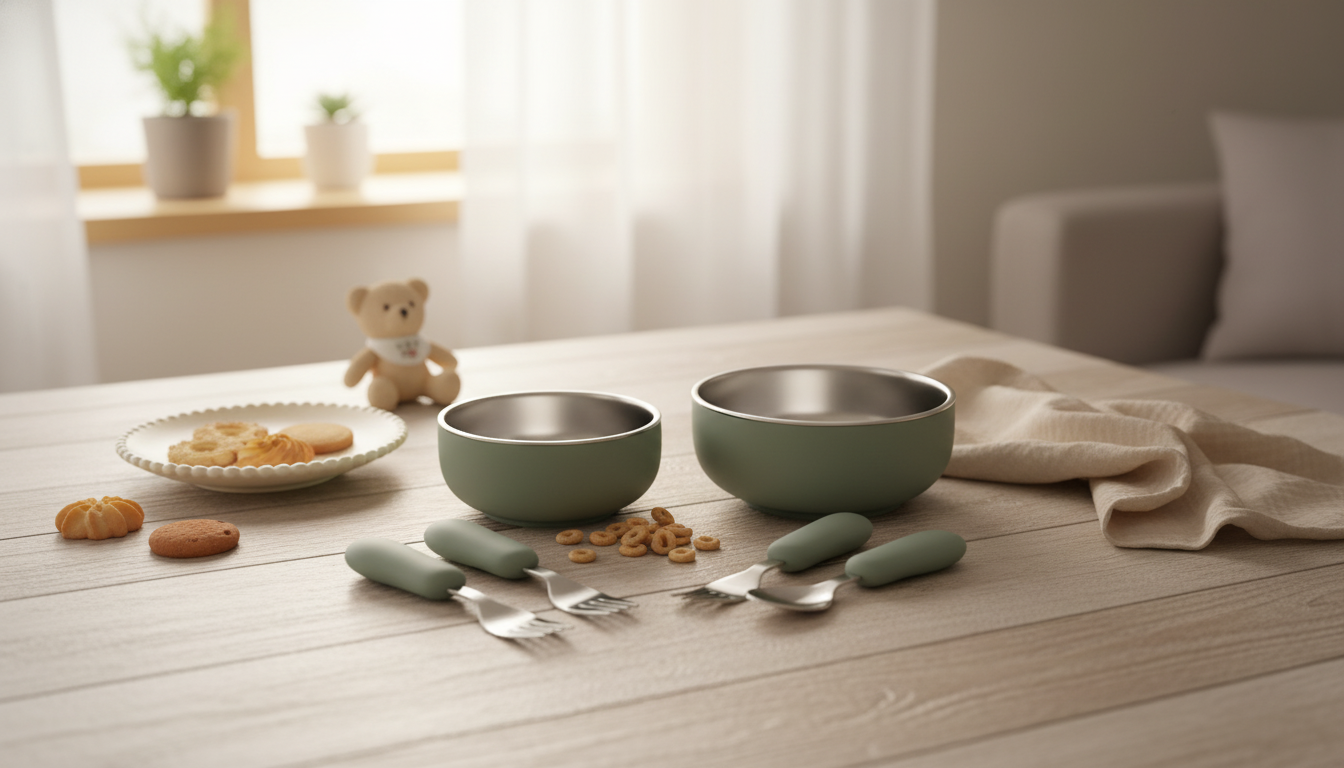
4PCS Baby Feeding Bowl & Utensil Set – Silicone & Stainless Steel
Building a calmer mealtime often comes down to the right tools: a bowl that stays put, utensils that fit small hands, and materials that are easy to clean. The 4PCS Baby Feeding Bowl & Utensil Set – Silicone & Stainless Steel pairs soft, grippy silicone with durable stainless steel so babies can practice scooping while caregivers spend less time managing spills and more time focusing on feeding and fun. Whether you’re starting purées or offering soft finger foods, a dependable bowl-and-utensil combo helps make “practice meals” feel more predictable from day one. For more guidance, see Personalized Name Food Grade 6pcs Baby Feeding Set with Spoon ….
What’s Included and Who It’s For
This set is designed for babies and toddlers who are starting solids and moving toward independent eating skills. It’s a practical starter option for families who want coordinated essentials without committing to a full feeding station setup. For further reading, see Silicone Feeding Supplies With Suction Plates & Self-Feeding Utensils.
- Designed for babies and toddlers starting solids and practicing independent eating.
- Set includes a feeding bowl plus coordinated utensils for early self-feeding practice.
- Material mix supports comfort (silicone) and long-term durability (stainless steel).
- Useful for purées, oatmeal, yogurt, mashed foods, and soft finger foods.
If you’re building a larger routine (plate, bib, cup, and utensils), consider pairing it with a more expanded bundle like the 6PCS Silicone Baby Feeding Set with Lion Plate, Bib, Cup, Spoon & Fork for a more “all-in-one” setup.
Why Silicone and Stainless Steel Work Well Together
Mixed-material baby utensils are popular for a reason: they balance comfort and sturdiness. Silicone adds a soft touch and extra grip, while stainless steel helps utensils keep their shape and feel more like “real” cutlery as kids grow.
- Silicone offers grip and flexibility, helping reduce sliding and clatter during meals.
- Stainless steel provides a sturdy core that holds shape over time and resists staining and odor retention compared with many plastics.
- The combo can feel gentler on gums than all-metal options while still giving a solid, “real utensil” feel.
- Easy-to-wipe surfaces help streamline cleanup after sticky foods like banana, nut butter, or yogurt.
For caregivers, that “wipe-and-rinse” convenience matters—especially when meals happen multiple times a day. For kids, the more stable feel in the hand can make early scooping attempts less frustrating.
Mealtime Benefits for Early Self-Feeding
Self-feeding is a progression, not a switch that flips overnight. A dedicated bowl and consistent utensils can help children understand the routine while practicing coordination in small, repeatable steps.
- Encourages hand-to-mouth coordination with utensils sized for small grips.
- Supports the transition from caregiver-feeding to assisted self-feeding (loaded spoon) and then more independent scooping.
- A dedicated bowl helps keep portions contained and can simplify routine: prep, serve, rinse, repeat.
- Works well for both traditional spoon-feeding and baby-led approaches where utensils are offered alongside finger foods.
For general guidance on feeding milestones and safe introduction of solids, consult trusted sources such as the CDC Infant and Toddler Nutrition pages and the American Academy of Pediatrics guidance on starting solid foods.
Quick Specs and Care Guide
Good care keeps silicone fresh and helps utensils stay smooth and comfortable for little mouths.
Set Overview at a Glance
| Item | Main Material | Everyday Use | Care Notes |
|---|---|---|---|
| Feeding bowl | Silicone | Purees, cereal, snacks | Rinse promptly after oily or tomato-based foods to reduce odor/staining |
| Spoon | Silicone + stainless steel | Loaded spoon practice, scooping soft foods | Avoid abrasive scrubbers to keep silicone smooth |
| Fork | Silicone + stainless steel | Soft foods (pasta, fruit pieces) | Inspect tines regularly; replace if damaged |
| Additional utensil/piece | Silicone + stainless steel | Backup or alternate grip option | Dry thoroughly before storing to keep surfaces fresh |
How to Use the Set Through Different Stages
Safety and Material Tips to Keep in Mind
When This Set Is a Good Fit (and When to Consider Another Option)
- Good fit: families who want a compact starter setup without a full plate-and-bib bundle.
- Good fit: travel or daycare—fewer pieces, straightforward cleaning, and familiar utensils for consistent practice.
- Consider another option: a larger set with plate, bib, and cup if building a complete feeding station from scratch (the 6PCS Silicone Baby Feeding Set with Lion Plate, Bib, Cup, Spoon & Fork is a helpful direction).
- Consider another option: multiple bowls if serving different courses or snacks throughout the day and minimizing turnaround between washes.
If you’re assembling a practical “mealtime corner,” it can also help to keep small organizers nearby for bib clips, wipes, and spare utensils—something as simple as a desktop-style holder can reduce last-minute searching (see the Creative Hollow Star Desk Organizer – Pen & Brush Holder for Office or Study for a compact option).
FAQ
Can silicone and stainless steel baby utensils go in the dishwasher?
Many silicone-and-stainless baby utensils are dishwasher-safe, but placement matters. Put silicone pieces on the top rack when possible, keep them away from heating elements, and inspect after cycles for loosening or wear.
How do you remove silicone odors or lingering smells after strong foods?
Wash promptly, then soak in warm, soapy water if odors linger. Occasional sanitizing (such as boiling or a vinegar/baking soda soak) can help when appropriate—follow the product’s care instructions and let pieces dry fully before storing.
What foods are easiest for babies learning to scoop with a spoon?
Thicker foods that cling to the spoon tend to be easiest, like oatmeal, yogurt, mashed avocado, and mashed sweet potato. Pre-loading the spoon at first helps babies succeed while they learn the scooping motion.










Leave a comment