Baby’s First Tooth: What to Do Next
15% off on product page · save $2.12
Baby’s First Tooth: What to Do Next
Start Brushing the First Tooth
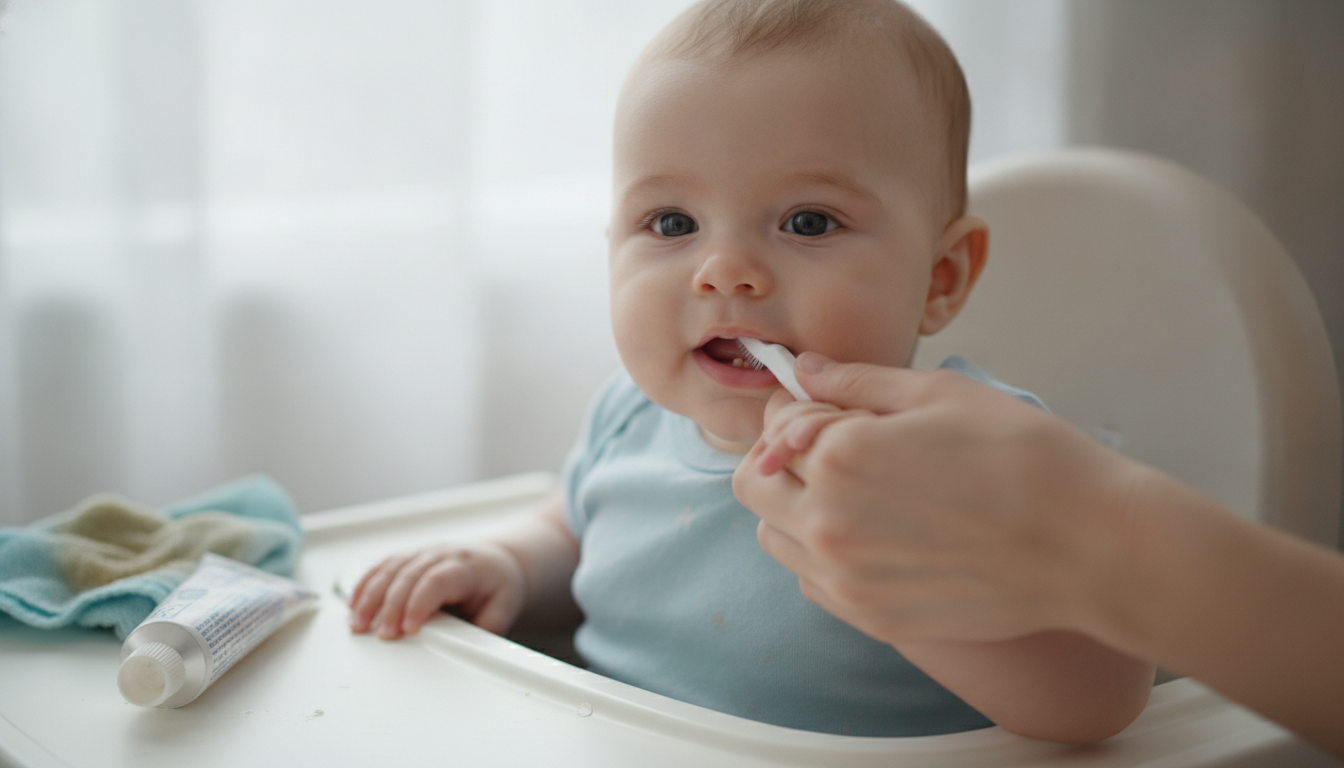
Once your baby’s first tooth appears, brush it twice a day with a soft, small-headed toothbrush and a smear of fluoride toothpaste about the size of a grain of rice. Gently brush all surfaces of the tooth and along the gumline, including before bedtime, and continue helping your child brush as more teeth come in.
Arrange a First Dental Visit
Schedule your baby’s first dental appointment within six months of the first tooth appearing and no later than their first birthday. The dentist can check your baby’s mouth, discuss brushing and fluoride, and answer questions about feeding, pacifiers, or anything you have noticed as teeth emerge.

Featured in this guide
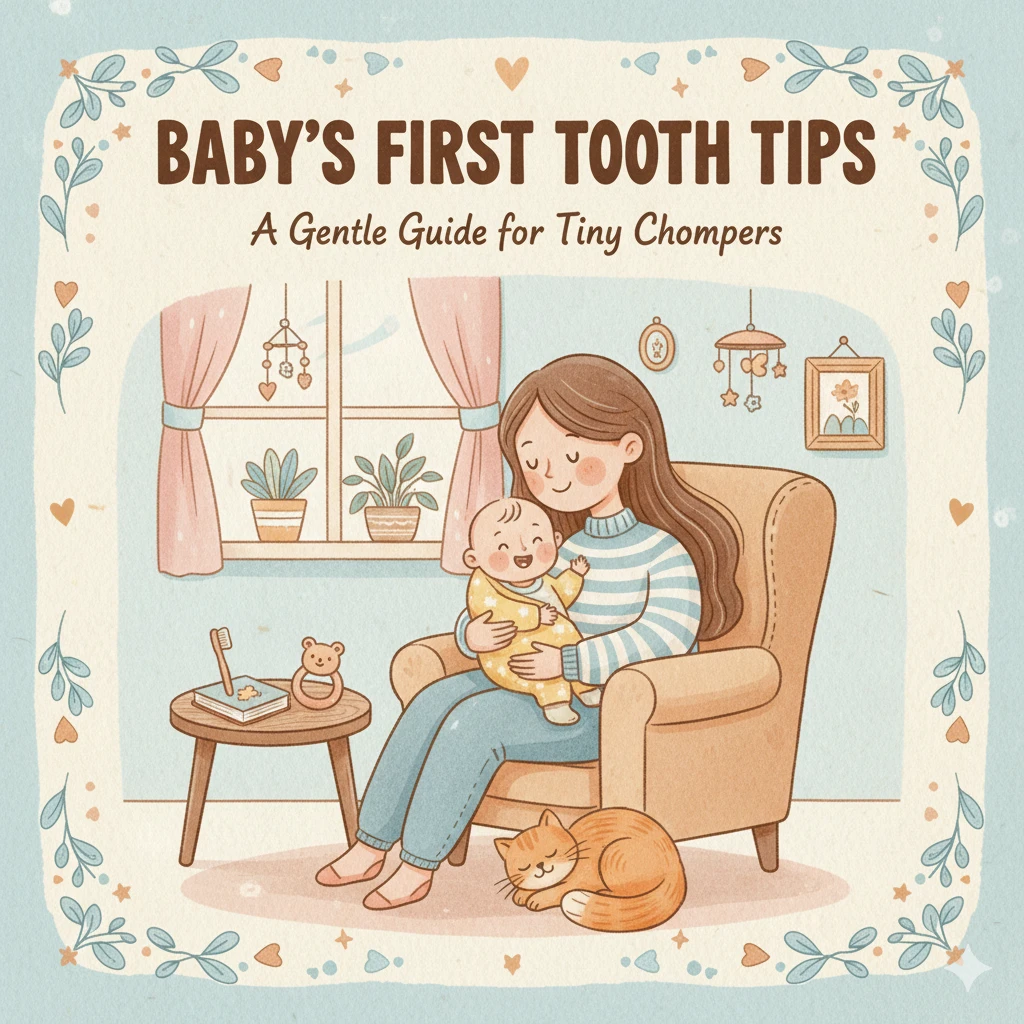
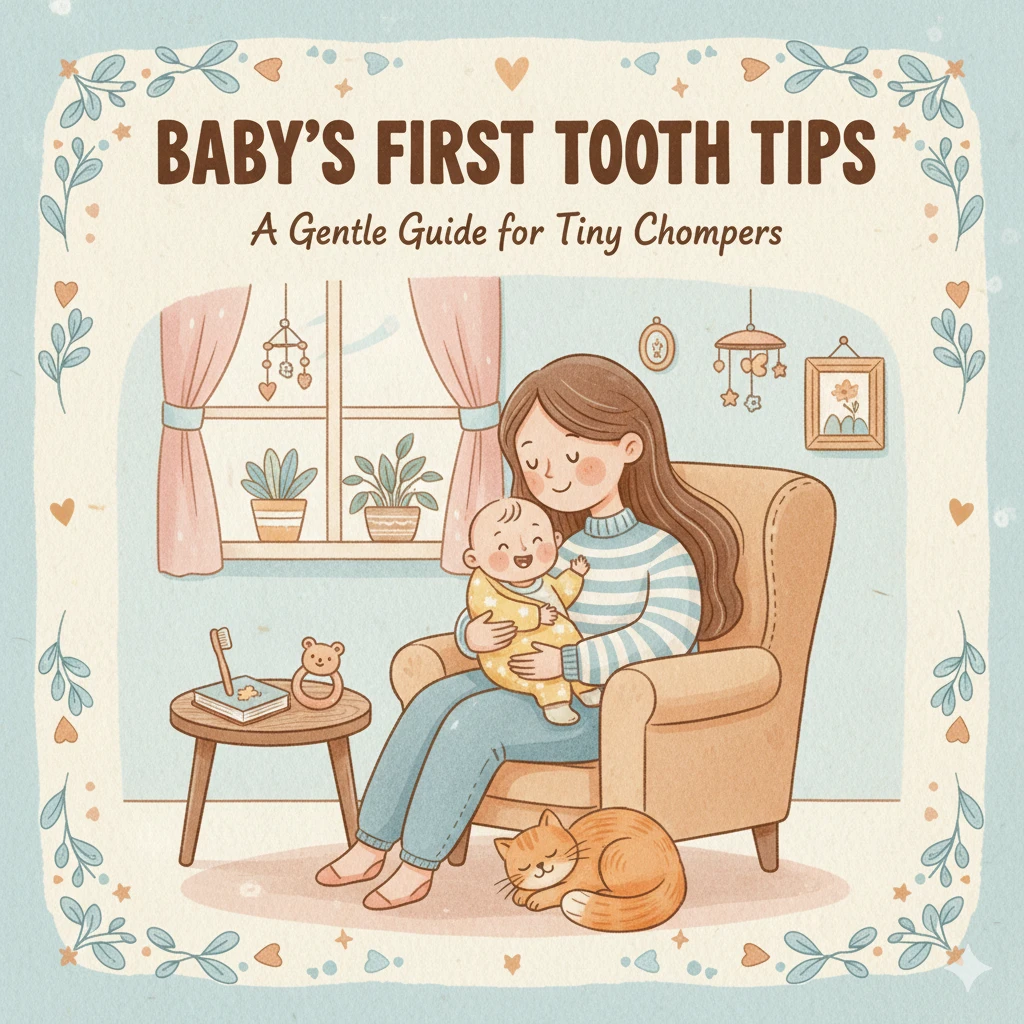
Baby’s First Tooth Tips Ebook | Helpful Guide for Parents | Tips for Managing Baby’s First Tooth
Help Your Baby Feel Comfortable
If your baby seems uncomfortable while teething, gently rub their gums with a clean finger or offer a clean, chilled—not frozen—teething ring. Avoid teething necklaces and over-the-counter numbing gels containing benzocaine or lidocaine; if discomfort is difficult to manage, ask your pediatrician about an appropriate pain reliever and dose.
Protect That New Tooth Every Day
To help prevent cavities, avoid putting your baby to bed with a bottle of milk, formula, juice, or another sweet drink, and clean the tooth after the last feeding before sleep. If you would like more guidance, our Baby’s First Tooth Tips Ebook is a parenting guide focused on managing this milestone, and you can also read our guide to first-tooth timing, teething, and care.
The Baby Rolled Off the Bed – Emergency & Calm Checklist | What to Do When Baby Rolls Off Bed | Instant Digital Download | Printable First Aid & Safety Guide for New Parents works alongside the featured product and provides a defined sleep surface during family stops and overnight travel.
FAQ
What to do once baby gets its first tooth?
Begin brushing twice daily with a soft toothbrush and a rice-grain-sized smear of fluoride toothpaste. Make a dental appointment within six months of the tooth appearing, and by your baby’s first birthday at the latest.
How painful is it for babies to get their first tooth?
Teething discomfort varies: some babies seem only mildly bothered, while others may be fussier or want to chew more. A chilled teething ring or gentle gum massage may help, but contact your pediatrician if your baby has a fever, diarrhea, or seems unusually unwell rather than assuming teething is the cause.
See if Baby’s First Tooth Tips Ebook | Helpful Guide for Parents | Tips for Managing Baby’s First Tooth fits your setup
Recommended for you










Leave a comment