What Age Should a Baby Be in a Car Seat? Safety Guide
40% off on product page · save $519.20
What Age Should a Baby Be in a Car Seat? Safety Guide

When should a baby start using a car seat?
You should use an appropriate car seat from your baby’s first ride home and on every car journey, even when the trip is short. For a newborn, choose a rear-facing seat that fits your baby’s height and weight and can be installed correctly in your vehicle.
There is no single age when a child stops needing a car seat or booster; the right stage depends on your child’s size, development, the seat’s limits, and applicable laws. Our team recommends planning for several stages, from a rear-facing seat through a forward-facing seat and then a booster.

How long should your baby ride rear-facing?
Keep your child rear-facing until they reach the maximum height or weight allowed for that position by the car seat manufacturer. Many convertible seats accommodate rear-facing children beyond infancy, so an infant’s first birthday or a particular weight alone is not a reason to turn the seat around.
A 22-pound baby is not automatically ready to face forward, and age matters as well as weight when determining whether a forward-facing seat can be used. Follow the seat’s instructions and your local law, and continue rear-facing as long as the seat permits.

Featured in this guide
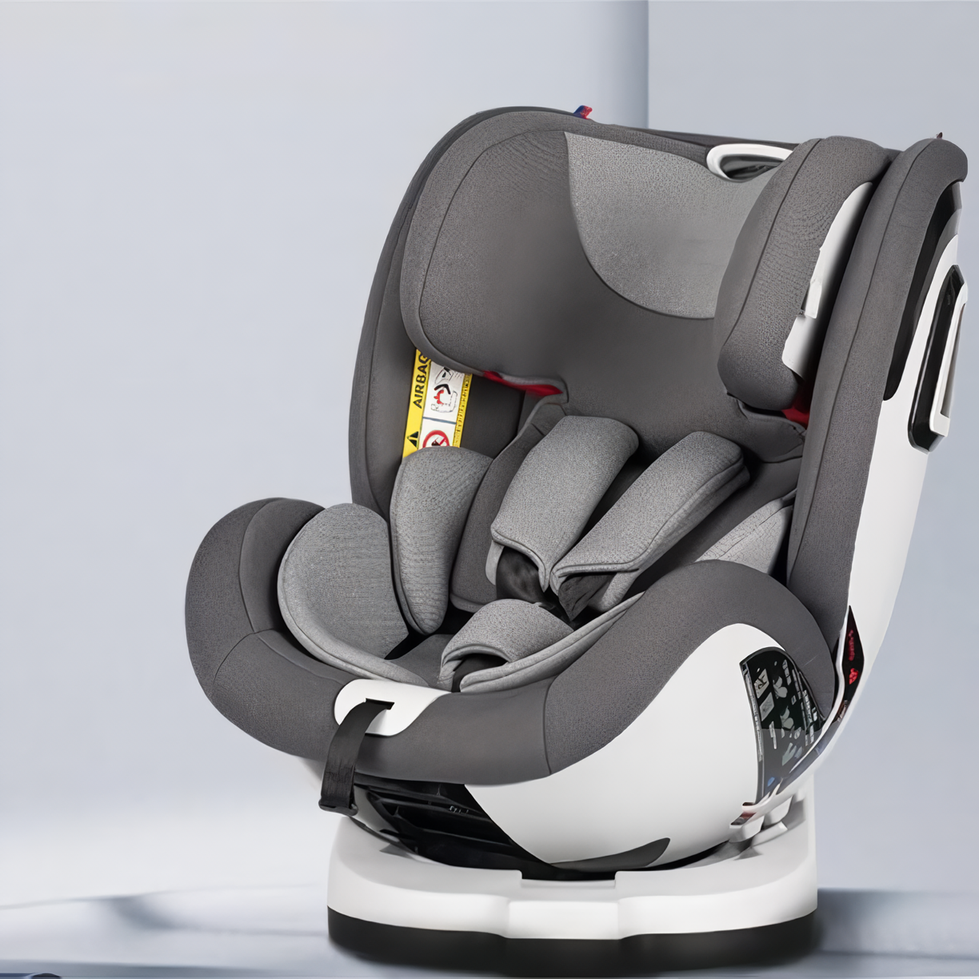
3-in-1 Baby Car Seat with Isofix Connect and Stroller Compatibility for 0-36kg
When should you switch car seats?
Switch when your child reaches the current seat’s stated height or weight limit, or when the seat’s fit requirements can no longer be met. For example, you may move from an infant-only seat to a convertible seat while keeping your child rear-facing, provided the new seat fits your child.
After your child outgrows the rear-facing limits, use a suitable forward-facing seat with a harness until its limits are reached. A booster is the next stage when your child is ready and meets its requirements; a vehicle seat belt alone comes later, when it fits properly.
How do you get the right fit?
Install the seat at the permitted recline angle and secure it using an approved installation method described in both the car seat and vehicle manuals. Buckle your baby snugly, position the chest clip at armpit level, and follow the seat’s instructions for the appropriate harness slot position.
Our featured 3-in-1 Baby Car Seat with Isofix Connect and Stroller Compatibility is described for children weighing 0–36 kg, but that range alone does not establish the limits for each seating stage or fit in every vehicle or stroller. You can read our 3-in-1 car seat and stroller fit guide as you consider your options.
FAQ
What age do I switch my baby’s car seat?
Switch based on your baby’s height, weight, and fit in the current seat rather than age alone. If your baby outgrows an infant seat, you can move to a suitable convertible seat and continue using it rear-facing within its limits.
Can a 22 pound baby face forward in a car seat?
Not necessarily: 22 pounds alone does not determine whether a baby can safely or legally face forward. Keep your child rear-facing until they reach the seat’s rear-facing height or weight limit, and follow local law and the manufacturer’s instructions.
See if 3-in-1 Baby Car Seat with Isofix Connect and Stroller Compatibility for 0-36kg fits your setup









Leave a comment