When Do Babies Start Using Rattles? Age-by-Age Guide
What age do babies start playing with rattle toys?
Many babies start showing interest in rattle toys around 2 to 4 months old, when their hand control and curiosity about sound begin to kick in. Some newborns will briefly attend to a soft sound, but intentional “playing”—reaching, grasping, and shaking—usually develops a bit later as coordination improves.
By about 3 months, babies often bat at toys during tummy time or while lying on their back. Between 4 and 6 months, you’ll typically see more purposeful grabbing and shaking, plus the classic move of bringing the rattle to the mouth to explore texture and shape.
What to expect by age
0–2 months: Listening and looking
At this stage, babies may turn toward gentle sound or briefly focus on a high-contrast toy nearby. A lightweight, quiet rattle can be used for short, supervised moments—more for sensory exposure than independent play.
2–4 months: Reaching begins
As babies gain better control of their arms and hands, they may start swiping at a rattle and occasionally grasping it for a second or two. Simple, easy-to-hold shapes work best, especially during play on a mat.
4–6 months: Grasp, shake, mouth
This is the prime window for “real” rattle play. Babies can hold on longer, shake to make noise, and explore with their mouths. Look for smooth edges, baby-safe finishes, and a size that’s easy to grip but too large to be a choking hazard.
6+ months: Cause-and-effect fun
Older babies may pass the rattle between hands, bang it, and use it during seated play. Rattles can also support early games like “find the sound” (shaking gently to one side and letting baby turn or reach).
Choosing a rattle toy that fits your baby
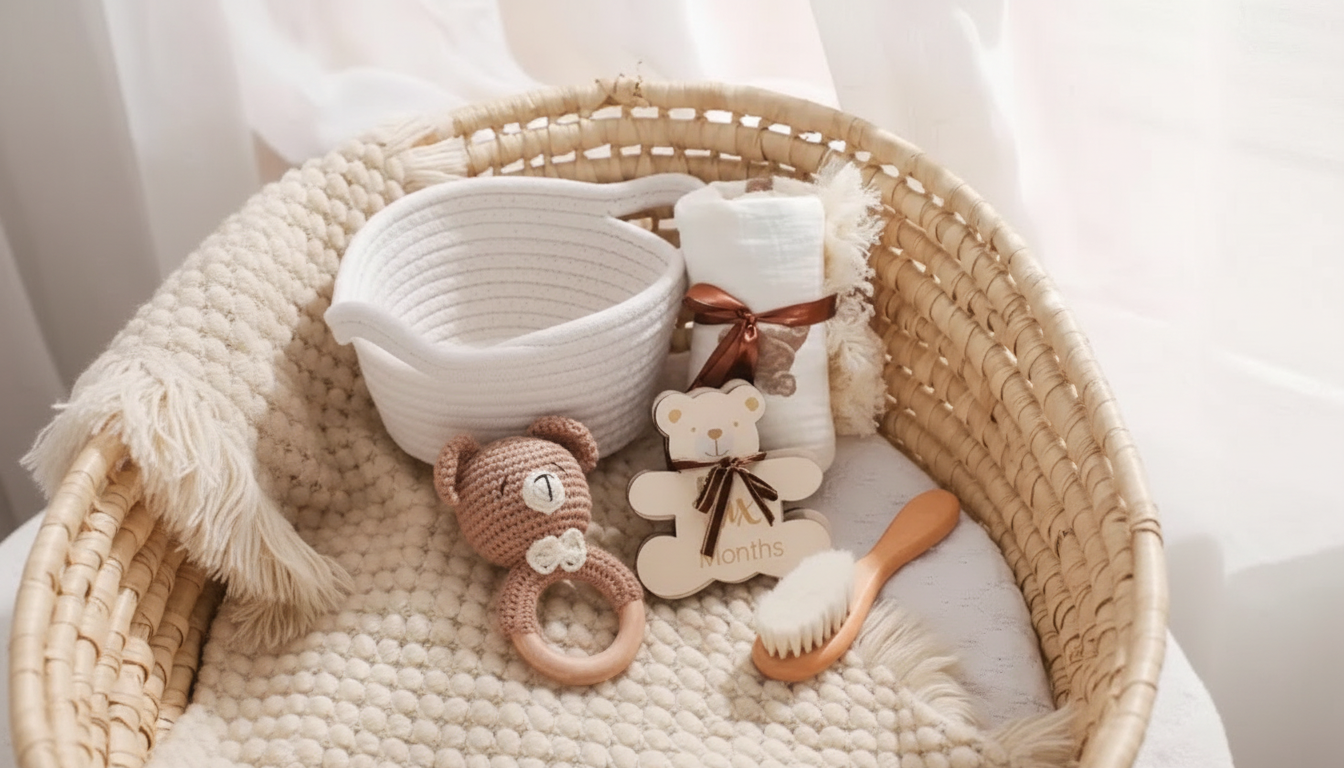
Pick a rattle that matches your baby’s current skills: lightweight, easy to grasp, and made from baby-safe materials. If you’re considering a handcrafted option, see the details in this guide: crochet bear wooden rattle set with milestone cards.
FAQ
Are wooden rattles safe for babies?
They can be safe when they’re made for infants, finished with baby-safe coatings, and regularly checked for cracks, splinters, or loose parts. Always supervise play and follow the maker’s age guidance.






Leave a comment