When Kids Feel Left Out: Scripts, Skills, and Support
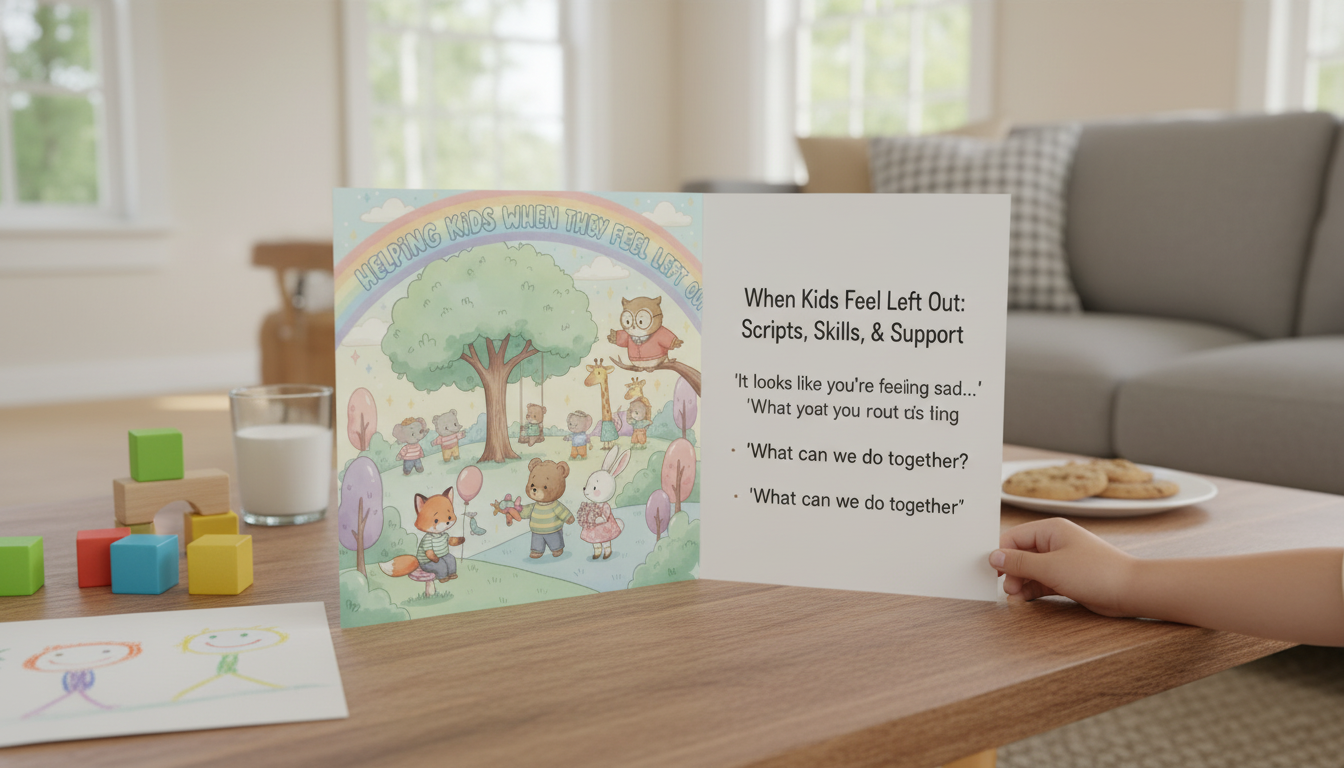
Helping Kids When They Feel Left Out: Practical Support, Calm Scripts, and Social Skill Builders
Feeling left out can hit kids hard—showing up as tears, anger, shutdowns, or sudden “I hate school” comments. The goal isn’t to fix every friendship moment, but to help a child name what’s happening, regulate big feelings, and practice doable next steps that fit their personality and age. The sections below offer simple ways to respond in the moment, build confidence over time, and know when extra help is needed.
What “left out” can look like at different ages
- Preschool: clinginess, sudden tantrums at drop-off, “They won’t play with me,” trouble sharing or joining games.
- Early elementary: complaints about recess, “Nobody likes me,” frequent “best friend” switching, wanting play-by-play reassurance.
- Upper elementary: embarrassment, anger, social comparison, worry about group chats and parties, avoiding activities they used to enjoy.
- Middle school: withdrawal, irritability, intense sensitivity to small cues, fear of being judged, changes in sleep/appetite, avoiding school or clubs.
- Common triggers: unstructured times (recess/lunch), group projects, birthdays/parties, team tryouts, online group threads, “everyone paired up” moments.
Start with emotional safety: what to say in the first 2 minutes
When kids feel excluded, their nervous system often goes into “alarm mode.” Connection first helps the brain settle enough to think.
- Lead with connection before problem-solving: “That sounds really painful. I’m here.”
- Name the feeling without debating the facts: “It makes sense you feel hurt and embarrassed.”
- Avoid quick fixes that can feel dismissive: “Just ignore them,” “Make new friends,” “You’re fine.”
- Use a grounding reset if your child is flooded: a sip of water, a 5-4-3-2-1 senses check, slow breaths together, or a short walk.
- Offer choices to restore control: “Do you want a hug, quiet time, or to talk it through?”
Helpful vs. unhelpful responses when a child feels left out
| If a child says… | Try this | Avoid this | Why it helps |
|---|---|---|---|
| “Nobody wants me there.” | “It feels awful to want in and not feel welcomed.” | “That’s not true.” | Validates feelings so the brain can calm down. |
| “They did it on purpose!” | “It seemed intentional. Let’s look at what happened step by step.” | “Stop being dramatic.” | Slows escalation and makes room for problem-solving. |
| “I’m never going back.” | “Something really big happened. Let’s make a plan for tomorrow together.” | “Yes you are—end of discussion.” | Keeps limits while communicating safety and support. |
| “I don’t have any friends.” | “Right now it feels like that. Who feels easiest to talk to, even a little?” | “But you have plenty of friends.” | Gently challenges all-or-nothing thinking. |
Get the real story without turning it into an interrogation
Kids share more when they don’t feel cross-examined. Aim for curiosity, not a verdict.
- Use a simple timeline: “What happened right before you felt left out? Then what happened next?”
- Ask for details that matter: who was there, where it happened, what was said, what your child did, and what they wish they had done.
- Watch for patterns: a specific child, a specific setting (bus/lunch), repeated exclusion, teasing, or power dynamics.
- Check interpretation vs. intention: “Is it possible they didn’t notice, or was it clearly deliberate?”
- Reflect strengths: “You tried joining. That took courage, even though it didn’t go well.”
Teach “join-in” skills that don’t feel awkward
Many kids get stuck because they only know one approach: walk up and ask to play. A few small strategies can make joining feel more natural.
When exclusion is unkind: boundaries, assertiveness, and adult help
For additional guidance on bullying prevention and when to escalate concerns, these sources are helpful: American Academy of Pediatrics, CDC, and American Psychological Association.
Build the “friendship foundation” at home (10 minutes a day)
A printable guide that makes the next steps easier on hard days
If you’d like a ready-to-print set of scripts and practice pages, see: Helping Kids When They Feel Left Out | Printable Digital Guide for Parents | What to Do When Child Feels Left Out | Emotional Support & Social Skills eBook.
And if mornings and after-school logistics add extra stress (which can amplify social worries), this planning resource can help simplify routines: Using AI to Organize Kids’ Schedule | Digital Guide for Parents on How to Use AI to Organize Family Schedule.
When to consider extra support
FAQ
What should a parent say when a child says, “No one likes me”?
Start by validating: “That sounds really lonely.” Ask for one specific moment that made them feel that way, then gently soften the all-or-nothing thinking by identifying one person who feels even a little safe, and choose one small step for tomorrow (like a simple join-in line or sitting near a friendly classmate).
How can a shy child make friends if joining groups feels scary?
Use low-pressure entries like “watch-then-join,” helper roles (scorekeeper, passing out supplies), and short one-on-one playdates with a structured activity. Brief role-plays at home—just 30 seconds of practicing one line—can make the first step feel more doable.
When is being left out considered bullying?
Occasional exclusion can be part of normal social sorting, but bullying is more likely when exclusion is repeated, targeted, and meant to harm (often involving humiliation or a power imbalance). If it’s ongoing or escalating, document what’s happening and involve school staff early.








Leave a comment