Teach Kids Self-Soothing: Calm Routines & Coping Tools
Teaching Kids the Art of Self-Soothing: Practical Skills for Emotional Regulation and Calm Routines
Self-soothing is the set of skills kids use to calm their bodies and minds when feelings run big—without shutting down emotions or relying on constant rescue. With consistent language, simple tools, and predictable routines, children can learn to notice early stress signals, choose a calming strategy, and return to connection and problem-solving. The goal is not “never upset,” but “able to recover.”
What Self-Soothing Really Means (and What It Doesn’t)
Self-soothing is a child’s ability to shift from dysregulated (fight/flight/freeze) back toward a calmer state using age-appropriate strategies and supportive cues. It’s not forced independence, ignoring emotions, or expecting a child to “calm down” on command.
Co-regulation comes first: kids borrow an adult’s calm through tone, proximity, and predictable responses, then gradually internalize those skills. Progress often looks like shorter meltdowns, quicker recovery, and more willingness to try a coping tool—not perfect behavior.
Why Self-Soothing Skills Matter for Daily Life
Self-soothing strengthens emotional regulation by helping kids name feelings, tolerate discomfort, and transition between activities without tipping into overwhelm. Over time, it builds resilience: children learn that feelings rise and fall, and they can influence what their body does next.
These skills also make routines smoother—bedtime, school drop-offs, homework starts, and screen-time boundaries tend to carry less friction when a child has a familiar reset plan. And when bodies are calmer, relationships benefit: it’s easier to listen, apologize, and problem-solve after conflict. Many of these ideas align with broader child development guidance from the American Academy of Pediatrics and practical parenting supports from the CDC.
Start with the Body: Recognizing Early Signs of Dysregulation
Kids often feel dysregulation in their bodies before they can explain it in words. Teach them to notice clues like a tight jaw, clenched fists, hot face, fast heartbeat, wiggly legs, tummy knots, or “buzzing” energy.
A simple check-in can make this concrete: “Is your body at green, yellow, or red?” Many families post a small visual chart on the fridge or in a calm corner. Practice the check-in when your child is already calm—self-soothing is a skill, and skills are built during low-stress moments.
Model it out loud so they can borrow your script: “My shoulders feel tight. I’m going to take three slow breaths and loosen them.” When kids hear this consistently, they start to recognize their own early signals sooner.
Age-Appropriate Ways to Teach Self-Soothing (Toddlers to Big Kids)
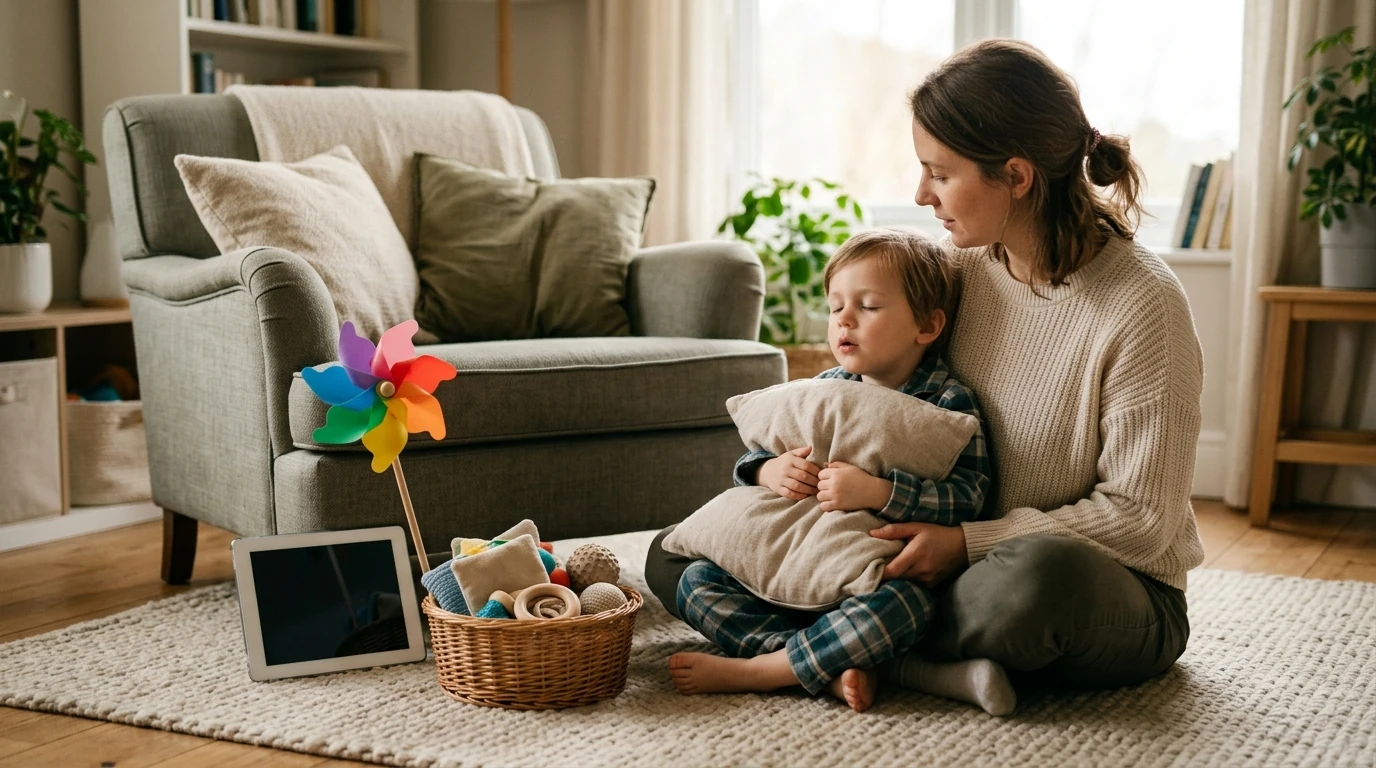
Self-soothing tools should match development. For ages 2–4, keep it physical and simple: a hug, deep breaths with a pinwheel, squeezing a pillow, stomping then freezing, or naming one feeling. For ages 5–7, add choices and short scripts: “bubble breathing,” a quick stretch, or choosing between two calm tools.
For ages 8–12, build ownership with coping plans, journaling prompts, playlists, and “what do I need right now?” checklists. For teens, emphasize autonomy and respect—private regulation strategies, boundaries around conflict, and recovery routines after hard moments. Independence increases with consistency, not pressure.
Self-Soothing Toolkit by Age
| Age range | Best types of tools | Examples to practice | What adults do |
|---|---|---|---|
| 2–4 | Sensory + movement | Bear hug, blow bubbles, squeeze playdough, “push the wall” | Stay close, label emotion, offer 1–2 choices |
| 5–7 | Choices + simple scripts | 5-finger breathing, calm corner cards, “I can try again” | Prompt steps, praise effort, keep routine predictable |
| 8–12 | Plans + problem-solving | Coping menu, body scan, journaling, music break | Coach reflection after calm, not during heat |
| 13+ | Autonomy + boundaries | Time-out with return plan, grounding, exercise, talk/text plan | Respect space, agree on reconnection time |
Calm Routines That Make Self-Soothing Easier
Routines are “training wheels” for regulation. Anchor them to predictable moments: wake-up, after school, before homework, bedtime, and after conflicts. A calm corner can help when it’s framed as support, not exile—keep it simple with a soft texture, a visual timer, a few coping cards, and a comfort object (too many choices can overwhelm).
What to Say in the Moment: Phrases That Support Regulation
After calm, reflect and plan: “What was your first body clue?” “Which tool helped most?” “What can we try next time?” If you want additional ideas on stress and coping, the American Psychological Association has helpful overviews for caregivers.
Common Roadblocks (and How to Handle Them)
A Simple Plan to Teach Self-Soothing Over 2 Weeks
Digital Support for Busy Parents: Guided Prompts and Ready-to-Use Routines
- Teaching Kids the Art of Self-Soothing (digital parenting eBook)
- High-Speed 1/8 Scale Monster Tank RC Car (a fun way to build in outdoor movement breaks that can lower stress)
- Girls Knit Sweater Dress with Heart Print & Ruffle Collar (soft, cozy layers can support comfort during transitions)
FAQ
At what age can kids learn to self-soothe?
Kids begin learning through co-regulation in the toddler years, when an adult’s calm voice, closeness, and simple routines help their body settle. More independent self-soothing skills usually grow across preschool and early elementary years with lots of practice during calm moments.
What if my child gets more upset when I suggest calming tools?
Validate first, then offer fewer choices and a shorter script. It can also help to model the tool yourself (“I’m going to take two breaths”) and to start at early “yellow-zone” signs rather than waiting until the peak.
Are calm corners and breathing exercises helpful for kids with anxiety or ADHD?
They can be, but many kids need personalization—more movement, stronger sensory input, and shorter steps. If anxiety or attention challenges are significant, coordinating strategies with your child’s clinician or school team can make routines more effective.






Leave a comment