BPA-Free Cartoon Silicone Teether for Newborn Comfort
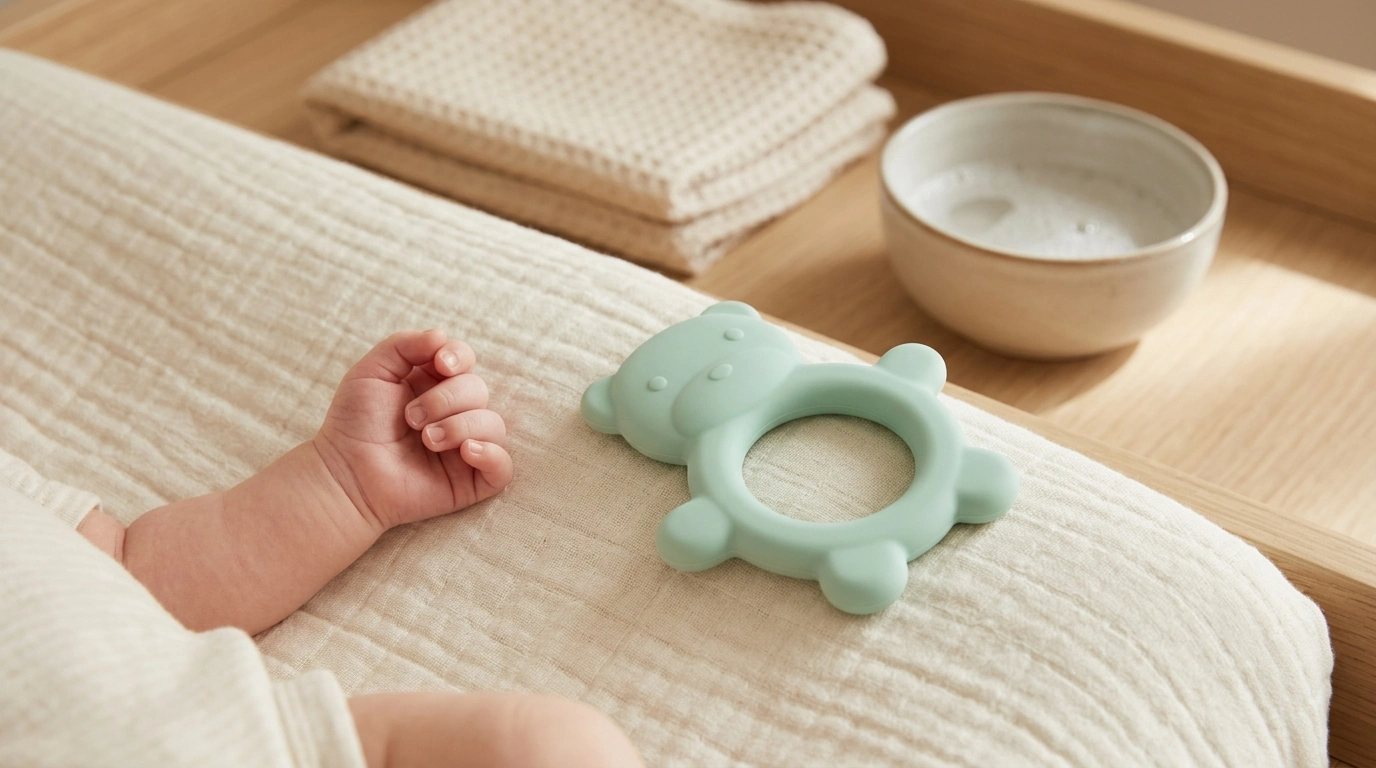
Baby Silicone Teething Toy with Cartoon Design: BPA-Free Comfort for Newborns
Sore gums can make early days feel extra long. A soft, easy-to-grip silicone teether can soothe discomfort while giving little hands a safe sensory toy to explore. Below are practical points to look for, simple ways to use a silicone teether comfortably, and realistic care tips that fit everyday routines. For more guidance, see Snowflake Station | Children’s Hospital of Philadelphia.
Why teething comfort matters from the start
Even before teeth break through, babies may experience gum tenderness that shows up as extra drooling, fussiness, and a strong urge to chew on fingers, sleeves, or blankets. Having a dedicated teether helps redirect chewing to a baby-safe surface instead of household items that may carry germs, lint, or small parts. For further reading, see [PDF] Example Health & Child Safety Products.
Many babies also respond well to gentle, consistent pressure on their gums. A soft silicone teether can become part of a calming wind-down routine—especially when naps and bedtime are harder than usual.
What makes a silicone teether a practical choice
Silicone is popular for a reason: it’s typically soft yet durable, so it can feel gentler on tender gums than hard plastic. For newborns and early infants, a lightweight teether also supports grip practice and hand-to-mouth coordination—skills babies build through repetition.
Another everyday advantage is cleaning. Non-porous silicone is often simpler to wash than fabric teethers that can stay damp after chewing. And when the teether has a playful cartoon shape, it can hold a baby’s attention longer during fussy moments, encouraging independent soothing while you finish a diaper change or prep a bottle.
Safety essentials for newborn-friendly teethers
- Look for baby-intended materials: Choose a teether labeled BPA-free and intended for babies, with smooth edges and no flaking paint or coatings.
- Keep it one solid piece: Avoid teethers with detachable parts; a single-piece design helps reduce choking risk.
- Check size and shape: A teether should be large enough that it cannot fit fully into a baby’s mouth.
- Inspect before each use: Watch for tears, cracks, thinning, or sticky residue; discontinue use if the surface is damaged.
- Supervise every session: Especially for newborns and early sitters, keep teething time within sight and reach.
For additional guidance on teething products, the FDA’s safety tips are a helpful reference: Teething products: what you should know. The American Academy of Pediatrics also shares practical teething comfort recommendations: AAP baby teething tips.
Quick feature check for the Baby Silicone Teething Toy
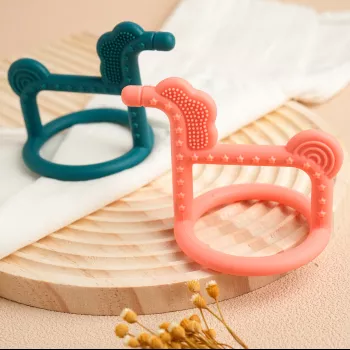
If you want something simple, portable, and made for everyday chewing, the Baby Silicone Teething Toy – BPA Free, Cartoon Design, Safe for Newborns is designed to cover the basics: BPA-free silicone, a cartoon design for visual interest, and a newborn-friendly size and soft texture intended to soothe gums. It’s also an easy budget-friendly backup soother to keep in a diaper bag.
At-a-glance details
| Feature | What it means for daily use |
|---|---|
| Material | Silicone designed for baby chewing; flexible feel against gums |
| BPA-free | Helps avoid bisphenol-A exposure associated with some plastics |
| Cartoon design | Easy to spot in a crib or bag; keeps baby interested |
| Cleaning | Wash with mild soap and warm water; follow seller instructions for any heat-sterilizing limits |
| Age use | Intended for newborns; always supervise and inspect for wear |
How to use a teething toy comfortably (and calmly)
Timing matters. Offer the teether when drooling ramps up or when your baby starts gnawing on fingers. Keeping it within easy reach during wake windows can prevent those frantic “nothing helps” minutes when baby is already overstimulated.
- Try gentle cooling: If product directions allow, briefly chill the teether in the refrigerator (not the freezer). Very cold or frozen teethers can irritate gums.
- Rotate options: Having two teethers in rotation keeps novelty high and ensures one is always clean and dry.
- Use a predictable routine: A simple sequence—teether, cuddle, then feeding or nap—can help babies settle because the pattern feels familiar.
If you’re curious about BPA and plastics in general, the CDC provides an overview here: BPA and plastics basics.
Cleaning and care that fits real life
Teethers do a lot of “work,” so a quick, repeatable cleaning routine is key. After each use, rinse and wash with mild dish soap and warm water, paying attention to grooves and textured areas where milk residue or lint can cling.
- Air-dry fully before storing to help prevent lingering odors.
- Avoid harsh cleaners, fragranced detergents, or abrasive scrubbers that can damage silicone surfaces.
- Store in a clean container or pouch in the diaper bag so it doesn’t pick up crumbs, lint, or dropped-snack dust.
- Replace at the first signs of tearing, thinning, cracking, or stickiness.
When a pediatrician should be contacted
A simple gifting and stocking-stuffer idea
For a slightly bigger gift pairing, combine a practical soother with something cozy like the Girls Knit Sweater Dress with Heart Print & Ruffle Collar for a warm, photo-ready bundle (especially if you know the baby’s size or are gifting for a later season).
Recommended in-stock picks
- Baby Silicone Teething Toy – BPA Free, Cartoon Design, Safe for Newborns
- Girls Knit Sweater Dress with Heart Print & Ruffle Collar
FAQ
Can a newborn use a silicone teether?
Yes—if it’s designed for newborns, appropriately sized, and used with close supervision. Inspect it often and stop using it right away if you notice any tears, cracks, thinning, or sticky residue.
Is it safe to chill a silicone teething toy?
Usually yes when chilled in the refrigerator for a short time. Avoid freezing unless the manufacturer explicitly allows it, since very cold surfaces can irritate gums.
How often should a silicone teether be replaced?
Replace it immediately if there are tears, cracks, thinning, or sticky residue. Otherwise, rotate between teethers and reassess regularly based on visible wear and how well it cleans.









Leave a comment