Summer Petal Cotton Gauze Bibs for Newborns & Toddlers
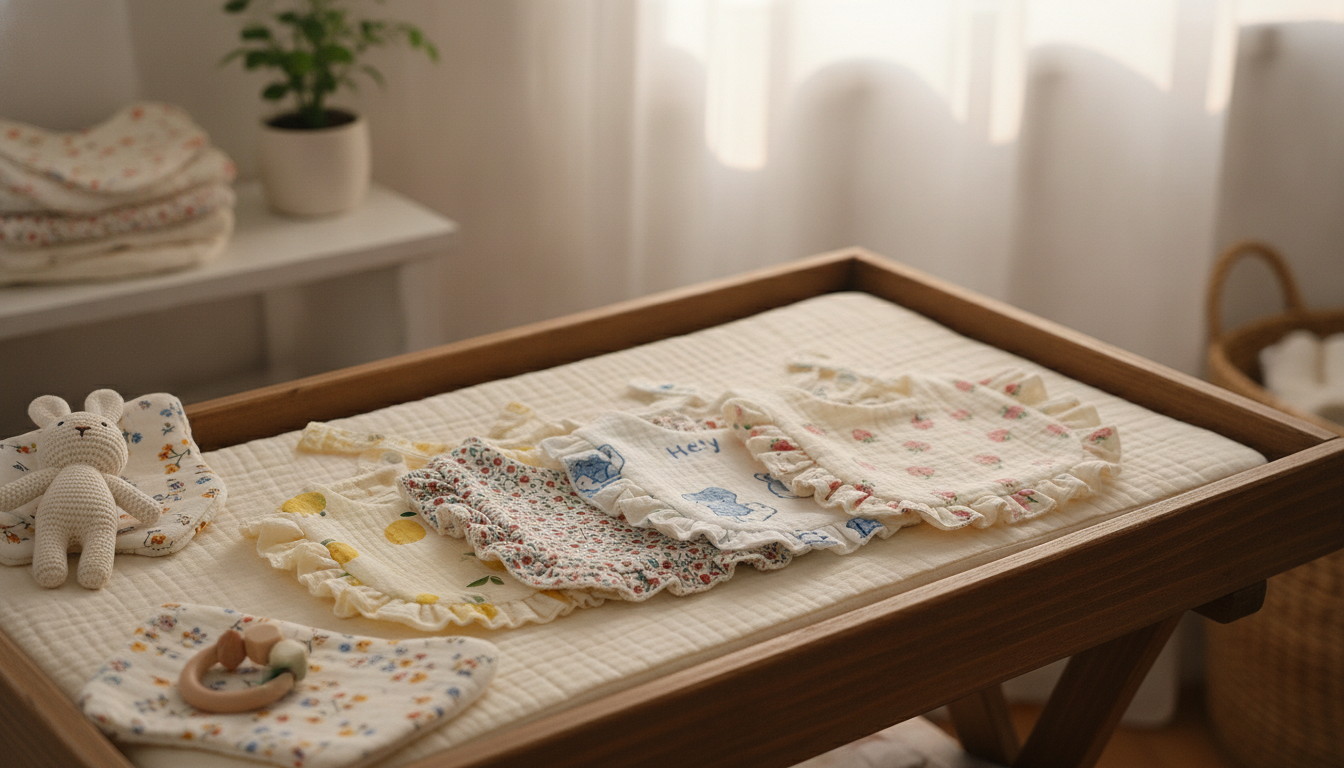
Soft Cotton Gauze Baby Bibs with Summer Petal Design
Lightweight cotton gauze bibs can make everyday feeding and drool management easier—especially in warm weather. This soft, petal-shaped style is designed to sit comfortably around the neck while helping protect outfits from spit-up, teething drool, and small spills for newborns through toddler stages. The result is a bib that feels more like a breathable accessory than a bulky cover, while still doing the daily work parents rely on.
What Makes These Gauze Bibs a Summer Favorite
When temperatures rise, comfort matters just as much as coverage. Cotton gauze is popular for warm months because it feels light, allows airflow, and dries faster than heavier fabrics. Pair that with a petal/collar silhouette, and you get a bib that looks sweet with everyday outfits while still shielding the neckline—where drips and drool love to collect.
- Breathable cotton gauze feel that stays comfortable during warmer days
- Petal-shaped silhouette that looks like a cute collar while covering key drip areas
- Easy to rotate through multiples for daycare, travel, stroller walks, and at-home use
- Gentle on sensitive skin and suitable for frequent outfit changes during teething
At-a-Glance Details
| Feature | Why it matters |
|---|---|
| Soft cotton gauze | Lightweight comfort and airflow for warm climates |
| Petal/collar-style shape | Adds coverage at the neckline with an outfit-ready look |
| Newborn to toddler use | Supports changing needs from early drool to self-feeding messes |
| Everyday practicality | Helps reduce laundry load by protecting tops and onesies |
Material and Comfort: What to Look For in Cotton Gauze
Not all bibs feel the same around a baby’s neck. Since drool bibs sit right at the neckline, small fabric differences can affect comfort—especially for little ones with sensitive skin or neck folds.
- Softness against the neck: Look for a smooth, non-scratchy feel that won’t irritate during long wear.
- Breathability: Gauze tends to release heat and moisture faster than dense fabrics, which can feel better during summer walks and warm indoor days.
- Absorbency for drool and spit-up: A good bib catches drips before they soak into collars, straps, or onesies.
- Flexible drape: A bib that moves with the child often feels less restrictive during tummy time, crawling, and play.
Teething can also increase drool for weeks at a time. For guidance on what’s normal and how to soothe sore gums, see the American Academy of Pediatrics resource on teething at HealthyChildren.org.
Petal Design: Style That Still Works Hard
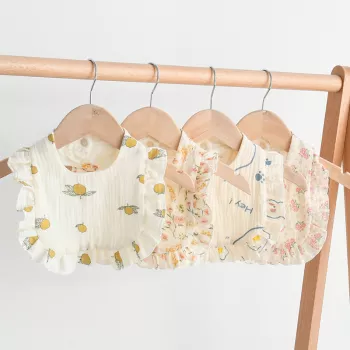
A petal bib is a smart middle ground: it looks like a small collar but still covers the “drip zone” around the neck and upper chest. That makes it easy to keep on for daily routines—without the look (or bulk) of full coverage feeding bibs.
- Collar-like look pairs well with simple onesies, rompers, and dresses without appearing bulky
- Petal edges can help distribute coverage around the neckline, where drool often collects
- Great for photos, outings, and everyday wear when a full-coverage bib feels too large
- Works as a light accessory layer that can be swapped quickly after feeds
For a coordinated outfit feel, pair a petal bib with a sweet collar-forward look like the Girls Knit Sweater Dress with Heart Print & Ruffle Collar—especially for family visits, photos, or cooler evenings.
Fit for Newborns and Toddlers
The best fit is secure but never tight. A bib should sit flat and stay in place through wiggling, cuddles, and car seat time. For newborns, comfort at the neck is the priority; for toddlers, it’s often about a fit that doesn’t feel annoying during busy movement.
- Choose a fit that sits flat without rubbing—especially important for younger babies with sensitive neck folds
- Look for secure, parent-friendly fastening that stays put during wiggling and crawling
- For toddlers learning to self-feed, a comfortable bib increases the chance they keep it on
- If layering over thicker outfits, a slightly roomier neck fit helps maintain comfort
Everyday Use Ideas: Feeding, Teething, and On-the-Go
Keeping a small rotation of bibs makes daily messes less stressful. A quick swap can prevent damp fabric sitting on the skin and can save an outfit before you’re committed to a full change.
- Teething days: Rotate bibs to keep the neckline dry and reduce skin irritation.
- Bottle and breastfeeding support: Catch small drips and spit-up that otherwise soak the collar.
- Snack time for toddlers: Quick coverage for crackers, fruit, and yogurt moments.
- Travel kit: Pack an extra bib in the diaper bag for unexpected messes and outfit changes.
As babies move into solids, bibs become a daily helper for mealtimes and snacks. For nutrition and feeding guidance by age, the CDC’s Infant and Toddler Nutrition hub is a helpful reference: CDC – Infant and Toddler Nutrition.
Care Tips to Keep Gauze Soft
Safety Notes for Bib Use
Pairing and Gifting
If you’re ready to stock up on an everyday go-to, see Soft Cotton Gauze Baby Bibs – Summer Petal Design for Newborns & Toddlers.
FAQ
Are cotton gauze bibs absorbent enough for teething drool?
Yes—cotton gauze can be breathable while still absorbing typical drool and small spit-up drips. On heavy teething days, swapping to a fresh bib as soon as it feels damp helps keep the neckline drier and more comfortable, and the collar-style coverage can catch drool before it reaches the shirt collar.
Can these bibs be used in hot weather without overheating?
Lightweight gauze is commonly chosen for warm weather because it allows more airflow than thicker bib fabrics. For comfort, change damp bibs promptly and pair them with breathable clothing so moisture doesn’t sit against the skin.
How should gauze bibs be washed to keep them soft?
Wash before first use, use a mild detergent, and avoid heavy fabric softeners that can reduce absorbency over time. Air-drying or tumble drying on low heat helps maintain the bib’s softness and shape.








Leave a comment