Starting Solids: Readiness Signs, First Foods & Safety
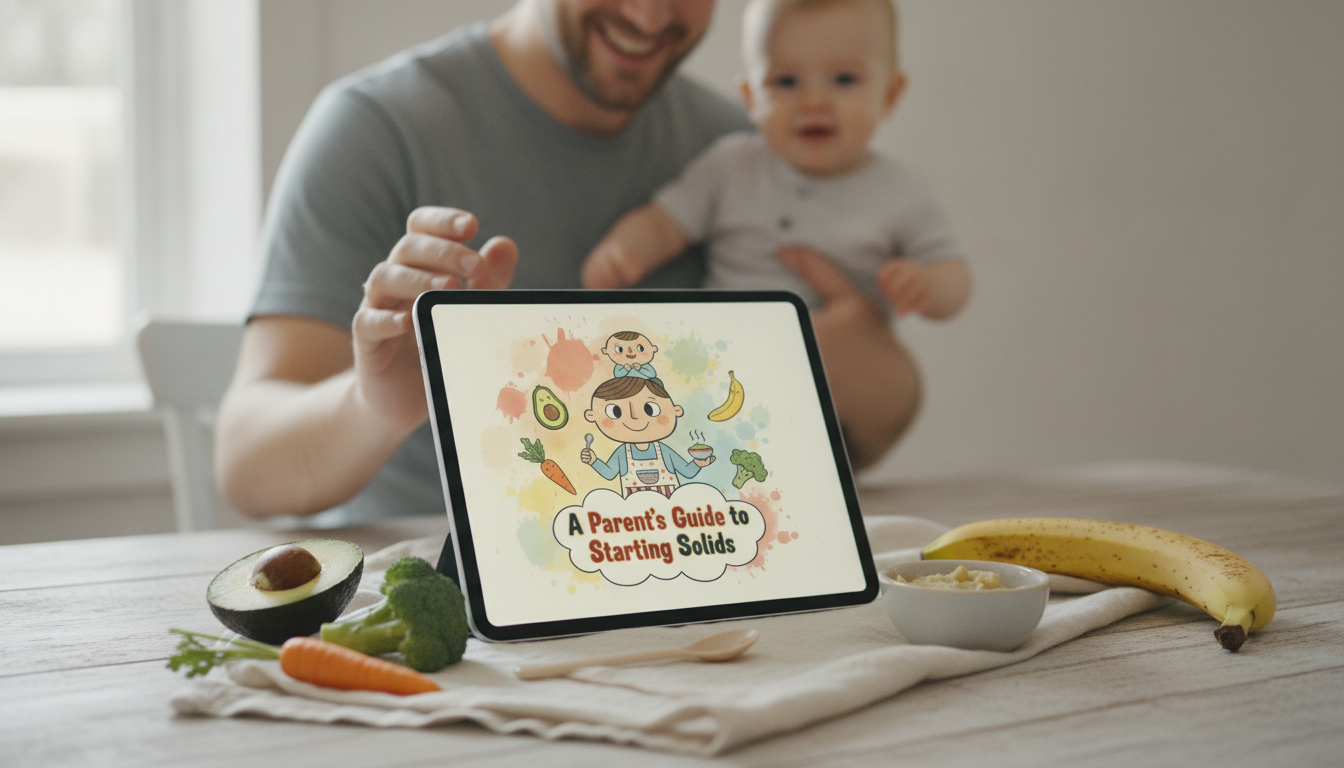
When babies are ready for solids
Starting solids is less about hitting a certain birthday and more about developmental readiness. Many babies are ready around 6 months, while some may be ready a bit earlier—but the clearest signal is a cluster of readiness signs working together, not a date on the calendar. If your baby was born preterm or has any feeding concerns (reflux complications, poor weight gain, oral-motor challenges), confirm timing with your pediatrician or a feeding specialist.
Even after solids begin, breast milk or formula remains the primary nutrition through the first year. Early solids are practice: learning to sit for meals, coordinate chewing and swallowing, and build comfort with flavors and textures.
| Sign | What it looks like | Why it matters |
|---|---|---|
| Sits with support | Can sit upright in a high chair with minimal slumping | Supports safer swallowing and better control |
| Head and neck control | Keeps head steady when upright | Reduces choking risk and helps coordinated feeding |
| Brings hands/toys to mouth | Explores by mouthing objects | Shows oral-motor readiness |
| Shows interest in food | Watches you eat, reaches for food | Signals curiosity and willingness |
| Less tongue-thrust | Doesn’t immediately push spoon/food out | Helps keep food in the mouth to learn swallowing |
What to prepare before the first bite
Confidence with first foods starts with setup. Choose a stable high chair (ideally with a footrest) so your baby’s hips, knees, and feet are supported for steady posture. Plan the first few tries when your baby is alert and calm—not overtired and not frantic with hunger. If needed, offer milk first so solids stay low-pressure.
Keep the routine simple: begin with 1 meal per day and build up to 2–3 meals as interest and skills grow. Portions can be tiny—taste-sized is enough—because the goal is coordination, not calories.
Safety basics matter more than fancy gear: baby upright and supervised, no eating in swings or car seats, and minimize distractions. It also helps to understand that gagging is common when learning textures (often noisy with tongue forward), while choking is an emergency (often silent with trouble breathing). Consider taking an infant first aid/CPR refresher for peace of mind.
First foods that build confidence and nutrition
Around 6 months, iron and zinc become especially important, so it’s smart to prioritize nutrient-dense first foods alongside fruits and vegetables. Great early options include soft meats, well-cooked lentils or beans, egg, iron-fortified infant cereals, tofu, and age-appropriate fish. Then round things out with soft-cooked produce like sweet potato, carrots, avocado, banana, and pear.
Texture progression is a skill-building ladder. Start with very soft textures (purées or smooth mashes), then gradually move toward thicker mashes and soft pieces as your baby shows readiness. Once solids are more than a tiny taste, small sips of water with meals can help, while breast milk or formula remains the main drink.
To make it easier to spot patterns, many families begin with mostly single-ingredient foods. Skip added sugar, keep salt low, and focus on repeat exposure—babies often need multiple tries to accept a new taste.
| Texture stage | Examples | Preparation tips |
|---|---|---|
| Smooth/purée | Sweet potato, pear, yogurt (plain) | Thin with breast milk/formula/water as needed; serve small amounts |
| Thick mash | Avocado, banana, beans/lentils | Mash well; ensure no hard skins or lumps |
| Soft pieces | Ripe peach slices, steamed carrot sticks, omelet strips | Cook until easily squished between fingers; cut to safe shapes |
Allergens: how to introduce them calmly and safely
Common allergens include peanut, egg, dairy, wheat, soy, sesame, fish, and shellfish. For many babies, introducing these foods once they’re developmentally ready for solids can be appropriate. If your baby has severe eczema, a known food allergy, or a strong family history, ask your pediatrician about the safest timing and approach.
Choking hazards and safer ways to serve foods
| Avoid (hazard) | Why it’s risky | Safer option |
|---|---|---|
| Whole grapes/cherry tomatoes | Round and slippery; can block airway | Quarter lengthwise; serve soft and ripe |
| Hard raw apple | Too firm to gum safely | Steam until soft; thin slices |
| Sticky nut butter by spoon | Can stick in throat | Thin and mix into yogurt/purée |
| Hot dog rounds | Coin shape can seal airway | Lengthwise strips; small pieces for advanced eaters |
A simple step-by-step routine for the first weeks
Support when questions pop up (and a clear plan to follow)
For a structured roadmap—readiness, timing, safe serving ideas, and step-by-step guidance—see A Parent’s Guide to Starting Solids (Digital eBook).
Shop favorites
- A Parent’s Guide to Starting Solids | Digital eBook for New Parents
- Girls Knit Sweater Dress with Heart Print & Ruffle Collar
Helpful, evidence-based resources
- CDC — When, What, and How to Introduce Solid Foods
- American Academy of Pediatrics (HealthyChildren.org) — Starting Solid Foods
- World Health Organization — Complementary Feeding
FAQ
Is 4 months too early to start solids?
For many babies, solids make more sense closer to 6 months, when readiness signs are clear. Some babies may start earlier with pediatric guidance, but breast milk or formula remains the main nutrition source throughout the first year.
What are the best first foods for a 6-month-old?
Iron- and zinc-rich foods are strong starters (like soft meats, lentil mash, egg, tofu, or iron-fortified cereal), alongside soft fruits and vegetables (like avocado, banana, sweet potato, or pear). Keep portions tiny and progress textures gradually as skills improve.
How often should allergens be offered after the first try?
If an allergen is tolerated, offer it regularly in baby-safe forms (often a few times per week) to maintain exposure. For babies with severe eczema or other risk factors, confirm the best plan with your pediatrician.









Leave a comment