Kids Refusing Chores? Calm Scripts That Actually Work
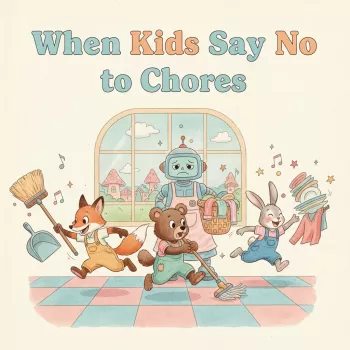
When Kids Say No to Chores: Calm Steps That Build Cooperation
A child refusing chores can feel like defiance, but it’s often a mix of skills, emotions, and timing. With steady routines, clear expectations, and respectful follow-through, chores can shift from daily battles to teachable moments that build responsibility and family teamwork. For more guidance, see Appropriate Consequences for Chore-Ditching Teens.
Why “No” Happens: What the Refusal Is Really Saying
“No” is often less about attitude and more about what’s happening under the surface. Common drivers include overwhelm, unclear instructions, fatigue, hunger, tough transitions, or a strong need for control after a day of being directed. For further reading, see How Can I Get My Kids to Do Chores?.
Sometimes a skill gap looks like defiance. If kids don’t know where supplies live, how long a task should take, or what “clean” actually means, they may stall, argue, or shut down. Power struggles also grow when a simple request turns into a lecture. Brief, calm language lowers resistance and makes it easier to re-engage.
Neurodiversity can add another layer. ADHD and autism can make starting, sequencing, and shifting tasks harder—especially when the instructions are vague or the environment is distracting. In these cases, structure (clear steps, visuals, predictable timing) typically helps more than consequences alone.
For supportive, research-aligned guidance on discipline and communication, see the American Academy of Pediatrics’ Positive Discipline resources and the CDC’s Positive Parenting Tips.
Set the Stage Before Chores: Fewer Surprises, More Buy‑In
Cooperation is easier when chores aren’t random interruptions. Pick a predictable window—after snack, before screens, or right before dinner—so your child can anticipate what comes next instead of feeling ambushed.
- Use “when/then” wording: “When toys are in the bin, then we can head outside.”
- Keep chores small and concrete: one drawer, one basket, one tabletop.
- Do a quick walkthrough once: show where items go and what “done” looks like.
- Offer controlled choices: “Trash or recycling?” “Wipe table or sweep floor?”
If you’d like ready-to-use scripts and routines, the When Kids Say No to Chores | Parenting Guide for What to Do When Child Refuses Chores is a simple reference to keep on your phone for high-friction moments.
What to Do in the Moment: A Script for When Your Child Refuses
When refusal hits, your first job is to keep things from escalating. A calm adult nervous system is a powerful “reset button.” Try this short script flow:
- Regulate first. Pause, lower your voice, and keep your face neutral.
- Name and validate without giving in. “You don’t feel like doing it.”
- Restate the boundary briefly. “Chores come before screens.”
- Offer a choice and a timer. “Start now or in 5 minutes—your pick.”
- Follow through calmly. If refusal continues, remove the competing privilege without extra commentary, then circle back later.
Avoid long explanations during a standoff. Save teaching for when everyone is calm; that’s when kids can actually hear you—and when you’re less likely to over-negotiate.
Follow‑Through That Works: Consequences vs. Punishment
Kids learn best when cause-and-effect is clear. Related consequences work because they connect directly to the task, instead of feeling random or retaliatory.
Make Chores Clear: Age-Appropriate Tasks and Simple Expectations
| Age range | Starter chores | Make it easier | Watch-outs |
|---|---|---|---|
| 2–4 | Put toys in a bin; carry napkins to table; toss diapers/trash | Turn it into a race with a 2-minute timer; do it alongside | Too many steps at once; vague asks like “clean your room” |
| 5–7 | Set table; match socks; water plants; feed pets with help | Use a picture checklist; keep supplies within reach | Perfectionism—focus on “good enough” |
| 8–11 | Unload dishwasher; fold simple laundry; tidy bathroom sink; take out trash | Define “done” (counter cleared, towel hung); use a routine day | Arguing about fairness—use a posted rotation |
| 12+ | Laundry start-to-finish; meal prep steps; yard work; deeper room reset | Agree on standards and deadlines; allow autonomy in method | Over-scheduling—set realistic expectations during busy weeks |
Troubleshooting Patterns: When Refusal Keeps Coming Back
A Ready-Made Plan for the Week
To make the “then” part feel truly rewarding, consider steering it toward active, screen-free play. Outdoor laps and driveway adventures can be a natural next step after the family reset, like a Kids’ 12V Ride On Land Rover with Remote Control and LED Lights or hands-on play with the High-Speed 1/8 Scale Monster Tank RC Car.
Extra Support When You Need It
Predictable, calm consequences reduce testing over time because your child stops hoping that bigger emotions will change the outcome. If you want step-by-step scripts and examples you can use right away, keep the When Kids Say No to Chores | Parenting Guide for What to Do When Child Refuses Chores handy during your new routine.
FAQ
Should an allowance be tied to chores?
Either approach can work: allowance can teach money skills, while basic chores can stay non-negotiable as a family contribution. A practical middle ground is to keep everyday chores expected, and offer optional “extra jobs” for pay—then stay consistent.
What if my child screams or melts down when asked to do chores?
Pause to regulate first, validate the feeling briefly, and shrink the task to a first tiny step with a choice and a short timer. Watch for patterns like hunger, fatigue, or difficult transitions; if intense meltdowns are frequent or escalating, consider professional support.
How long should I wait before giving a consequence when my child refuses?
Keep the window short: one reminder plus a brief choice or timer (for example, 5 minutes), then follow through immediately and calmly. Repeated warnings usually teach kids that “no” earns more chances to delay.










Leave a comment