Kids 12V Ride-On Tractor + Trailer: Backyard Hauling Fun
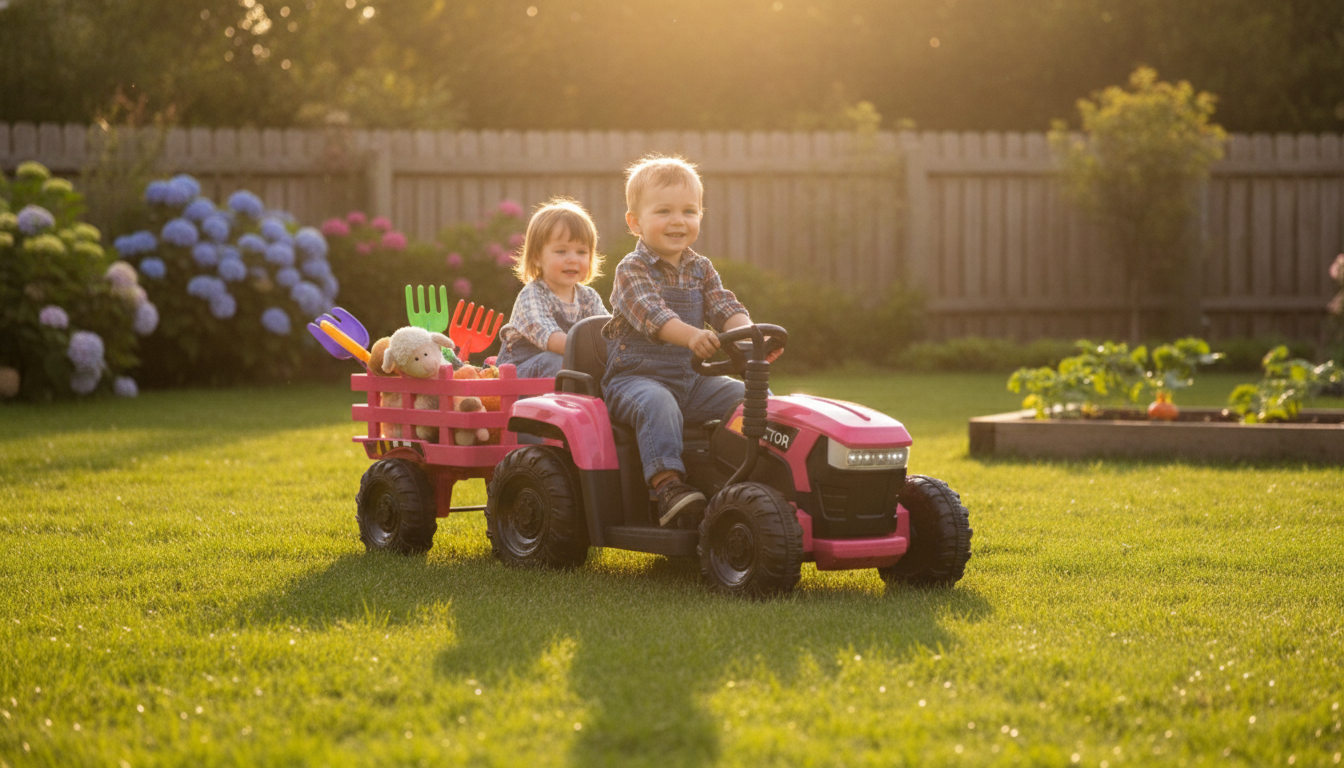
Kids 12V Ride On Tractor with Trailer: Outdoor Farm Play That Hauls More Fun
A ride-on tractor with a trailer adds a whole new layer to outdoor play: kids can drive, load, haul, and “work” around the yard with purpose. A 12V setup typically brings stronger torque than smaller battery options, helping the tractor handle grass, gentle slopes, and a trailer full of lightweight toys. This guide covers what matters most—battery power, safety features, trailer usefulness, and fit—so it’s easier to choose a model that matches your child’s age, space, and everyday play routines.
Why a tractor with a trailer becomes a favorite outdoor toy
A tractor-and-trailer combo turns simple laps around the driveway into a mission. The trailer creates a reason to move from place to place, which naturally stretches playtime and keeps kids engaged.
- Hauling play builds longer, more imaginative sessions: moving leaves, toy bricks, garden tools, or stuffed animals from “field to barn.”
- The trailer adds cooperative play: one child drives while another loads and unloads (with clear rules and supervision).
- Supports gross motor skills and planning: steering, turning radius, backing up, and “parking” at a station.
- The farm theme stands out: especially if the toy garage already has plenty of cars and trucks.
Spotlight: Kids 12V Ride On Tractor with Trailer
The Kids 12V Ride On Tractor with Trailer is built for outdoor driving and pretend farm jobs, with a matching trailer designed for towing lightweight cargo. It’s a strong pick for families who want more than cruising—loading, hauling, and “delivery” play is the main event.
For households with a yard, long driveway, patio, or cul-de-sac space, a tractor encourages routines kids love: morning “supply runs,” moving tools to the “worksite,” and end-of-day cleanup runs with a trailer full of balls and yard toys.
Quick details to confirm before purchase
| What to check | Why it matters |
|---|---|
| Age/size fit | Comfort and control depend on seat size, pedal reach, and steering height. |
| Surface type | Grass and uneven ground may need stronger traction and torque than smooth pavement. |
| Trailer attachment | A secure hitch and stable wheelbase reduce tipping and improve tracking behind the tractor. |
| Battery and charger | Charging time and battery life affect how often it gets used during the week. |
| Space for turns | A tractor-and-trailer combo needs more room to turn than a single ride-on car. |
What 12V power means for real-life play
Voltage isn’t everything, but 12V ride-ons usually feel more capable in everyday backyard conditions than lower-voltage options. That matters most when a child is learning to start, stop, and steer smoothly—especially while towing.
- More confident starts and stops: helpful as kids learn pedal control and figure out how the trailer changes handling.
- Better performance across common outdoor surfaces: particularly when transitioning from concrete to lawn.
- More enjoyable towing (within reason): the tractor can keep moving without feeling bogged down by small loads.
Practical tip: keep cargo lightweight—think balls, small buckets, plush toys, empty pots, or garden gloves. Overloading a trailer can make turning clumsy and reduce traction, especially on thicker grass.
Safety and comfort basics to prioritize
Ride-on toys are most fun when the play area is set up for success. A few consistent rules and a comfortable driving position go a long way toward preventing bumps, tip-overs, and frustration.
- Supervision and boundaries: set a clear “farm route” away from pools, streets, stairs, driveways with traffic, and steep slopes. For general toy safety guidance, review CPSC toy safety resources.
- Start slow: practice driving without cargo first; add small loads only after turning and braking are consistent.
- Footwear matters: closed-toe shoes help with grip and pedal control.
- Comfort checks: a supportive seat and easy-to-hold steering make longer play sessions feel better and reduce “sloppy steering” from fatigue.
- Battery handling: charge in a dry area, follow the manufacturer’s instructions, and store the charger out of reach.
Outdoor play is a big plus for kids’ routines. For broader outdoor injury-prevention tips, see the American Academy of Pediatrics outdoor safety guidance.
Trailer play ideas that keep kids engaged
The trailer is what turns a ride-on into a job-based, repeatable game. Rotating a few “farm tasks” helps the toy feel new without adding anything complicated.
Setup and care tips that extend the fun
When a different ride-on might fit better
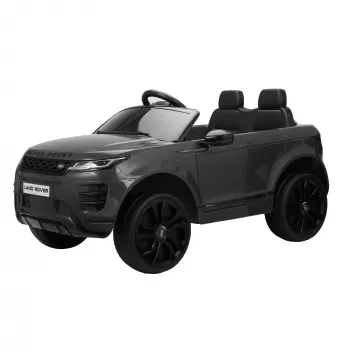
- If driveway cruising and “car play” is the priority, the Kids’ 12V Ride On Land Rover with Remote Control and LED Lights can better match that vibe, especially for kids who love a realistic SUV look.
- If the goal is fast, hobby-style driving with precision control, a high-performance RC option like the High-Speed 1/8 Scale Monster Tank RC Car fits older-kid play (with its own safety expectations and a different kind of supervision).
- Many families enjoy pairing a hauling ride-on (tractor) with a second toy focused on speed or role-play variety, so kids can choose a “job day” or a “race day.”
FAQ
How much can the trailer carry?
Stick to lightweight cargo and always check the product’s stated load limits. Safe picks include toys, small buckets, plush items, and other low-weight items that won’t shift suddenly during turns.
Can a 12V ride-on tractor drive on grass?
Often, yes—12V models typically handle lawns better than lower-voltage ride-ons. Results still depend on grass thickness, slope, tire traction, rider weight, and how much is in the trailer.
How long does a 12V ride-on typically run per charge?
Many 12V ride-ons land in a practical range of about 45–90 minutes per charge, but runtime varies with surface, total weight, towing load, and temperature. Following the manufacturer’s charging guidance and keeping a steady charging routine helps maintain consistent playtime.









Leave a comment