Kid Safety Scissors with Sheath for Easy Paper Crafts
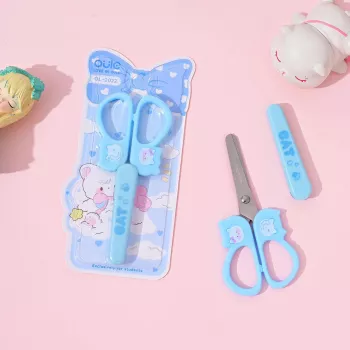
Cartoon Children’s Safety Scissors with Sheath: A Safer Way to Practice Cutting
Early cutting practice is a classic part of childhood—helping kids build hand strength, coordination, and patience while making something they can proudly show off. Cartoon children’s safety scissors with a sheath are designed to make that practice feel approachable and better controlled, especially for quick craft sessions at home, classroom-style activities, and on-the-go boredom busters. With a playful look and a protective cover for storage, they’re a simple tool that supports safer routines when an adult sets the rules and stays close.
What Makes These Safety Scissors Kid-Friendly
Not all scissors feel inviting to beginners. A cartoon-themed design can reduce hesitation and encourage kids to participate in cutting practice without turning it into a struggle. The size and weight are also important—small hands do better with a lightweight tool they can open and close without overgripping.
- Cartoon-themed look that motivates kids to try cutting during craft time.
- Protective sheath to reduce accidental contact during storage, travel, and cleanup.
- Comfortable for small hands to support early fine-motor development (with adult supervision).
- Great for basic paper tasks like worksheets, cut-and-paste activities, and simple art projects.
- Lightweight and portable for pencil cases, desk organizers, and craft bins.
Common Uses at Home, School, and On the Go
These scissors are best for everyday kid crafts—simple, satisfying projects that don’t require heavy cutting power. When they’re treated like a “sit at the table” tool (not a toy), they fit neatly into routines that keep kids focused and hands busy.
- Cutting paper shapes for crafts, collages, and beginner scrapbooking pages.
- Trimming along thick worksheet lines to practice control and build hand strength.
- Creating greeting cards, classroom-style projects, and seasonal decorations.
- Packing in a travel activity bag for quiet-time crafts (store with the sheath on between uses).
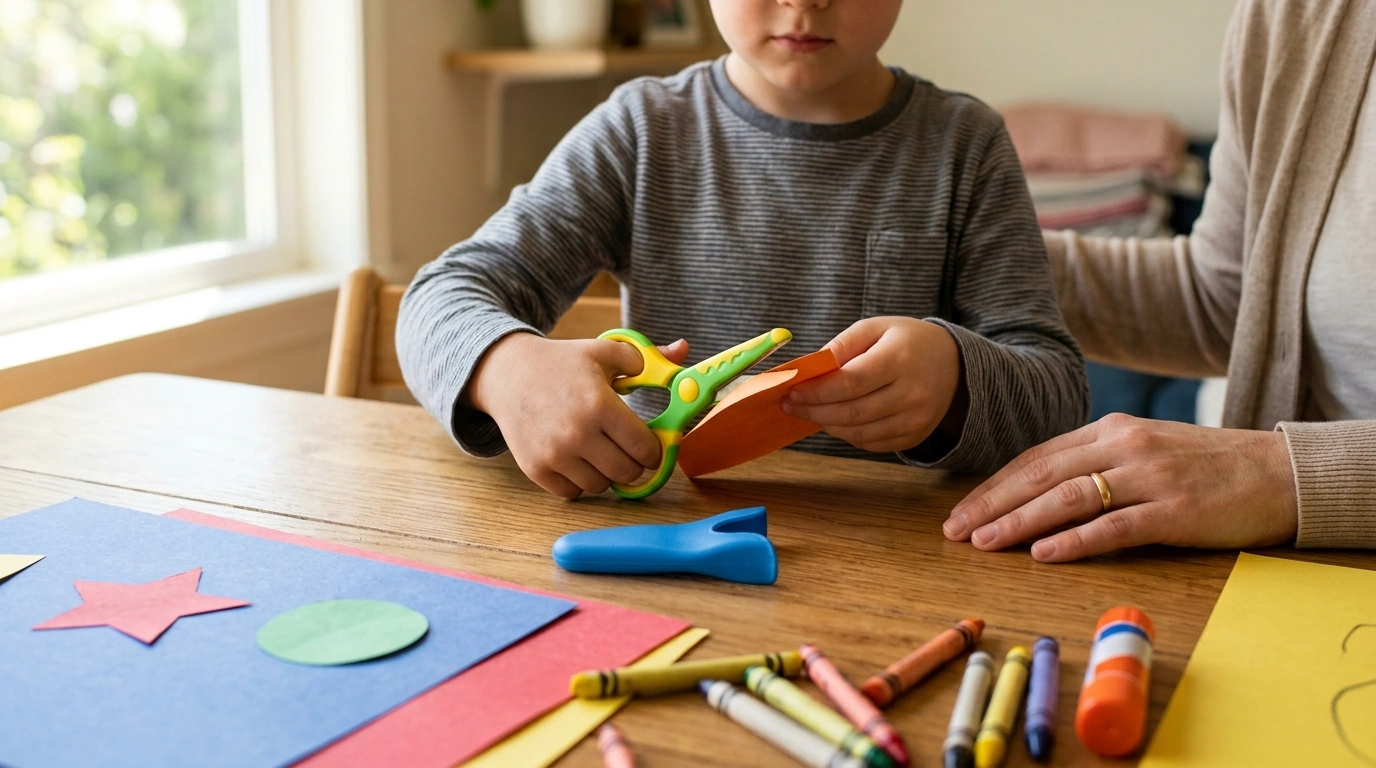
- Pairing with kid-safe glue sticks, crayons, and construction paper for a complete craft session.
Safety and Supervision Tips That Matter
“Safety scissors” still require responsible use. The goal is to help kids learn habits that transfer to more advanced tools later—calm posture, focused attention, and careful passing. For broader child safety guidance, see resources from the American Academy of Pediatrics (HealthyChildren.org) and the U.S. Consumer Product Safety Commission.
- Supervise all cutting, especially for younger children or first-time users.
- Practice “sit and cut” habits: staying seated at a table reduces slips and distractions.
- Teach correct passing: handle-first, blades closed, sheath on.
- Set a clear rule: scissors stay at the craft table—no running and no pretend play.
- Store immediately after use: wipe residue (like glue) and replace the sheath before putting them away.
How to Teach Cutting Skills Step by Step
Progress happens faster when kids work in small stages. A few minutes of focused practice is often better than a long session that ends in frustration. Keep instructions short, demonstrate once, then let them try with guidance.
1) Start with snips
Use paper strips and invite kids to make short snips along the edge. This builds confidence with opening and closing the blades.
2) Move to straight lines
Draw bold, high-contrast lines (thick marker works well). Straight lines help kids coordinate both hands: one to cut, one to hold and turn the paper.
3) Introduce simple curves
Try wide arcs or simple circles. Curves teach gentle wrist movement and steady pacing.
4) Try guided shapes
Squares, triangles, and easy cartoon outlines encourage direction changes—cut, pause, rotate the paper, then continue.
5) Celebrate control over speed
Slow, accurate cutting reduces tearing and jagged edges. Praise careful movement and safe handling rather than “fast cutting.”
Care, Storage, and Keeping the Sheath Useful
The sheath is only helpful if it becomes part of the routine. Build a predictable start-and-finish sequence: set up the workspace, take the scissors out, cut only at the table, then sheath on and put away.
| Item | Why it helps | Tip |
|---|---|---|
| Protective sheath | Reduces contact during storage and transport | Put it on immediately after finishing a cut |
| Stable table surface | Limits slips and improves accuracy | Use a non-slip mat under paper if available |
| Thicker paper (construction paper) | Easier for beginners to control | Start thick, then move to standard printer paper |
| Clear workspace | Prevents accidental bumps | Keep drinks and toys off the cutting area |
| Adult supervision | Supports safe habits and technique | Model safe passing and “blades down” storage |
Product Snapshot
If you’re adding a cutting tool to a craft bin, travel activity bag, or classroom-style practice setup at home, Cartoon Children’s Safety Scissors with Sheath are an easy, low-cost pick at $3.01 (USD), currently in stock. They also work well as a small add-on for party favor activity packs or rainy-day craft kits.
- High-Speed 1/8 Scale Monster Tank RC Car
- Kids’ 12V Ride On Land Rover with Remote Control and LED Lights
- Girls Knit Sweater Dress with Heart Print & Ruffle Collar
FAQ
What age are safety scissors appropriate for?
Many kids can start supervised cutting practice around preschool age, often roughly 3–6, but readiness depends on attention span and hand control. Begin with simple snips on thicker paper and increase difficulty gradually as technique improves.
Can kids use these scissors for cardboard or fabric?
They’re best for paper and light craft materials. Thick cardboard or fabric can be difficult to cut and may lead to frustration or rough, uneven edges.
How should the sheath be used and stored?
Put the sheath on immediately after use and store the scissors in a pouch or craft bin so they don’t rattle around loose. When not supervised, keep scissors stored out of reach of very young children.









Leave a comment