Family Budgeting With Kids: Allowance, Save/Spend/Share
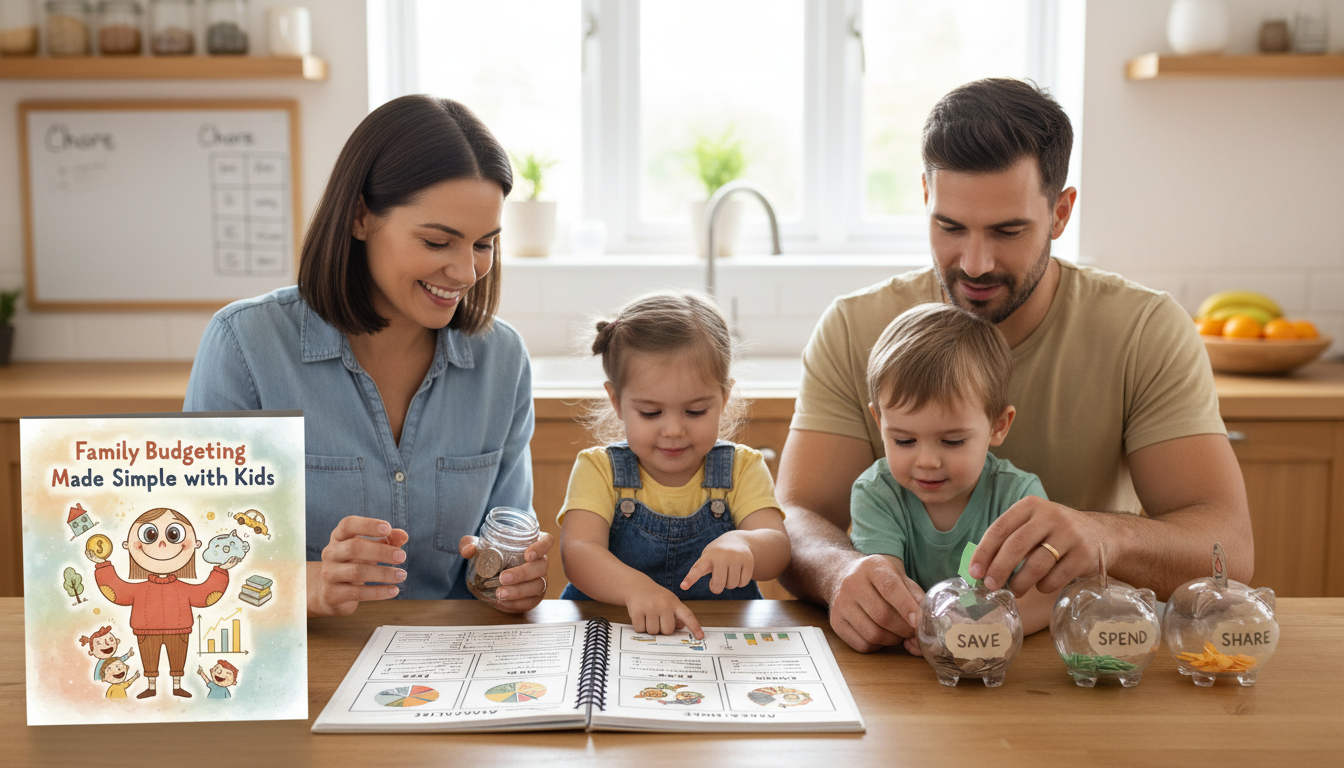
Why budgeting works better when kids are included
Family budgeting gets easier when kids aren’t on the outside guessing what’s “allowed.” When they understand the plan, they can participate in it—making fewer impulse requests and more thoughtful choices.
- Fewer surprises: Kids learn what money is for (needs, savings, giving, fun) and why some requests are a “not today,” not a “never.”
- Real skills early: Planning, patience, comparing options, and learning that money is finite all grow through practice.
- A shared language: Simple categories like “save/spend/share” can replace drawn-out negotiations.
- More consistency: A predictable routine works better than occasional lectures and makes allowance more meaningful.
Set the foundation: a simple family money routine (15 minutes a week)
Keep the routine short enough to maintain. A weekly check-in that’s tied to an existing habit is more likely to stick than a complicated monthly overhaul.
- Pick a predictable time: After dinner on Sundays or before school on Mondays works well.
- Use three steps: (1) review what was spent, (2) plan upcoming needs, (3) set one small goal for the week.
- Keep numbers visible: One page or one screen that shows categories and progress in a way kids can “read” quickly.
- Assign small roles by age: Younger kids can color-code categories; older kids can total receipts or update a savings tracker.
Allowance that teaches, not just pays
The most effective allowance is a training tool. It gives kids a safe place to make small money decisions now, before the stakes get bigger.
- Decide the purpose: Allowance works best as money-management practice—not a reward for basic family responsibilities.
- Choose a schedule: Weekly is easier for younger kids; biweekly or monthly can work for teens managing larger categories.
- Set clear boundaries: Define what allowance covers (snacks, small toys, apps) versus what parents cover (school needs, basic clothing).
- Limit advances: Create a short exception list (birthday gifts, school trip) so the routine doesn’t become a constant renegotiation.
Allowance options and what they teach
| Approach | How it works | Best for | Watch-outs |
|---|---|---|---|
| Fixed allowance | Same amount on a set day | Building consistent habits | Needs clear boundaries on what it covers |
| Earned add-ons | Base allowance + optional extra tasks | Motivation and effort-reward links | Don’t tie to basic chores like cleaning personal messes |
| Goal-based boosts | Temporary increase for a specific savings goal | Big-ticket goals (bike, game console) | Avoid making it permanent without review |
| Teen budget transfer | Monthly amount to manage categories (clothes, outings) | Ages 13+ learning real trade-offs | Start small and increase after successful months |
Teach three buckets: Spend, Save, Share
“Where did it go?” gets easier to answer when money has a job before it’s spent. Three buckets keep the system simple enough for kids to use independently.
- Start with memorable percentages: For example, 50% spend, 40% save, 10% share—then adjust as kids mature.
- Match the method to the age: Envelopes or jars for younger kids; a simple tracker for older kids.
- Define “save” clearly: Include short-term goals (a toy) and longer-term goals (a bigger item or future activity).
- Make progress visible: A chart or checklist often motivates better than reminders.
Make budgeting concrete with kid-friendly categories
Adult budget lines like “discretionary spending” don’t mean much to a child. Build categories from the situations they actually face so they can practice decisions in real time.
Everyday teaching moments that don’t feel like lectures
- At the store: Compare two options and ask what’s gained or lost by choosing one.
- Before checkout: Have kids predict the total, then compare it to the receipt.
- After a purchase: Do a quick reflection: “Worth it?” or “Would you pick the same thing next time?”
- For subscriptions and apps: Explain recurring costs and how small charges add up over time. For additional guidance on digital purchases and family planning, see resources from the Federal Trade Commission and the American Academy of Pediatrics.
Tools that simplify the process (printable + digital)
For age-based money skills and ideas you can match to your child’s development, the Consumer Financial Protection Bureau’s Money as You Grow is a helpful reference.
Printable eBook bundle: Family Budgeting Made Simple with Kids
If you want a ready-to-use system that keeps routines consistent across caregivers, Family Budgeting Made Simple with Kids (printable eBook) is designed to make the plan visible and repeatable. The printable pages are easy to reuse as kids grow, and the structure helps reduce back-and-forth by setting clear expectations for allowance, saving goals, and spending categories.
To keep the weekly rhythm running smoothly (especially in busy seasons), pair it with Using AI to Organize Kids’ Schedule (digital guide)—a practical way to streamline routines so money check-ins don’t get crowded out by everything else.
For a simple “budget station” at home, a dedicated place for trackers, pencils, and envelopes helps kids stay involved. The Creative Hollow Star Desk Organizer can keep the tools in one spot so the weekly check-in is quick to start and easy to maintain.
Common roadblocks and quick fixes
FAQ
What’s a good age to start teaching kids about budgeting?
Preschool is great for simple categories and choices (“save or spend?”), elementary kids can use jars/envelopes and goal charts, and tweens/teens can track real categories like outings or clothing. Starting early matters more than doing complicated math.
Should allowance be tied to chores?
A practical approach is separating basic family responsibilities (unpaid) from optional extra tasks (paid). Many families use a hybrid: a small base allowance to practice budgeting, plus earnable add-ons for extra effort.
How can kids save for big goals without losing motivation?
Use a visual tracker, break the goal into milestones, and keep the timeline realistic. For example, a $60 goal can be split into $5 per week for 12 weeks, with progress celebrated at each $15 milestone.









Leave a comment