Adjustable Bedside Bassinet: Mesh Sides & Storage Guide
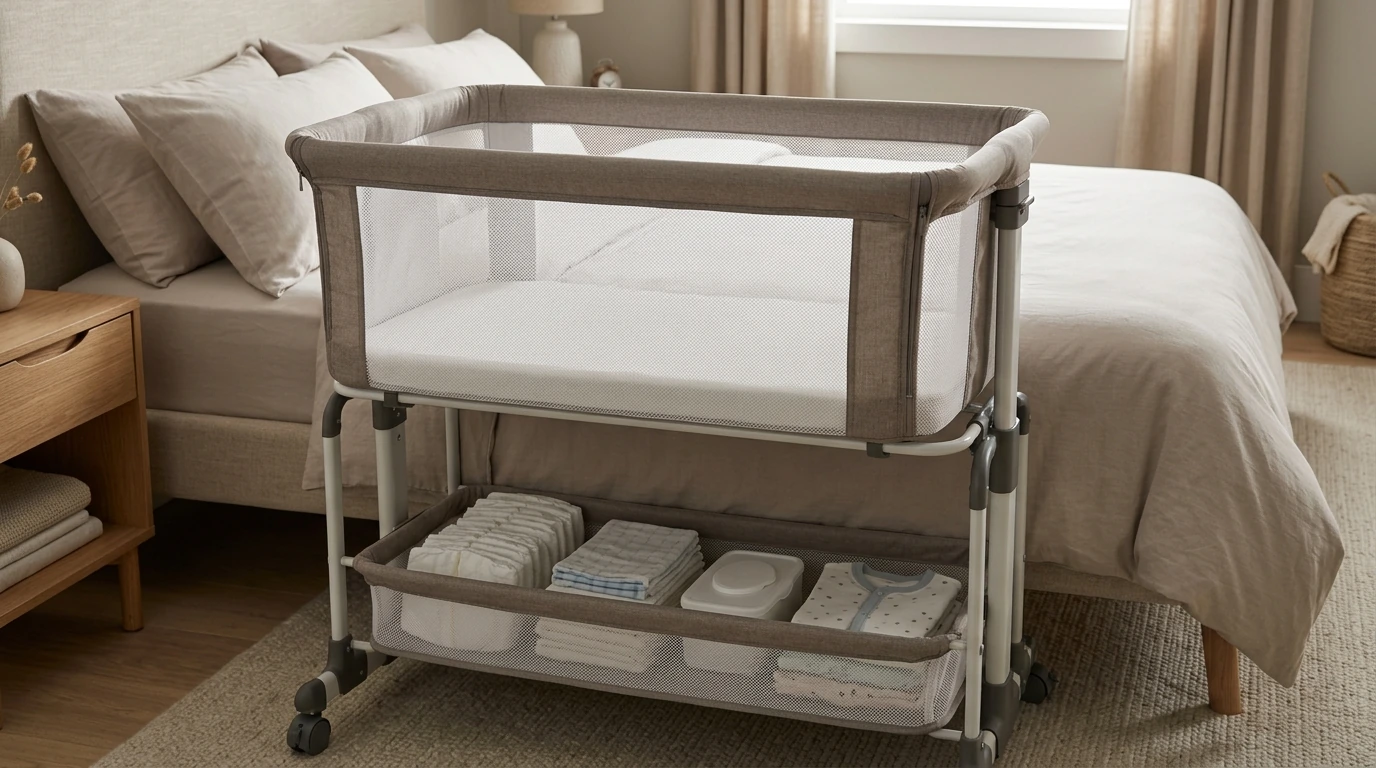
Adjustable Bedside Bassinet Sleeper with Mesh Sides & Storage
A bedside bassinet that adjusts in height, uses breathable mesh sides, and adds built-in storage can simplify nighttime care while keeping essentials within reach. The right setup supports quicker soothing and feeding, fewer fully-awake moments, and a more organized sleep space—without giving up a separate, dedicated place for baby to rest.
What an adjustable bedside bassinet sleeper is designed to do
An adjustable bedside bassinet sleeper is built to keep baby close to the bed for nighttime care while maintaining a separate sleep surface. That “nearby but separate” approach aligns with widely shared safe sleep guidance encouraging room-sharing without bed-sharing for many families; review current recommendations from the American Academy of Pediatrics.
- Keeps baby close for nighttime soothing and feeding while maintaining a separate sleep space.
- Height adjustment helps align the bassinet with different bed frame and mattress heights.
- Mesh sides support airflow and make it easier to check on baby without turning on bright lights.
- Built-in storage reduces trips across the room for diapers, wipes, burp cloths, and spare pajamas.
Key features that matter most for everyday use
Small design details can make a big difference at 2 a.m. Focus on features that improve access, stability, and visibility—while preserving a firm, flat sleep surface and a clutter-free interior.
- Height range and adjust increments: More positions can make it easier to get a level, stable bedside fit.
- Side access: A bedside-style opening or lower side can make transfers gentler during overnight wakeups (use only as instructed by the manufacturer).
- Breathable mesh panels: Look for wide mesh coverage for visibility and airflow.
- Storage capacity and layout: A larger basket or shelf that stays accessible from the bedside position is more useful than a small pocket.
- Mobility and stability: Wheels can help reposition for cleaning, while a strong frame and secure locks help prevent drift.
- Mattress fit: A firm, flat surface and snug fit are important for safe sleep.
Quick feature check for a bedside setup
| Feature | Why it helps at night | What to check before buying/using |
|---|---|---|
| Adjustable height | Comfortable reach and smoother transfers | Bassinet can align with bed height and remain level |
| Mesh sides | Better airflow and easier visibility | Mesh panels are taut and fully secured; no tears or gaps |
| Storage basket | Less clutter and fewer trips out of bed | Basket stays clear of floor hazards; easy to access from the bedside |
| Stable frame/locks | Prevents shifting during use | Locks engage securely; unit doesn’t wobble when gently pushed |
| Easy-clean surfaces | Faster cleanup after spit-ups and diaper leaks | Removable, washable fabrics (follow care instructions) |
How to set it up beside a bed for a secure fit
A bedside sleeper should feel “anchored” in day-to-day use—no rolling, drifting, or tilting. Before the first night, take a few minutes to set height and placement carefully.
- Measure bed height: Include the top of the mattress, not just the frame.
- Adjust height before placing baby inside: Ensure the sleep surface is level and stable at the chosen setting.
- Give yourself clearance: Avoid getting pinned by nightstands or walls when adjusting or reaching in.
- Engage wheel locks (if present): Confirm the bassinet does not roll or slide during normal bedside movement.
- Keep cords away: Move curtains, monitor cables, and phone chargers out of the bassinet area.
- Use only approved mattress/accessories: A correct fit reduces gaps and keeps the sleep surface consistent; the U.S. Consumer Product Safety Commission is a helpful resource for safe sleep and infant product considerations.
Using mesh sides for visibility and calmer nighttime checks
Mesh panels do two practical things at night: they help you see baby easily, and they encourage airflow around the sleep area. For many caregivers, that means fewer “full sit-up” checks and less temptation to turn on overhead lights.
- Mesh panels make it easier to confirm baby’s position and breathing without fully sitting up.
- A dim, warm night light paired with mesh visibility can reduce full wake-ups for both baby and caregiver.
- Keep the sleep area clear: avoid pillows, loose blankets, and soft items inside the bassinet; the NIH Safe to Sleep program offers clear reminders on creating a safer sleep space.
- If baby begins to roll or shows signs of outgrowing the bassinet, follow manufacturer guidance for transition timing.
Storage that actually reduces stress: what to keep in the basket
Storage is most helpful when it prevents “search mode” during wakeups. Aim for a small, repeatable system: stock essentials, keep items grouped, and refill once per day so nights stay simple.
Cleaning and maintenance for long-term use
A practical pick for nightly routines: adjustable bedside sleeper with mesh sides & storage
Shop: Adjustable Bedside Bassinet Sleeper with Mesh Sides & Storage (currently $321.01).
Also available
- Girls Knit Sweater Dress with Heart Print & Ruffle Collar (currently $18.97).
FAQ
How do I know the bassinet is at the right height next to the bed?
The correct setting is one where the sleep surface is level and stable, aligned for bedside access as the manufacturer describes. After locking the height and wheels (if present), gently push the unit to confirm it doesn’t wobble, drift, or tilt.
Are mesh sides better than solid sides for a bedside bassinet?
Mesh sides can improve airflow and make it easier to see baby during quick checks. Overall safety still depends on secure construction, a firm flat mattress with a snug fit, and keeping the sleep space free of loose items.
What should be stored in the bassinet basket—and what should not?
Store helpful essentials like diapers, wipes, burp cloths, and spare clothes in the basket so they’re within reach. Avoid cords, heavy objects, medications, and small loose pieces—and never place any items inside the baby’s sleep area.








Leave a comment