6 Kids’ Balance Stepping Stones for Sensory Obstacle Play
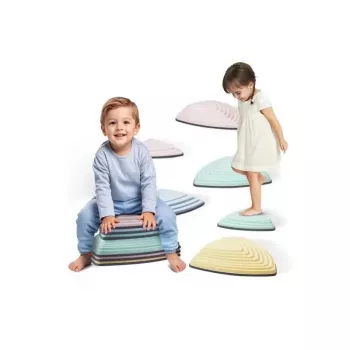
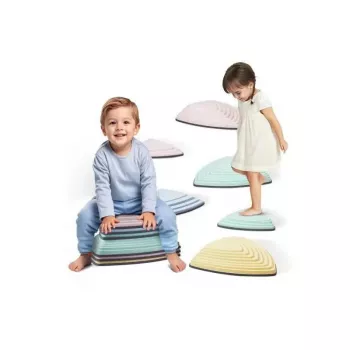
6-Piece Kids Balance Stepping Stones for a Sensory Obstacle Course
Balance stepping stones can turn everyday floor space into an active-play path that supports coordination, body awareness, and imaginative movement games. A simple “step here, pause there” route helps kids practice controlled weight shifting, midline crossing, and pacing—without needing a big playroom or a full gym setup. If you’re building a sensory obstacle course at home, these stones also make it easy to adjust difficulty in seconds by changing spacing, direction, or rules.
For a quick, ready-to-go option, see the 6-Piece Kids Balance Stepping Stones for Sensory Obstacle Course and set up a new course whenever your child needs a movement break.
What These Stepping Stones Are Designed To Do
Stepping stones are built for deliberate stepping—not speed. That’s what makes them such a useful tool for early balance practice and sensory-style play.
- Create a simple obstacle-course route that encourages slow, careful steps and steady weight transfer.
- Support gross-motor skills such as balance, coordination, and bilateral movement (left-right control).
- Add sensory variety by changing spacing, direction, and challenge level (low-to-higher steps, turns, stops).
- Work for independent play, sibling games, or guided activities with an adult.
- Pack away easily and rearrange into new routes to keep play feeling “new.”
For context on movement skill development over time, the CDC’s milestone resources can be helpful when planning age-appropriate challenges: CDC: Important Milestones (movement and physical development).
What Comes in the 6-Piece Set
A 6-piece set is a flexible “just enough” quantity: you can build clear paths, loops, and mini-challenges without needing a large footprint.
- Six stepping stones you can arrange in lines, circles, zigzags, or “islands” across a room.
- Use close spacing for confidence-building and wider spacing for bigger steps and planning.
- Pair with easy add-ons you likely already have—painter’s tape lines, pillows, or a scarf “finish line.”
Easy Course Setups Using a 6-Piece Stepping-Stone Set
| Setup | How to Arrange the Stones | Skill Focus | Make It Easier / Harder |
|---|---|---|---|
| Straight Path | Place stones in a line with equal spacing | Controlled stepping, confidence | Easier: closer spacing; Harder: wider spacing |
| Zigzag Trail | Alternate left-right positions to form a zigzag | Weight shift, turning control | Easier: gentle zigzag; Harder: sharper angles |
| Circle Loop | Arrange stones in a ring and walk around | Curved walking, pacing | Easier: larger circle; Harder: smaller circle with tighter turns |
| Stop-and-Go Islands | Scatter stones; pause for 3 seconds on each | Balance holds, self-regulation | Easier: allow toe taps; Harder: one-foot pauses |
Who It’s For and When It’s Most Useful
A stepping-stone course fits naturally into everyday routines—especially when kids need movement to reset their focus.
- Toddlers and preschoolers building early balance confidence through low-risk stepping games.
- Kids who enjoy movement breaks and do best with clear “missions” (step, pause, turn, reach).
- Playrooms, classrooms, and therapy-inspired home routines that benefit from repeatable movement patterns.
- Rainy days or limited outdoor time—set up a route in hallways, bedrooms, or living areas (with clear space).
If you’re balancing indoor play with outdoor adventures, a ride-on option can complement obstacle-course days: Kids’ 12V Ride On Land Rover with Remote Control and LED Lights.
Safety and Setup Tips for Indoor and Outdoor Play
A great obstacle course starts with a calm setup. Most bumps happen when kids get excited and rush, so simple “course rules” matter as much as placement.
- Choose a clear area: remove loose rugs, cords, and clutter near the course.
- Start on a stable surface; on smooth floors, confirm each stone sits flat before play begins.
- Introduce “slow feet” rules: step fully onto a stone before moving to the next.
- Use barefoot or grippy socks indoors to reduce slipping (based on your flooring and household preference).
- For outdoor use, place on level ground and avoid wet or uneven surfaces that may wobble.
- Supervise early attempts and keep the first course short with close spacing.
For broader guidance on healthy activity habits for kids, the AAP provides practical recommendations: AAP HealthyChildren.org: Fitness and Activity for Children.
Sensory Obstacle Course Ideas (No Extra Equipment Required)
When kids repeat the same route, interest can fade—so rotate the “game layer” on top of the same six stones. That keeps practice consistent while making the experience feel different.
Ways to Adjust Difficulty as Skills Improve
Care, Storage, and Keeping Play Consistent
Product Snapshot
- Product: 6-Piece Kids Balance Stepping Stones for Sensory Obstacle Course
- Best for: quick obstacle-course builds, balance practice, and active play in small spaces.
- Works well with: simple floor markers (tape), a timer for games, and imaginative prompts.
FAQ
Are balance stepping stones safe for indoor floors?
They can be safe when set up on a clear surface and checked to ensure each stone sits flat before play. Start with close spacing, supervise early use, and reinforce “slow feet” rules; barefoot or grippy socks can also help reduce slipping depending on your flooring.
What age is appropriate for a 6-piece stepping-stone course?
Toddlers can start with very close spacing and optional hand support, while older kids can widen gaps and add turns, pauses, or carry-and-balance tasks. Ability level and supervision matter more than a strict age cutoff.
How can a sensory obstacle course stay interesting over time?
Rotate layouts (line, zigzag, loop), add themes (lava, jungle, space), and switch game rules like stop-and-go pauses or traffic-light pacing. Simple dual tasks—carrying a toy or following color/animal prompts—also keep kids engaged without adding equipment.








Leave a comment