12 vs 14 Inch Toddler Balance Bike: Fit, Safety, Skills
What a toddler gains from a balance bike
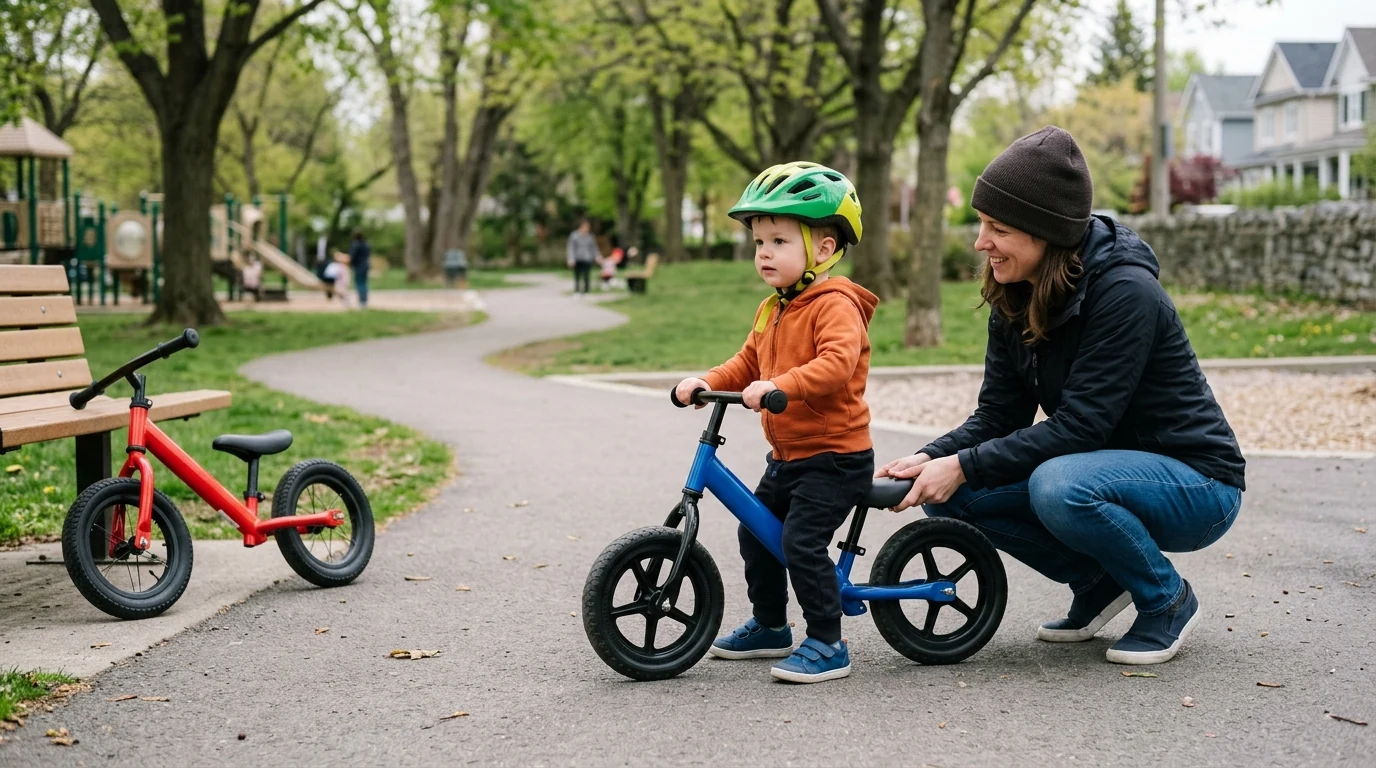
A balance bike is a simple tool with big payoffs: it teaches the “feel” of riding without asking a toddler to coordinate pedaling at the same time. Because kids can put their feet down instantly, they tend to practice more often—and with less hesitation—than they do on bikes that feel tall or unstable.
- Develops balance and coordination without the distraction of pedals
- Encourages natural steering, braking practice, and awareness of surroundings
- Supports confidence-building through short, repeatable wins (glide, stop, turn, repeat)
- Often eases the transition to a pedal bike by reducing reliance on training wheels
For safety basics that apply to any wheeled ride, the American Academy of Pediatrics bike safety guidance is a helpful reference, especially for helmet fit and supervision.
12-inch vs 14-inch: getting the fit right
Wheel size matters, but fit starts with your child’s inseam and the bike’s minimum seat height. A toddler-friendly setup allows both feet to rest flat on the ground while seated, making starts and stops feel predictable. Tip-toe riding can work for experienced kids, but it often slows learning for beginners.
- Start with inseam and minimum seat height: the best fit allows both feet to rest flat for stable starts and stops
- A slightly bent knee at full extension is ideal; avoid tip-toe setups for new riders
- Choose a range-adjustable seat and handlebar setup to extend usable life as your child grows
- Consider the riding environment: larger wheels can feel smoother over cracks and light gravel, while smaller wheels can be easier for compact indoor spaces
- Re-check fit after assembly: seat height and handlebar angle can change how easily a toddler reaches the grips
Quick fit check for toddler balance bikes
| Fit checkpoint | What to look for | Why it matters |
|---|---|---|
| Feet on the ground | Both feet flat while seated | Safe starts/stops and less fear |
| Seat height range | Seat adjusts low enough now and higher later | Longer use without outgrowing quickly |
| Reach to handlebars | Relaxed shoulders, slight bend in elbows | Better steering control and comfort |
| Bike weight | Toddler can push and turn it without struggling | More practice time, fewer frustrations |
| Tire type | Works for your surfaces (indoor, sidewalk, park paths) | More stability and smoother rides |
Features that matter most for toddlers
When comparing 12-inch and 14-inch balance bikes, the “best” pick is usually the one that’s easiest to mount, easiest to control, and least likely to cause small slips that scare a new rider. Toddler-friendly details can turn short practice sessions into daily habits.
- Low step-through frame for easy mounting and dismounting
- Comfortable, grippy handlebar grips to reduce slips and improve control
- Steering that feels stable (not overly stiff, not overly loose)
- Puncture-resistant or durable tires suited to common family routes (sidewalks, driveways, parks)
- A padded, adjustable seat that stays secure after tightening
- Limited pinch points and smooth edges around the frame and wheels
- If a hand brake is included, it should be easy to squeeze with small hands; many toddlers start with foot braking first
A useful rule of thumb: if your child can pick the front end up slightly to pivot the bike and can walk it forward without wrestling it, they’ll practice longer and progress faster.
Everyday safety essentials for first rides
Balance bikes are low to the ground, but falls still happen—usually at slow speed during turns or when a tired toddler forgets to put feet down. A few consistent routines keep rides fun and reduce preventable tumbles.
- Helmet fit: level on the head, low on the forehead, snug straps with a simple “two-finger” check under the chin
- Closed-toe shoes for traction; avoid sandals during learning sessions
- Choose a low-traffic practice zone: smooth pavement or a flat path with space to coast
- Set clear boundaries (driveway edges, sidewalk ends) and keep sessions short to prevent fatigue
- Check the bike before each ride: tight seat clamp, straight handlebar alignment, wheels spinning freely
For helmet selection and correct positioning, the U.S. Consumer Product Safety Commission helmet safety page provides clear, practical guidance.
A simple progression: from walking to gliding
Many toddlers learn best with tiny steps and lots of repetition. The goal isn’t distance—it’s control. Keep early sessions short (often 10–15 minutes is plenty) and end on a “win,” even if the win is a smooth stop.
Care, storage, and keeping rides smooth
A ready-to-ride option in 12/14 inch sizing
If you’re looking for a practical starter bike that can span early learning and growth, the 12/14 Inch Kids Balance Bike for Toddlers is a convenient size range for many families. After assembly, do a quick fit check: confirm a flat-foot stance, a comfortable reach to the grips, and a seat clamp that stays secure after tightening.
For variety in outdoor play once steering and stopping are consistent, some families also add a powered ride-on for supervised driveway cruising, like the Kids’ 12V Ride On Land Rover with Remote Control and LED Lights.
FAQ
How do you know if a balance bike is the right size for a toddler?
Check inseam and minimum seat height first: when seated at the lowest usable seat height, your toddler should be able to place both feet flat on the ground. As gliding improves, raise the seat gradually so the knees still have a slight bend at full extension.
What age is best to start a toddler on a balance bike?
Many kids can start once they walk steadily and can follow simple safety directions like “stop” and “look ahead.” Readiness and fit matter more than a specific age.
Should a toddler wear a helmet on a balance bike?
Yes—treat it like any other wheeled ride. Use a properly fitted helmet every time, and start in a safe practice area away from traffic and steep slopes.








Leave a comment