Does Teething Pain Continue After a Tooth Breaks Through?
15% off on product page · save $2.12
Does Teething Pain Continue After a Tooth Breaks Through?
Why discomfort can continue
When you first see or feel the edge of a tooth, the rest of it is still moving through the gum, so the surrounding area may remain tender for a little while. Your baby may continue to chew on objects, drool, or seem fussier than usual, although these behaviors alone do not always mean teething is the cause.
If another tooth is close to emerging, it can also seem as though the discomfort from the first tooth never went away. We suggest looking for gradual improvement rather than expecting soreness to stop the moment you spot a tooth.
Check the product’s listed specifications when evaluating why discomfort can continue.
How long should soreness last?
Teething discomfort is often temporary and may come and go around the time a tooth emerges, rather than lasting continuously for weeks. There is no exact schedule that fits every baby, and the amount of discomfort can vary from one tooth to the next.
If your baby seems increasingly uncomfortable, has persistent pain, or is difficult to soothe, contact your pediatrician or pediatric dentist for guidance. A fever, diarrhea, or a baby who looks ill should not automatically be attributed to teething; ask your pediatrician about those symptoms.
Check the product’s listed specifications when evaluating how long should soreness last.

Featured in this guide
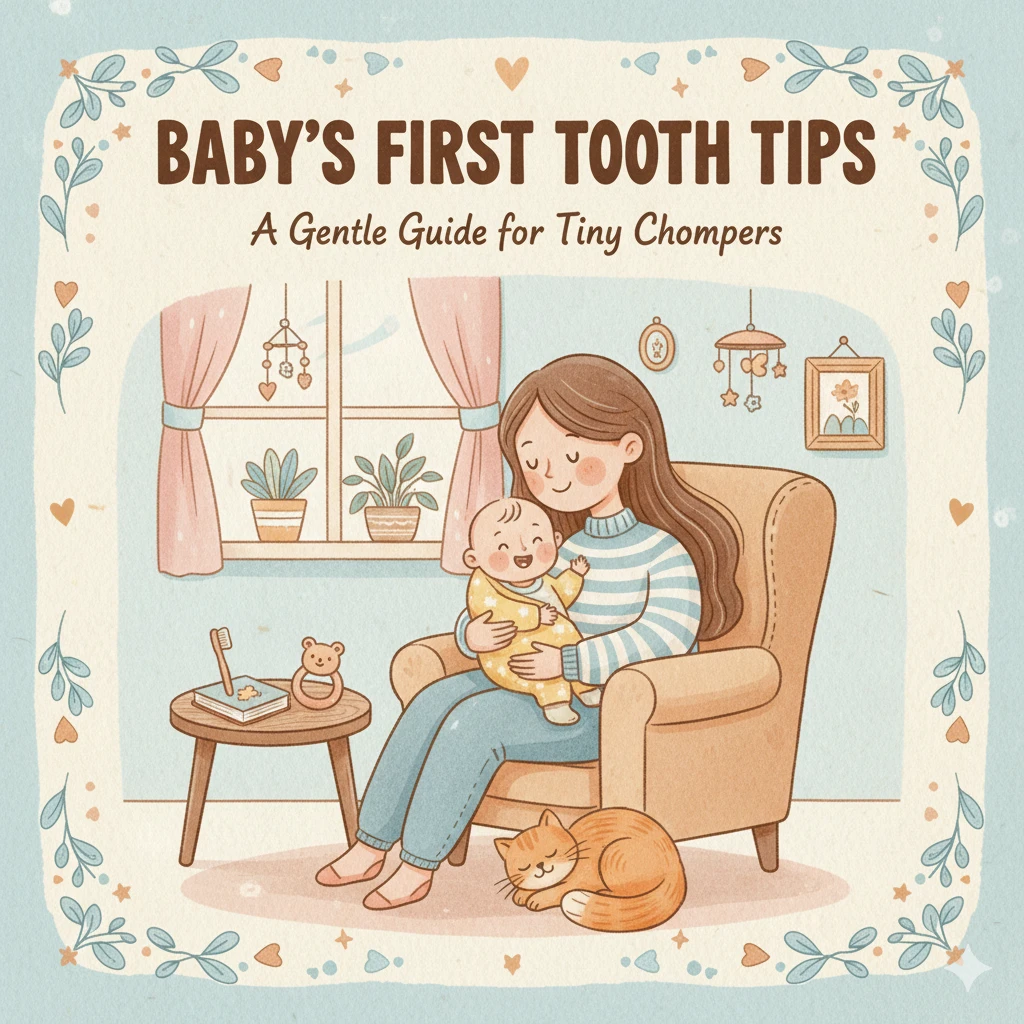
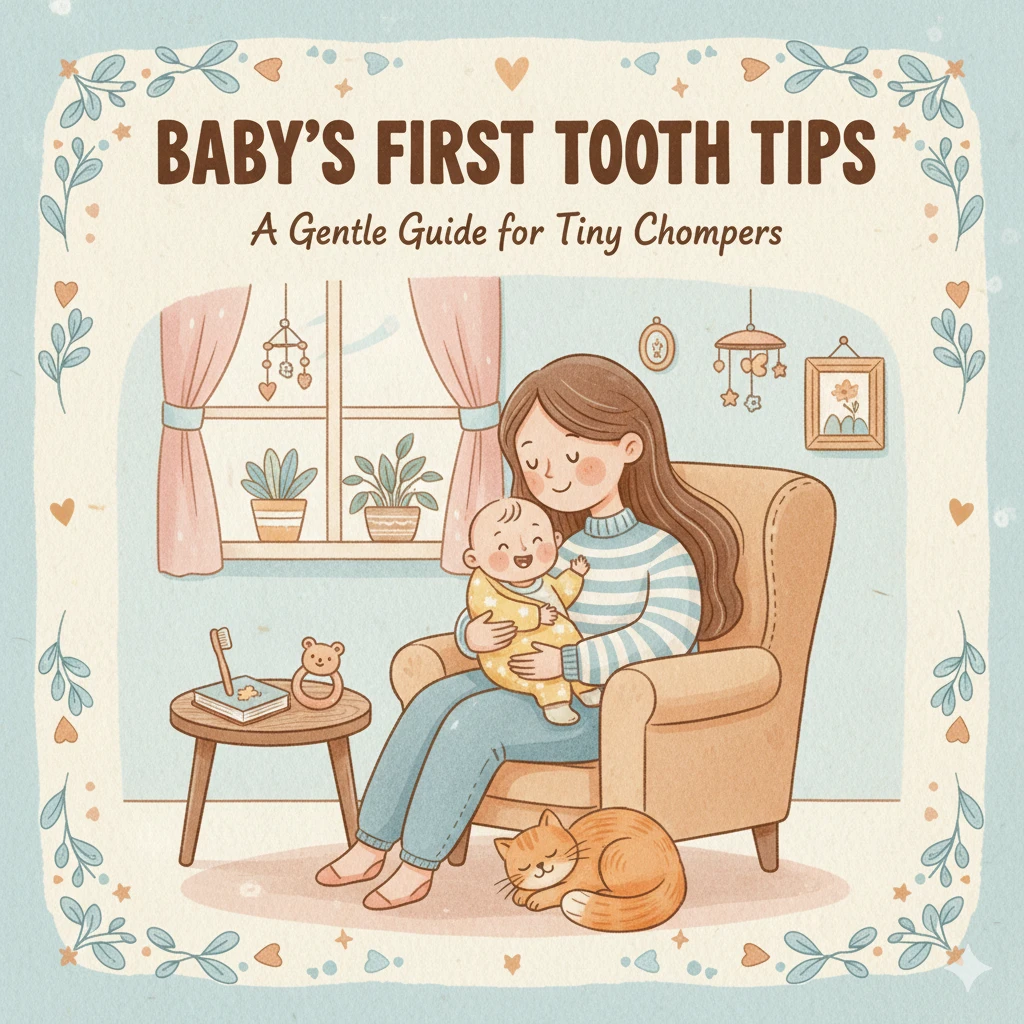
Baby’s First Tooth Tips Ebook | Helpful Guide for Parents | Tips for Managing Baby’s First Tooth
Ways to help your baby feel better
Gently rub your baby’s gums with a clean finger, or offer a clean, chilled teething ring that is firm enough to chew but not frozen. Stay nearby while your baby uses it, and avoid teething necklaces or bracelets because they can pose choking and strangulation risks.
If comfort measures are not enough, ask your pediatrician whether an age-appropriate pain medicine is suitable and how to use it. Avoid numbing teething products containing benzocaine or lidocaine unless your healthcare professional specifically directs otherwise.
Caring for the new tooth
Once the tooth appears, brush it twice a day with a soft, small-headed toothbrush and a smear of fluoride toothpaste about the size of a grain of rice. Gentle brushing helps you start a daily routine even if your baby’s gum is still a little tender.
Our team knows that a new tooth can bring both excitement and questions, so we encourage you to contact your baby’s healthcare professional whenever something concerns you.
For the full product context, see the main Owleys guide.
FAQ
Do baby teeth still hurt after they break through?
They can, because the gum may remain tender while more of the tooth emerges. Gentle gum rubbing or a chilled teething ring may help your baby feel more comfortable.
How long does tooth pain last for babies?
Teething discomfort is usually temporary and may come and go around the time a tooth emerges. If pain persists, worsens, or is difficult to soothe, contact your pediatrician or pediatric dentist.
See if Baby’s First Tooth Tips Ebook | Helpful Guide for Parents | Tips for Managing Baby’s First Tooth fits your setup









Leave a comment