Wooden Shoelace Lacing Toy for Toddlers: Fine Motor Play
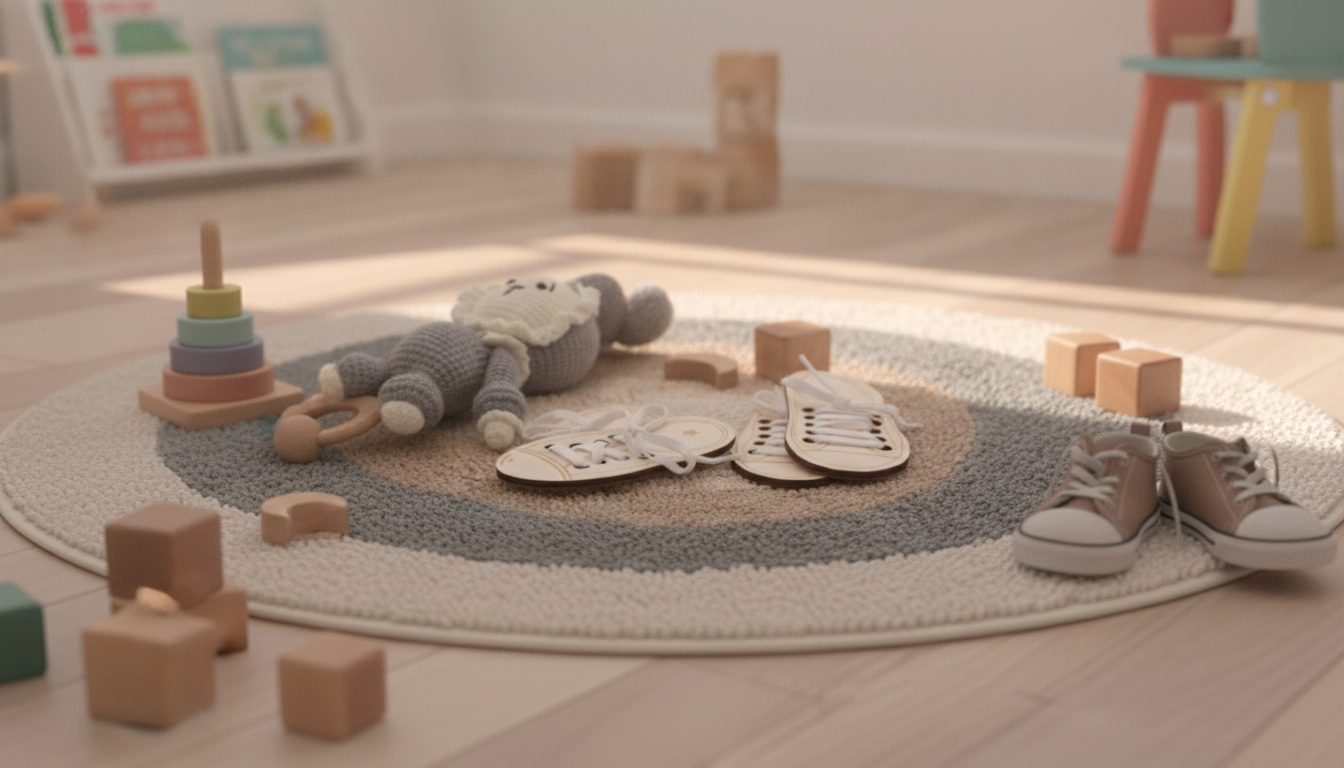
Wooden Baby Shoelace Learning Toy: A Simple Lacing Activity for Little Hands
Lacing boards and shoelace-style toys turn an everyday skill into a playful, screen-free activity. A wooden baby shoelace learning toy helps toddlers practice threading, pulling, and coordinating both hands—building the foundation for dressing skills and stronger fine-motor control during short play sessions at home or on the go.
What This Lacing Toy Helps Kids Practice
A lacing board looks simple, but it packs multiple “real life” skills into one calm activity. When a child repeats the same motion—push, pull, straighten, and try again—those tiny hand muscles and planning skills get a steady workout.
- Fine-motor strength: grasping the lace, pinching, and pulling through holes
- Hand-eye coordination: guiding the lace tip toward targets
- Bilateral coordination: one hand stabilizes the board while the other threads
- Early independence: stepping-stone skills that support dressing routines later
- Focus and patience: repeatable, calming play without batteries or screens
For families building a small rotation of “quiet toys,” the Wooden Baby Shoelace Learning Toy is an easy add-on—compact, portable, and familiar (kids recognize shoelace motions from shoes and hoodies).
How to Play: Quick Activities That Grow With Your Child
The best lacing play feels like a tiny success story: a few smooth pulls, a cheerful “You did it,” and then a break before frustration hits. These mini-games scale nicely as hands get steadier.
1) Start with “in and out”
Thread through 2–3 holes, then stop before attention fades. Ending early keeps the toy associated with “I can do it,” which makes the next session easier.
2) Add simple directions
If your board has colors or shapes, try prompts like “Next hole on the top” or “Now go down.” This turns lacing into listening practice without making it feel like a lesson.
3) Copy-the-pattern
Lace one side as a model path. Then let your child match the same path on the other side. This supports visual planning and gentle problem-solving.
4) Speed-free challenges
Try “Can the lace visit every hole?” without racing. Toddlers often tighten their grip and get tangled when speed is the goal, so keep the challenge about coverage, not time.
5) Story play
Make the lacing path a “trail” for an imaginary character. For example, the lace is a road and each hole is a stop—park, library, snack shop—so repetition stays interesting.
Safety and Use Tips for Toddlers
Lacing toys are generally straightforward, but any toy with a cord or lace deserves thoughtful supervision—especially for younger toddlers who explore by mouthing.
- Supervise during play, especially with younger toddlers who may mouth components
- Check the lace regularly for fraying; replace if worn to keep threading smooth and safe
- Store the lace attached or in a small pouch to prevent tangles and reduce trip hazards
- Avoid wrapping the lace around fingers/neck; keep play on a flat surface where the board stays stable
- Wipe clean with a lightly damp cloth; fully dry before storing
For broader guidance on choosing and using toys safely, the U.S. Consumer Product Safety Commission offers helpful resources at CPSC – Toy Safety, and the American Academy of Pediatrics provides family-friendly tips at HealthyChildren.org – Toy Safety and Choosing Toys.
At-a-Glance: Why Wooden Lacing Toys Are Popular
Wooden lacing boards stay in the “sweet spot” for toddler activities: simple enough to start right away, but repeatable enough to build skill. They also hold up well to the tug-and-pull nature of early practice.
- Wooden construction is durable for repeated threading and pulling
- Simple design encourages open-ended play and skill repetition
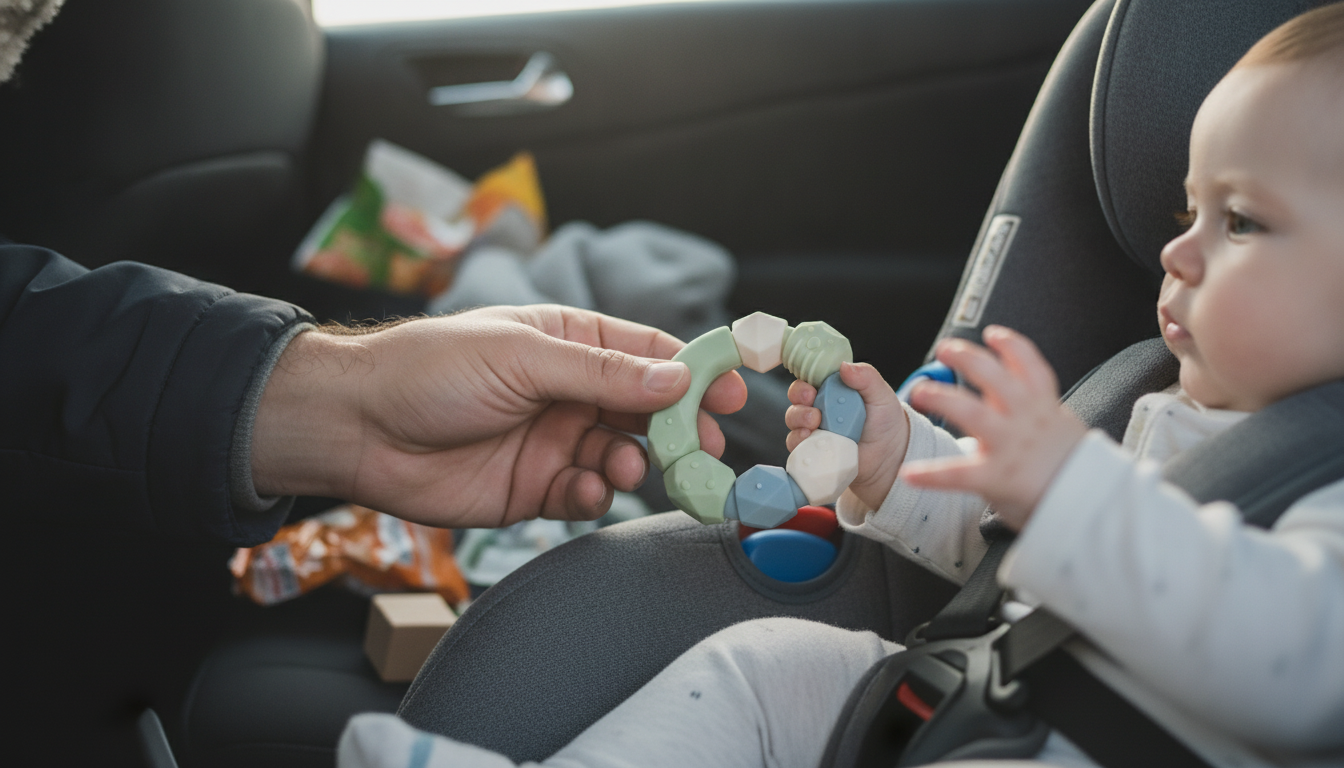
- Compact size works well as a travel activity for cars, waiting rooms, and visits
- Pairs well with other practical life activities (zippers, buttons, dressing frames)
| Option | What kids practice | Best for | Things to watch |
|---|---|---|---|
| Wooden lacing board | Threading, bilateral coordination, control | Skill-building play with minimal setup | Supervision; inspect lace condition |
| Bead stringing | Pincer grasp, sequencing, concentration | Color/pattern games | Small parts risk for younger toddlers |
| Sticker books | Finger isolation, planning, creativity | Quiet seated play | Less pulling/strength work than lacing |
| Busy boards | Zippers, snaps, switches, varied textures | Broader dressing-practice variety | Heavier/less compact; hardware checks needed |
When to Introduce Lacing Play and How to Level Up
Lacing is one of those skills where readiness matters more than a specific birthday. If a child can hold a chunky lace tip and enjoys putting objects “in” and “through,” they’re usually ready to try.
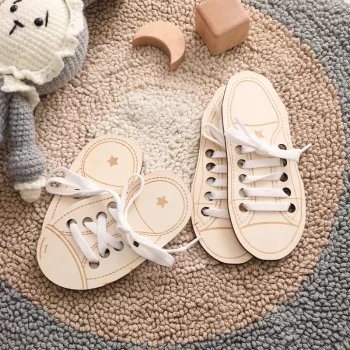
Wooden Baby Shoelace Learning Toy
If you’re looking for a budget-friendly fine-motor activity that travels well, the Wooden Baby Shoelace Learning Toy is a simple choice. It’s designed for toddler-friendly skill practice and works well as a small, grab-and-go quiet toy for short independent play.
| Detail | Info |
|---|---|
| Product | Wooden Baby Shoelace Learning Toy |
| Availability | In stock |
| Price | $2.17 USD |
| Product page | https://babyjoyboutique.com/wooden-baby-shoelace-learning-toy/ |
More in-stock gift ideas (different ages, different energy levels)
- Girls Knit Sweater Dress with Heart Print & Ruffle Collar (a cozy, dress-up-ready option)
- Kids’ 12V Ride On Land Rover with Remote Control and LED Lights (a big-ticket, active-play pick)
FAQ
What age is a shoelace learning toy good for?
Many families introduce lacing play during the toddler-to-preschool years, but readiness matters more than age. Choose a pace that matches your child’s attention span and always supervise, especially with younger children and any toy with laces.
How do you teach lacing without frustration?
Keep sessions short, start with just a few holes, and model the motion slowly. A little hand-over-hand help can get things started, and stopping before your child is tired helps lacing stay positive over time.








Leave a comment