Safe Baby Bottle Mixing: Formula Prep Routine for Parents
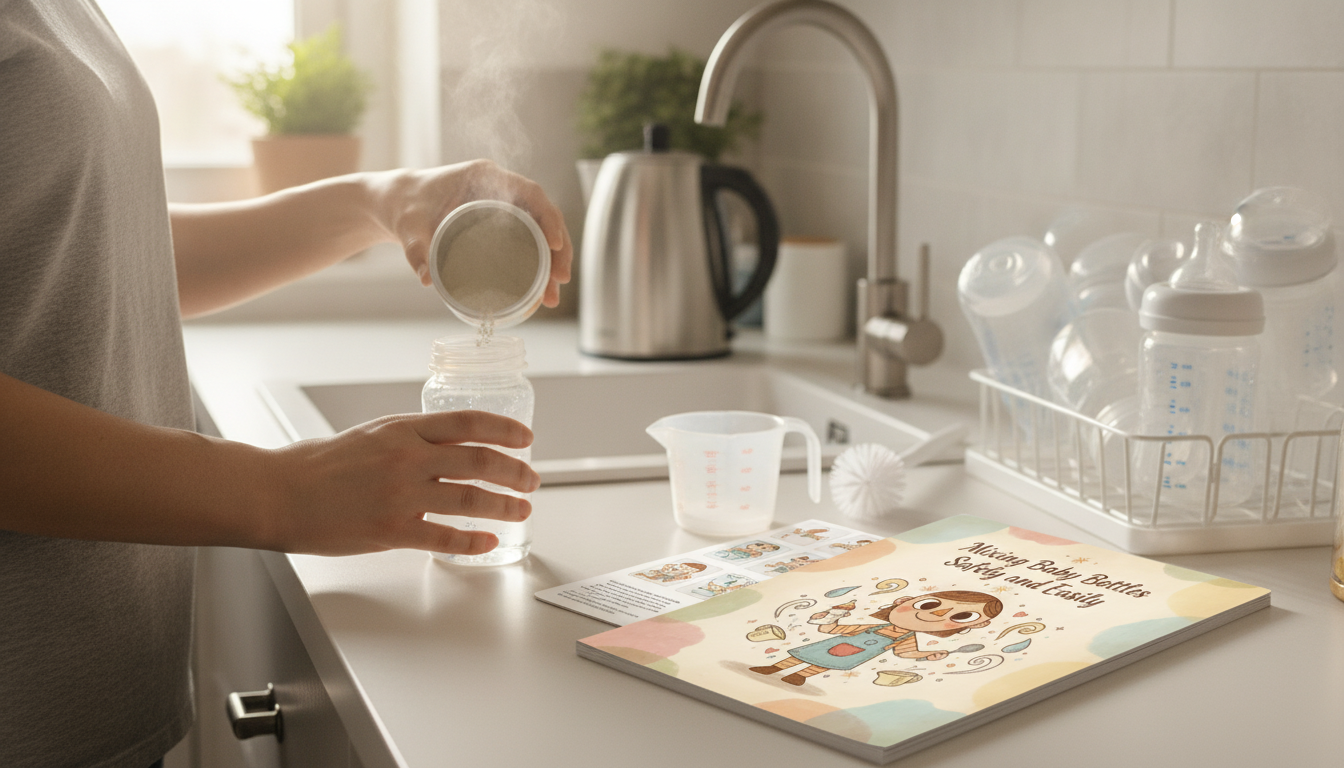
Mixing Baby Bottles Safely and Easily: A Step-by-Step Routine New Parents Can Trust
Safe formula prep is mostly about consistent steps: clean hands and tools, the right water and temperature, accurate measuring, and smart storage. When you repeat the same order of operations every time, mixing becomes faster, smoother, and easier to do correctly at 2 a.m. This guide lays out a simple routine, flags common mistakes that lead to clumps or over/under-concentration, and includes quick fixes so bottle prep stays steady and repeatable day or night.
Before You Start: What “safe and correct” mixing means
- Use the exact formula-to-water ratio listed on your formula label. Changing the ratio can impact hydration and nutrition.
- Start clean. Wash hands and use a clean prep area. Powdered infant formula isn’t sterile, so hygiene matters.
- Pick one method and stick to it. Consistency helps prevent “measurement drift” when you’re tired.
- Follow your pediatrician’s guidance for special situations (prematurity, immune compromise, certain medical conditions) where extra precautions may apply.
Set up a simple prep station
A small, organized “bottle mixing zone” reduces mistakes and keeps prep calmer.
- Keep together: bottles, nipples/rings, bottle brush, dish soap, a clean drying rack, formula scoop, and (if helpful) a dedicated container for measuring water.
- Optional helpers: a food thermometer, a timer, pre-labeled storage containers, and a cooler bag for travel.
- Choose one mixing spot away from raw food prep to reduce contamination risk.
- Keep the formula lid and scoop clean and dry. Store the scoop in the can if designed for it—avoid tossing it in drawers where it can collect dust or moisture.
Step-by-step: Mixing a formula bottle (repeatable routine)
- Wash hands with soap and water. Dry with a clean towel or air dry.
- Clean and sanitize bottles and parts as recommended for your baby’s age and health needs. Let everything fully air dry to reduce microbial growth.
- Prepare your water. Tap water safety varies by location. Follow local guidance and your pediatrician’s advice. Measure the required amount into the bottle first unless your formula label instructs otherwise.
- If using hot water per safety guidance, cool before feeding. Mix as directed, then cool the bottle to a safe feeding temperature and test it safely (a few drops on the inside of your wrist should feel lukewarm, not hot).
- Add powder with the included scoop. Use level scoops (not packed, not heaping) unless the label says otherwise.
- Close and mix. Many formulas mix well with gentle swirling or rolling. Avoid aggressive shaking if it creates lots of bubbles that may contribute to gassiness.
- Inspect for clumps and continue mixing until the bottle looks uniform.
- Feed right away or store promptly following the formula label’s time limits and food-safety guidance.
Quick checklist for accurate mixing
| Step | What to do | Common slip-up to avoid |
|---|---|---|
| Measure water | Pour the exact ounces/mL first (unless label says otherwise) | Eyeballing the water level or using the wrong bottle markings |
| Measure powder | Use level scoops; follow the label’s scoop-to-water ratio | Heaping/packed scoops or “extra for calories” without medical guidance |
| Mix | Swirl or mix per label until smooth | Shaking hard and creating foam that looks like “more volume” |
| Temperature | Cool to a safe feeding temp; test on wrist | Microwaving bottles (hot spots) |
| Timing | Use promptly or refrigerate quickly | Leaving mixed formula out too long |
Water temperature and safety: practical guidance without guesswork
- Start with the formula label and your pediatrician’s advice on whether to use boiled and cooled water—especially for higher-risk infants.
- If boiling is recommended: boil water, let it cool to the instructed range, then mix. After mixing, cool to feeding temperature before serving.
- Avoid microwaves for warming. Microwaves can heat unevenly and create hot spots. Use a warm water bath or bottle warmer and swirl to distribute heat evenly.
- Travel approach: pack measured water in a clean bottle and carry powder separately; mix right before feeding when possible.
For detailed public health guidance, refer to the CDC’s infant formula preparation and storage recommendations and the World Health Organization guidance on powdered infant formula safety.
Storing prepared formula and handling leftovers
- Refrigerate promptly if you’re not using the bottle right away. Store toward the back of the fridge where it’s typically coldest.
- Discard leftovers after a feeding. Once a baby drinks from a bottle, saliva can introduce bacteria that multiply over time.
- Label with prep time so you don’t have to guess later.
- Use a cooler with ice packs for outings when bottles must be transported, and minimize time at room temperature.
Common problems and quick fixes
A calmer routine for day, night, and on-the-go
Step-by-step visual support for new parents
If a printable reference would make bottle prep easier to repeat, consider: Mixing Baby Bottles Safely and Easily | Step-by-Step Formula Mixing eBook for New Parents.
And if you’re building a practical “new baby + older sibling” routine, a cozy outfit that’s easy to layer can be a simple win: Girls Knit Sweater Dress with Heart Print & Ruffle Collar.
FAQ
Should water go in the bottle before formula powder?
Follow the formula label; many brands instruct measuring water first, then adding level scoops so the final concentration is correct. If your specific brand directs a different order, use that method consistently.
Can formula bottles be warmed in the microwave?
Avoid microwaves because they can heat unevenly and create dangerous hot spots. Use a bottle warmer or place the bottle in a warm water bath and swirl to distribute heat evenly.
How long can prepared formula sit out?
Check your formula label and follow public health guidance; time limits depend on temperature and whether the bottle has been fed from. As a rule, discard any formula left in the bottle after a feeding.










Leave a comment