Wooden Doctor Play Set for Kids: Learn & Pretend
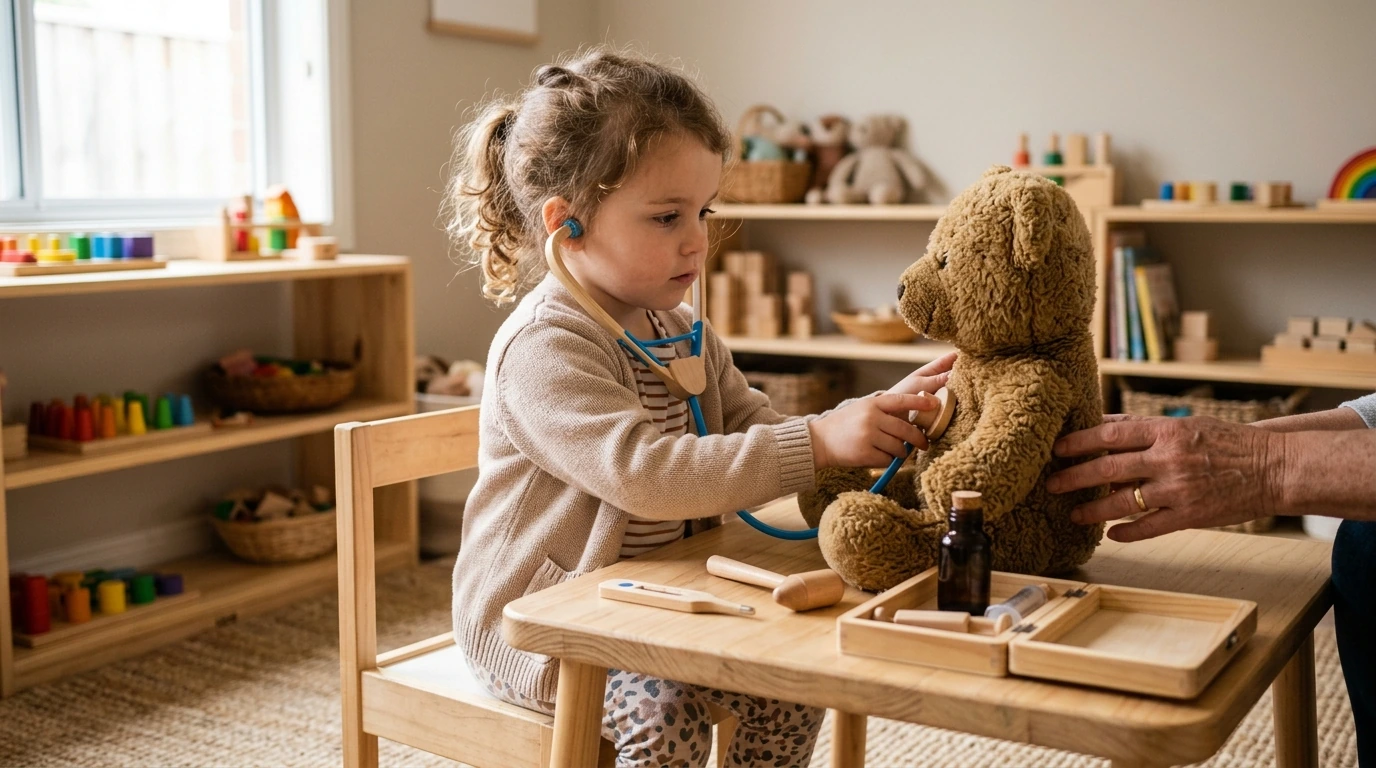
Wooden Kids Doctor Role Play Set – Educational Medical Toy Kit
A wooden doctor role play set turns everyday curiosity into caring, imaginative play. With kid-friendly medical tools and a sturdy wooden build, this kit supports pretend checkups, storytelling, and early social-emotional learning—great for playdates, classrooms, and at-home play. When kids get to “run the clinic,” they can practice confidence, communication, and gentle caregiving in a way that feels fun and familiar. For more guidance, see Wooden Toy Doctor Kit with Carrying Case Kids Role Play Medical Set.
If you’re looking for a durable, screen-free activity that grows with your child’s imagination, explore the Wooden Kids Doctor Role Play Set – Educational Medical Toy Kit for a playroom staple that invites repeat play.
Why Kids Love Playing Doctor
- It turns real-life experiences (doctor visits, shots, checkups) into a familiar, manageable game where the child feels in control.
- It encourages empathy and nurturing behavior as kids “take care” of dolls, stuffed animals, siblings, and even adults.
- It supports language development through role-based conversation: greetings, questions, and simple explanations.
- It builds confidence by letting kids lead the play, make choices, and “solve” pretend problems.
Pretend play is also widely recognized as essential for development. Organizations like the American Academy of Pediatrics highlight the value of play for building social-emotional skills and resilience (The Power of Play), and the NAEYC emphasizes how play supports learning across domains (10 Things Every Parent Should Know About Play).
What’s Included and How Each Piece Can Be Used
- Kid-safe medical tools designed for pretend exams, checklists, and simple routines.
- Opens possibilities for different roles: doctor, nurse, patient, receptionist, caregiver.
- Pairs well with stuffed animals, dolls, or a “clinic” corner using a small table and notepad.
- Creates repeatable play patterns: check-in, symptoms, exam, treatment plan, and follow-up.
Common Tools in a Kids’ Doctor Kit and What They Teach
| Tool (example) | Pretend use | Skills supported |
|---|---|---|
| Stethoscope | Listen to heartbeat/breathing | Imagination, turn-taking, descriptive language |
| Thermometer | Check temperature | Number recognition, routine-building |
| Syringe (pretend) | Give a “vaccine” or medicine | Emotional processing, gentle caregiving |
| Bandage/medical tape | Wrap an “injury” | Fine motor skills, problem-solving |
| Otoscope/flashlight tool | Look in ears/eyes | Observation skills, pretend diagnostics |
| Doctor bag/case | Store and organize tools | Independence, clean-up habits |
Learning Benefits That Grow with Your Child
- Social-emotional learning: kids practice kindness, reassurance, and patience with “patients,” especially when a doll is “scared” or a plush has a “boo-boo.”
- Communication: children learn to ask questions (“Where does it hurt?”) and explain steps (“I’m going to check your temperature now.”).
- Fine motor practice: grasping, aligning, twisting, fastening, and packing tools away strengthens hand coordination.
- Early logic and sequencing: following a routine from intake to treatment and aftercare builds planning skills.
- Collaborative play: playdates and sibling play naturally invite negotiation and turn-taking.
One easy way to “level up” the learning is to introduce simple vocabulary: patient, appointment, symptoms, healthy, gentle, and calm. Over time, kids begin to narrate their process, which is a powerful bridge to storytelling and early literacy.
Wooden Toy Advantages: Durability, Feel, and Play Value
- Sturdy construction: wood tends to stand up well to frequent play and classroom-style use.
- Tactile, “real tool” feel: the weight and texture can keep kids engaged longer than flimsier pieces.
- Timeless look: wooden sets fit naturally into Montessori-inspired spaces and neutral playrooms.
- Easier clean-up: pieces are often larger and more noticeable when it’s time to tidy.
For families building a curated pretend-play collection, a wooden medical kit pairs nicely with other “community helper” themes—like a toy kitchen, tool set, or dress-up outfits that encourage role switching and bigger stories.
Age Range, Safety, and Adult Supervision Tips
- Check the recommended age on the product page and supervise younger children, especially around small parts.
- Teach gentle play: no inserting tools into ears/nose, no “real” poking, and no wrapping bandages too tightly.
- Do a quick routine inspection: smooth edges, intact parts, and clean storage after play.
- If used in group play, set simple rules (one tool at a time, ask permission before “examining” someone).
A helpful boundary is to keep the play focused on comfort and care: “We help our patients feel better.” That keeps the tone positive and reduces rough handling—especially when the “patient” is a sibling who didn’t ask for an exam.
Easy Play Ideas: Turn It into a Full Clinic
For extra fun, dress-up can make the clinic feel more “official.” A cozy outfit change can signal the start of play—like slipping into a favorite sweater dress such as the Girls Knit Sweater Dress with Heart Print & Ruffle Collar before opening the pretend office for the day.
Gifting and Occasion Guide
For a gift that feels both fun and purposeful, the Wooden Kids Doctor Role Play Set – Educational Medical Toy Kit is easy to wrap, easy to understand, and instantly usable—no complicated setup required.
Care and Storage
FAQ
What age is a wooden doctor role play set best for?
Many wooden doctor sets work well for preschool and early elementary ages, often around 3+ depending on the parts included. Always follow the product’s listed age recommendation and supervise younger children, especially if any small pieces are present.
How does playing doctor help kids learn?
It helps children practice empathy, communication, and sequencing through a familiar routine like check-in, exam, and aftercare. Kids also build fine motor skills by handling tools and learn social skills by taking turns and caring for a stuffed animal “patient.”
How can a wooden medical toy kit be cleaned safely?
Wipe the wooden pieces with a lightly damp cloth, using a small amount of mild soap if needed, then dry immediately. Avoid soaking the parts, store them in a dry place, and routinely check for wear or loose components.









Leave a comment