Teething Relief Toolkit: Soothing Steps + Printable Checklist

Teething Relief Toolkit: A Calm, Step-by-Step Plan for Sore Gums, Sleepy Nights, and Confident Soothing
Teething can turn a normally content baby into a drooly, fussy, wakeful little mystery. A simple system helps: recognize common signs, try comfort measures in a sensible order, and know when symptoms point to something else. This digital Teething Relief Toolkit is designed to be printed or used on a phone so new parents can act quickly—especially at night—without second-guessing what to try next. For more guidance, see Teething Timeline, Symptoms, and Relief Strategies.
What Teething Can Look Like (and What It Usually Isn’t)
Babies can’t explain “my gums hurt,” so teething often shows up as a cluster of small changes that come and go. The most common signs include gum swelling or tenderness, increased drooling, chewing on hands/toys, mild irritability, and disrupted sleep. Some babies also rub their cheeks or pull at ears—often from referred discomfort rather than an ear infection. For further reading, see Baby Teething Tips: Symptoms, Relief & Remedies.
Teething symptoms can vary widely, even within the same child. Many families notice fussiness ramps up in the late afternoon and evening, when babies are already tired and less able to regulate.
It’s also important not to pin every symptom on teething. High fever, persistent diarrhea, vomiting, a widespread rash, or severe lethargy aren’t typical teething symptoms and deserve a separate check-in with a pediatric clinician. For a quick overview from a trusted source, see guidance from the American Academy of Pediatrics.
A Quick Soothing Routine: Try These in Order
When your baby is uncomfortable, it’s easy to try everything at once. A simple sequence helps you move from low-effort, low-risk comfort measures to “next-step” options when the discomfort seems stronger.
1) Start with gum pressure
Wash your hands, then use a clean finger to massage your baby’s gums for 30–60 seconds. Gentle pressure can be surprisingly effective and can be repeated as needed.
2) Add cold comfort (chilled, not frozen)
Offer a chilled teether, a cool washcloth to chew, or a refrigerated silicone teether. Cold can reduce gum inflammation and provide immediate relief. Skip frozen items, which can be too hard on tender gums.
3) Regulate with calm + distraction
If crying escalates, shift to nervous-system “reset” basics: a brief cuddle, rocking, a calming song, dim lights, or a quiet room. Many teething meltdowns intensify when a baby is overtired.
4) Make small feeding adjustments
If baby is fussing at the breast/bottle, try shorter, more frequent feeds. Pause to burp if they’re gulping air from crying. A little break can help them return to feeding without turning it into a battle.
5) If pain seems significant, ask about medication
If your baby seems truly uncomfortable, contact a pediatrician about age-appropriate pain relief options. Avoid teething gels with numbing agents unless specifically advised by a clinician.
| What you notice | What to try first | What to avoid / safety note |
|---|---|---|
| Baby chewing constantly, drooling a lot | Chilled teether; cool washcloth to chew | Avoid frozen items that can injure gums; always supervise |
| Night wakings with sudden fussiness | Gum massage + quick cuddle + dark, quiet room | Avoid starting new sleep associations that are hard to maintain if possible |
| Red, tender gums near an erupting tooth | Gentle massage; chilled silicone teether | Avoid topical numbing gels unless advised by a clinician |
| Refusing bottle/breast briefly | Shorter feeds; paced bottle feeding; offer again later | Watch hydration (wet diapers); persistent refusal needs medical guidance |
| Drool rash on chin/neck | Barrier ointment + frequent gentle drying | Avoid harsh wipes; keep skin folds dry |
Printable Checklist: A 2-Minute “What to Do Next” Plan
Decision fatigue is real—especially during nighttime wakeups. A one-page checklist turns teething support into a quick routine you can follow half-asleep: check the likely trigger, try comfort steps in order, and move on if something isn’t helping.
Soothing Tips That Fit Real Life (Daycare, Car Seats, and Grocery Runs)
On-the-go cooling
Car seat fussing
Daycare notes
Long errands
What Not to Do: Common Teething Myths and Safety Reminders
If you’re choosing chewable items, review choking-prevention basics from the CDC choking hazards resource.
When to Call a Pediatrician
For another reputable overview of typical teething symptoms and comfort ideas, the NHS teething guidance is a helpful reference.
Teething Relief Toolkit: What’s Inside and How to Use It Tonight
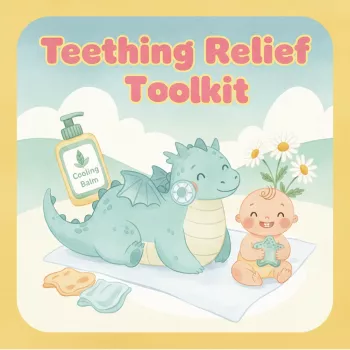
The Teething Relief Toolkit (digital download) is built for the moment you need it most: fussy stretches, bedtime setbacks, and middle-of-the-night wakeups. Keep a digital copy on your phone and print one for the nursery so anyone caring for your baby can follow the same calming routine.
And because teething often comes with drool and outfit changes, a soft, easy layer can help on extra-messy days—like the Girls Knit Sweater Dress with Heart Print & Ruffle Collar for cozy comfort when you’re going in and out of cooler rooms.
FAQ
How long does teething discomfort usually last for each tooth?
Discomfort often peaks in the few days before a tooth breaks through and may continue for a few days after, but it can come in waves. Watch hydration and overall behavior; if your baby seems unusually unwell or the pain feels prolonged, check in with a pediatric clinician.
Is a fever normal during teething?
Mild temperature changes can happen, but a significant or persistent fever shouldn’t be assumed to be teething. If you’re unsure—or fever comes with other concerning symptoms—contact your pediatric clinician for guidance.
What’s the safest thing for a baby to chew on for teething relief?
An age-appropriate, intact teether or a cool washcloth can be safe options when used with close supervision. Avoid amber necklaces, very hard or frozen items that can injure gums, and any teether that’s damaged or leaking.








Leave a comment