Single Parent Burnout: Signs + Simple Weekly Reset Plan

Burnout warning signs that show up in everyday parenting
Burnout in single parenting often looks less like a dramatic crash and more like a steady drain. It’s easy to miss because you’re still getting everyone fed, dressed, and where they need to be. The clues tend to show up in the small, repeatable moments of the day.
- Body clues: waking up tired, frequent headaches, tight shoulders, digestive upset, or getting sick more often than usual.
- Emotional clues: irritability, numbness, feeling trapped, crying easily, or snapping at minor messes.
- Thinking patterns: constant self-criticism, racing thoughts at night, forgetting appointments, or decision paralysis.
- Parenting impacts: shorter patience, inconsistent rules, more yelling than intended, or “phone scrolling” as the only escape.
- Quick check-in: notice what has changed in sleep, appetite, patience, and motivation over the last two weeks (not just today).
Stress also shows up physically; if you’re noticing changes in sleep, energy, or recurring tension, it may help to review what chronic stress can do to the body via the American Psychological Association.
The 3-level reset: stabilize today, simplify this week, strengthen the month
When everything feels urgent, the fastest relief comes from choosing the smallest reset that actually changes tomorrow. Think “minimum effective dose”: routines should work on hard days, not only on perfect days.
- Today (stabilize): pick one non-negotiable need—sleep, food, movement, or calm—and protect 15 minutes for it.
- This week (simplify): remove or pause one optional task (an extra cleaning standard, a non-urgent errand, an after-school add-on).
- This month (strengthen): create one supportive system—recurring grocery order, standing childcare swap, autopay bills, or a meal template.
- Minimum effective dose: if a plan requires high motivation, it’s too expensive.
- Regulation first: if emotions are running high, choose calm first, then plan.
If stress is escalating into persistent anxiety, low mood, or feeling unlike yourself for weeks, the National Institute of Mental Health offers practical guidance on caring for your mental health and when to consider added support.
Time management that respects real constraints
Time management for single parents isn’t about squeezing more in—it’s about reducing decisions, protecting transitions, and building a week that can absorb surprises.
- Anchor routines: build the day around 2–3 fixed points (wake, school drop-off, dinner/bed) instead of an overpacked schedule.
- Batch decisions: choose outfits, lunches, and tomorrow’s first task the night before to reduce morning stress.
- Two-list method: “Must Do” (3 items max) and “Nice to Do” (everything else); success is completing the must list.
- Micro-tasks count: 5-minute wins prevent backlog spirals (reply to one email, start laundry, prep a snack box).
- Use timers: 10 minutes of tidying is often more sustainable than aiming for a spotless home.
Weekly micro-plan for a calmer household
| Day | 10-minute home task | 10-minute parent reset | One kid-connection moment |
|---|---|---|---|
| Monday | Start one laundry load | Hydrate + stretch | Ask: “What was the best part of today?” |
| Tuesday | Clear one counter | Walk outside | Read one short book or chapter |
| Wednesday | Meal prep one item | Shower without rushing | Play 10 minutes: child chooses |
| Thursday | Paperwork/email sweep | Breathing: 4-7-8 x 3 | Share a small gratitude each |
| Friday | Trash/recycling reset | Early bedtime routine | Family “movie snack” at home |
| Saturday | Quick bathroom wipe-down | Music + light movement | Do one errand together as a game |
| Sunday | Set out clothes/bags | Plan 3 meals | Preview the week: “What do you need from me?” |
Emotional wellness: small practices that protect patience
Patience usually returns faster when the nervous system feels safer. The goal isn’t to “never lose it”—it’s to shorten the stress cycle and model repair.
Support systems that don’t rely on constant willpower
If you need ideas for stress and coping strategies that fit real-life constraints, the CDC’s stress and coping resource is a helpful starting point.
Healthy digital boundaries for parents and kids
A simple checklist to prevent burnout from returning
A ready-to-use guide for calmer routines and emotional support
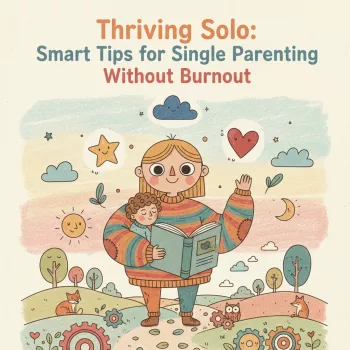
- For practical, quick-to-apply routines, see Thriving Solo: Smart Tips for Single Parenting Without Burnout (digital guide + checklist).
- To simplify morning decisions, a reliable go-to outfit can help reduce daily friction—consider the Girls Knit Sweater Dress with Heart Print & Ruffle Collar as an easy “grab-and-go” option for cooler days.
- To build connection without a big time commitment, a short, predictable play ritual can go a long way—something like the High-Speed 1/8 Scale Monster Tank RC Car can support a 10-minute “child chooses” play window that ends cleanly with a timer.
FAQ
What are realistic self-care options when there’s no childcare?
Choose 5–10 minute resets you can do at home: drink water, stretch, step outside for air, take a quick shower, do slow breathing, or play one song and move. Stack them onto kid routines (during bath time, while they do homework, or right after bedtime) and aim for consistency over length.
How can single parents manage time without waking up earlier?
Build around anchor routines, batch decisions the night before, and cap the daily “must do” list at three items. Timers and micro-tasks keep the house from sliding, and pausing optional tasks during tough weeks protects energy without falling behind.
How do you know if it’s burnout or something else?
Burnout commonly includes ongoing exhaustion, irritability, and reduced effectiveness that lasts for weeks and starts to impair daily functioning. If symptoms feel severe, include panic, persistent sadness, or major sleep disruption, checking in with a healthcare or mental health professional can help clarify what’s going on and what support fits best.










Leave a comment