Simple Daily Routines for Raising Bilingual Kids
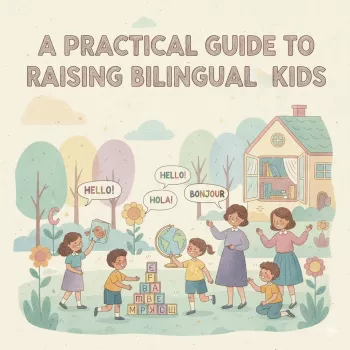
Raising Bilingual Kids Without Overcomplicating It
Raising bilingual kids can feel like you’re constantly balancing school expectations, community language pressure, and the reality of packed weekdays. The good news: bilingualism doesn’t require “extra lessons” every day. It grows best through predictable routines, meaningful connection, and a family plan that fits your actual life—not an ideal schedule. Below are practical, age-aware strategies to help both languages develop steadily over time.
What Bilingual Development Looks Like in Real Life
Bilingual development is rarely linear. Many children show “spurts” after a new teacher, a visit with relatives, or a phase of intense interest in a show or hobby. Language mixing (using two languages in one sentence) can be a normal part of development, especially when kids are reaching for vocabulary they don’t have yet in one language.
It’s also common for strength to shift by setting and topic. A child might talk about school and friends more easily in the community language, but express feelings, humor, or family routines more naturally in the home language. Clear goals help you choose the right routines: conversational confidence, literacy, connection to grandparents, and academic success can each require a slightly different approach. For evidence-based reassurance and guidance, ASHA’s overview of learning more than one language is a reliable starting point: American Speech-Language-Hearing Association (ASHA) — Learning More Than One Language.
Pick a Family Language Plan That Fits Your Household
The “best” language plan is the one you can repeat calmly for months. Consistency matters more than perfection because predictable patterns reduce daily negotiation. If multiple caregivers are involved, align on a few simple rules (meals, bedtime, errands, play), then adjust as needed rather than trying to enforce a complicated system.
Language plan options and when they work well
| Approach | Best for | Watch-outs | Simple starter routine |
|---|---|---|---|
| One-parent-one-language (OPOL) | Two caregivers each fluent in a different language | Harder with limited time with one parent | Each parent keeps their language during daily routines and play |
| Minority language at home (ML@H) | Community language dominates outside the home | Requires commitment at home to prevent drift | Home = minority language, outside = community language |
| Time-and-place | Busy households or mixed fluency | Can be inconsistent if rules are unclear | Bedtime + meals in minority language; weekends include longer exposure |
| Project-based immersion | Families restarting or boosting a weaker language | Needs sustained follow-through | 2–4 week “language boost” with media, books, and play in the target language |
Daily Habits That Build Vocabulary Without Extra “Lessons”
The easiest vocabulary gains come from routines you already do. Narrate what’s happening during cooking, laundry, bath time, and errands—these moments are full of repeatable words and short, useful phrases. Keep input slightly above your child’s level: familiar sentence patterns with one or two new words at a time.
Try “same message, new language” rephrasing: when your child speaks in the dominant language, acknowledge the meaning, then model the target-language version naturally. Add micro-rituals that make language automatic: a handwashing song, three bedtime questions, or a simple “tell me three things” dinner chat. Rotating weekly themes (animals, foods, feelings, transportation) helps recycle vocabulary until it sticks.
Handling Common Challenges: Resistance, Preference, and Mixed Language
When kids prefer the dominant language, pressure tends to backfire. A calmer approach is to keep the target language present while protecting the relationship. Respond warmly and model the target-language sentence without demanding repetition every time. Offer choices that require hearing the language (Book A or Book B? Game X or Game Y?) rather than framing it like a test.
Age-by-Age Focus: What to Prioritize
Toddlers (1–3)
Preschool (3–5)
Early elementary (6–8)
Tweens (9–12)
Teens
Autonomy is key. Support real-world use: clubs, volunteering, media creation, exchange opportunities, and bilingual goals tied to personal interests. UNESCO’s perspective on mother language-based bilingual education is a helpful reminder that language is deeply connected to learning and identity: UNESCO — Why mother language-based bilingual education is important.
Literacy and School: Supporting Reading and Writing
Keep writing low-friction: labels around the house, short texts to relatives, journaling prompts, or comic strips. If you can coordinate with teachers, emphasize that bilingualism is an asset and discuss realistic supports. The American Academy of Pediatrics also reassures families that learning multiple languages is healthy and typical: HealthyChildren.org (American Academy of Pediatrics) — Young Children Learning Multiple Languages.
Keeping Motivation High: Connection, Community, and Culture
A Ready-to-Use Weekly Routine (30–60 Minutes a Day)
Parent Toolkit: Prompts, Scripts, and Quick Wins
Helpful resources from our store
- A Practical Guide to Raising Bilingual Kids | eBook for Parents | Tips for Raising Bilingual Kids | Digital Download Parenting Resource (digital guide for building routines and staying consistent)
- Girls Knit Sweater Dress with Heart Print & Ruffle Collar (easy “outfit talk” practice: colors, textures, weather, getting-ready phrases)
- High-Speed 1/8 Scale Monster Tank RC Car (great for action vocabulary: directions, speed, turns, and playful commands)
FAQ
Is it normal if my child mixes two languages in the same sentence?
Yes. Mixing languages can be a typical stage of bilingual development, especially when a child knows a word in one language but not the other. Focus on understanding and respond by modeling the target-language phrasing naturally without shaming or over-correcting.
What if my child refuses to speak the minority language at home?
Reduce pressure and rebuild positive experiences first—play, humor, and connection usually work better than correction. Protect one daily anchor routine (like bedtime stories), increase meaningful contact with speakers, and use your child’s interests to invite the language back in.
Do bilingual kids start talking later than monolingual kids?
Timelines vary widely, and bilingual children may split vocabulary across languages, so total vocabulary and comprehension are better indicators than one-language word counts. If concerns persist across settings (not understanding, not communicating, or regression), consult your pediatrician or a speech-language pathologist.









Leave a comment