How to Teach Empathy to Toddlers in Everyday Moments
How to Teach Empathy to Toddlers in Everyday Moments
Start with what toddlers can do
Your toddler is still learning to recognize feelings, manage impulses, and understand that another person may want something different. A child who hits during a frustrating moment or refuses to share a favorite toy is not necessarily being unkind. They may need help stopping, calming down, and noticing what happened.
Look for small signs of care, too. Your toddler might pause when someone cries, watch a caregiver’s face with concern, or bring over a favorite toy. You can acknowledge the effort: “You noticed Grandma was upset.” The goal is to practice noticing and responding, not to demand perfect sharing or an immediate apology.
Development looks different from child to child. The CDC’s developmental milestones can help you understand skills children may be building at different ages, while everyday observation helps you respond to the child in front of you.
Check the product’s listed specifications when evaluating start with what toddlers can do.
Give feelings simple names
During a quiet part of your day, try “You’re excited to see Grandma” or “That child looks disappointed that the swing is busy.” Books and pretend play let you wonder together, too: “What do you think the bear is feeling?” If your toddler answers differently than you expected, stay curious.
You can model responsibility for your own feelings: “I’m frustrated that we’re running late, so I’m taking a breath.” Your child can hear that feelings are normal and that adults choose what to do next.
Check the product’s listed specifications when evaluating give feelings simple names.
Featured in this guide
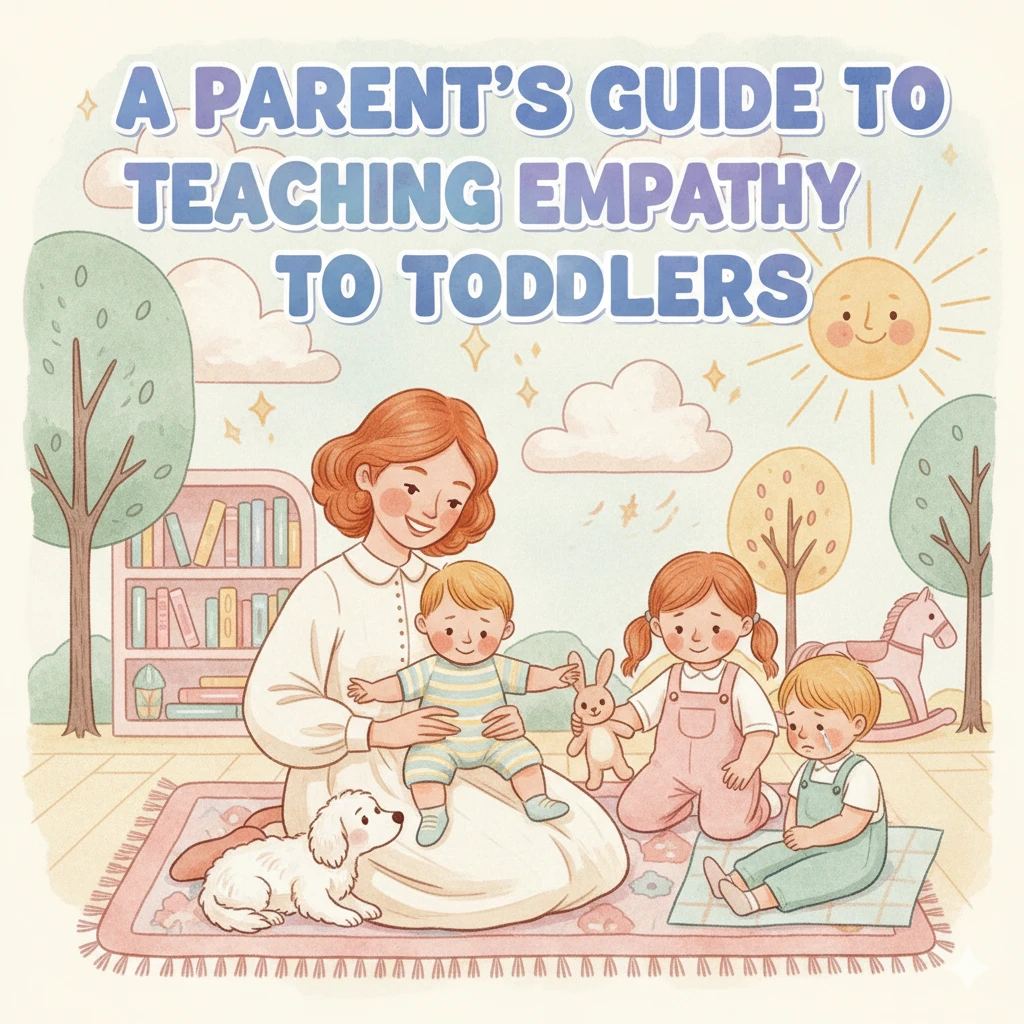
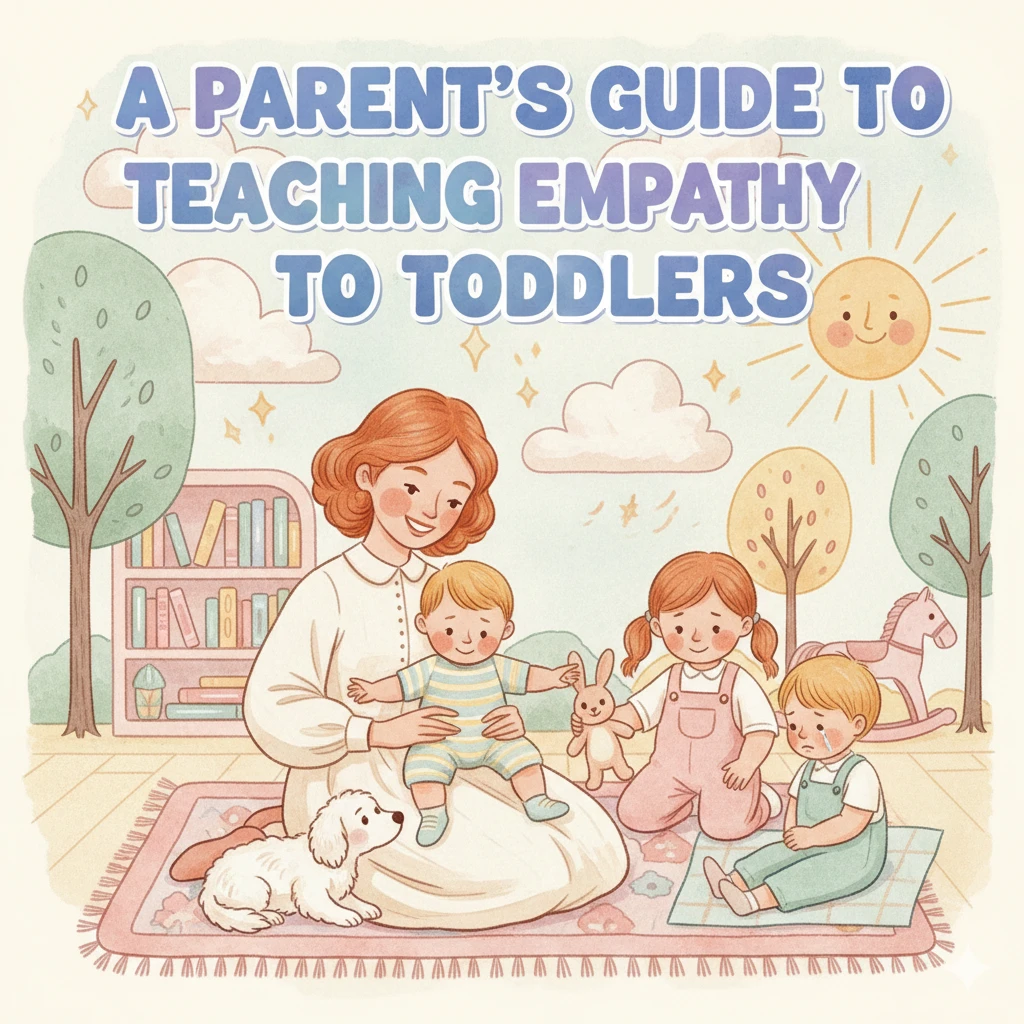
A Parent’s Guide to Teaching Empathy to Toddlers | How to Teach Empathy to Toddlers | Printable Digital eBook for Parents | Gentle Parenting Resource
Respond when someone gets hurt
If your toddler pushes another child, start with safety. Separate them if needed and attend to the child who was hurt. Then use a brief, firm description: “That push hurt. I won’t let you push.” You can set the boundary without calling your child mean.
When your toddler is calm enough, offer a manageable choice: “Would you like to bring a tissue?” Sometimes helping means giving the other child space. Do not require a hug; the hurt child gets to decide whether they want closeness. If your toddler is overwhelmed, you can model care now and talk about the moment later.
Make room for everyday practice
When a sibling wants a turn, you might say, “She’s waiting. Let’s choose when her turn starts.” If a pet moves away, try, “The cat may want space. Let’s give her room.” These small responses show your toddler that caring also means respecting boundaries.
Let your child see you make amends, too: “I spoke sharply. I’m sorry. I’ll take a breath and try again.” You can acknowledge your toddler’s disappointment while keeping a fair limit. Both listening and limits are part of the example you set.
Check the product’s listed specifications when evaluating make room for everyday practice.
Decide whether a printable guide would help
You can practice these moments without buying anything. If you prefer a dedicated resource to revisit, our A Parent’s Guide to Teaching Empathy to Toddlers is a printable digital eBook for parents. Choose it if that format suits the way you like to keep parenting resources close at hand.
Check the product’s listed specifications when evaluating decide whether a printable guide would help.
Keep a gentle reminder close
If you would like a dedicated resource to return to as new situations arise, explore our A Parent’s Guide to Teaching Empathy to Toddlers printable digital eBook. It is an option for parents who prefer a printable guide they can revisit rather than trying to remember the right words in the middle of a hard moment.
You do not need a purchase to practice empathy together. If you are also choosing something for everyday wear, our Girls Knit Sweater Dress with Heart Print & Ruffle Collar is available to browse, but clothing is separate from the work of helping your child notice and care for others. What matters most is your steady example, one small moment at a time.
Check the product’s listed specifications when evaluating keep a gentle reminder close.
FAQ
How to teach empathy to adults?
Adults can practice listening without interrupting, asking how someone feels, and checking whether their assumptions are correct. Taking responsibility after a mistake helps turn understanding into action.
What are some signs that someone might have a lack of empathy in a relationship?
Repeatedly dismissing your feelings, refusing to consider your perspective, or showing little concern after causing hurt may be signs. Look at patterns over time rather than judging someone by one difficult interaction.
See if A Parent’s Guide to Teaching Empathy to Toddlers | How to Teach Empathy to Toddlers | Printable Digital eBook for Parents | Gentle Parenting Resource fits your setup








Leave a comment