Exercise With a Newborn: Realistic Time Windows & Mini Workouts
Finding Exercise Time with Your Baby: A Practical Guide for New Parents
Exercise after a baby rarely fails because of motivation—it fails because time is fragmented, sleep is unpredictable, and hands are full. The most reliable approach is to fit movement into newborn life the way newborn life actually works: short sessions, baby-inclusive options, and simple planning that adapts week to week.
Start with the right goal: consistency over perfect workouts
Right now, the best “program” is the one you can repeat—especially on the rough days. Aim for a baseline that feels almost too easy, then let everything else be a bonus.
- Set a minimum baseline: 5–10 minutes counts as a win when sleep is broken or the day is chaotic.
- Use “movement snacks”: two to six short bursts spread across the day can add up fast.
- Pick low-setup options: bodyweight moves, a loop band, walking, or quick stroller laps keep momentum high.
- Track “days moved”: consistency (not intensity, calories, or perfection) is the habit builder.
If it helps to have something concrete to follow without overthinking, a ready-made plan can remove the daily decision load. The digital guide Finding Exercise Time with Your Baby: practical guide is designed around short templates and flexible time windows that work with infant routines.
The three time windows that most new parents can actually use
Most newborn schedules don’t offer a single long “free hour,” but they do offer repeatable pockets. The key is matching the pocket to a pre-decided workout so you’re not negotiating with yourself at the moment.
- Nap window: Choose a written 10–20 minute routine to avoid decision fatigue when you finally get a quiet stretch.
- Early-morning or post-bedtime: Keep it quiet (yoga, mobility, light strength) so you don’t disrupt sleep for anyone.
- Partner handoff window: Protect 2–3 slots per week, even if each is only 20 minutes. Treat them like appointments.
Quick time-window plan (choose one per day)
| Time window | Best-fit workout | Setup needed | Backup if baby wakes |
|---|---|---|---|
| First nap | 10–15 min strength circuit | Mat + water | Switch to baby-wearing squats/steps |
| Stroller walk | 30 min brisk walk + hills | Stroller | Shorter loop near home |
| Tummy time | Mobility + core breathing (5–10 min) | Towel/mat | Do 1–2 moves and stop |
| After bedtime | Yoga or band work (15–25 min) | Band + mat | Do 5 minutes of stretching only |
Baby-inclusive workouts that don’t require perfect timing
When the day is unpredictable, baby-inclusive movement keeps you from waiting for a “perfect” moment that never arrives.
- Stroller walking: Add intervals for quick intensity—1 minute faster, 2 minutes easy, repeated 6–8 times.
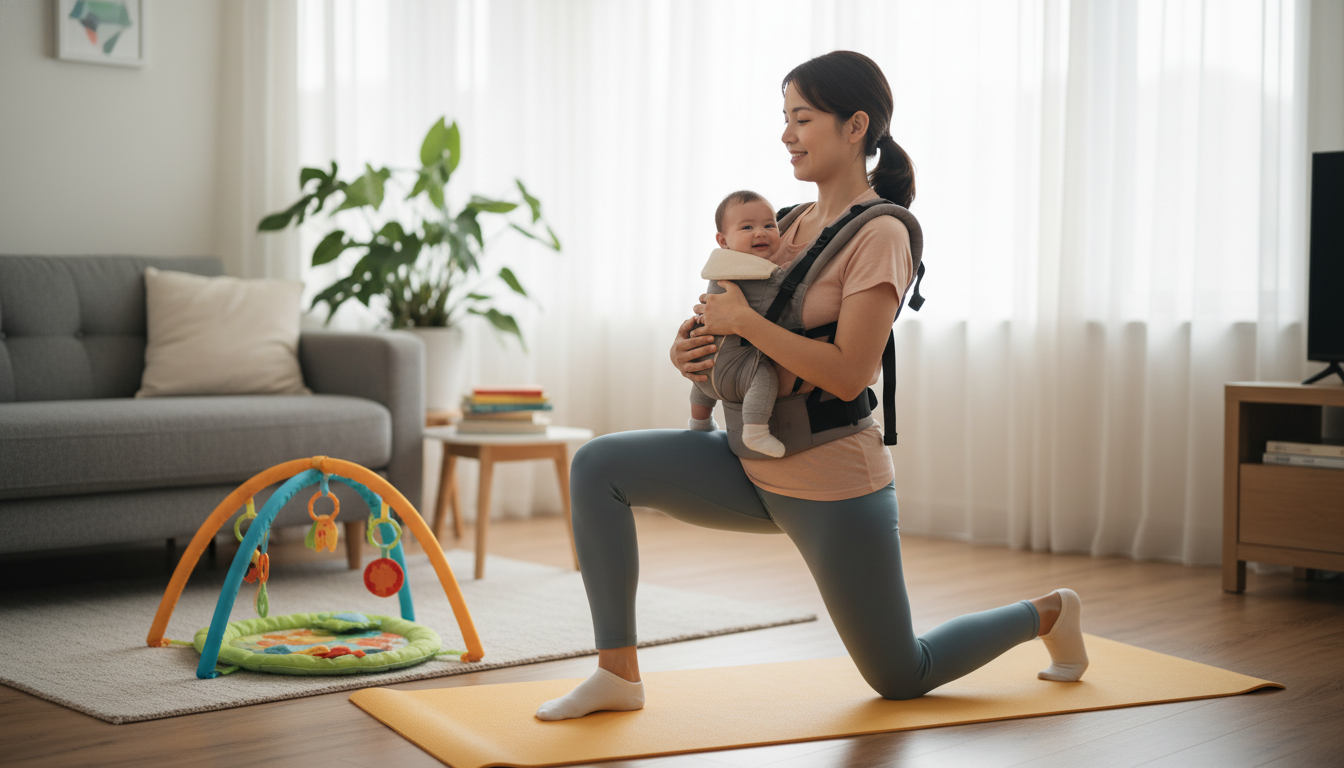
- Babywearing basics: Gentle squats, step-ups, calf raises, and slow dancing can be surprisingly effective while staying low-impact.
- Floor-based during tummy time: Hip bridges, bird-dogs, dead bugs, and simple mobility flows work well in short bursts.
- Music-based mini circuits: Two to three songs equals 6–10 minutes, with a clear start and finish.
Micro-workout templates (pick one and press start)
Templates remove the mental load. Pick one option, start a timer, and stop when the time is up—even if it felt “too short.” That’s how consistency sticks.
Safety and postpartum considerations that protect long-term progress
- Get medical clearance when needed: especially after a C-section, complications, or if anything feels “off.” Guidance from ACOG on exercise after pregnancy is a helpful starting point for common timelines and cautions.
- Rebuild foundations first: breathing, posture, and gentle core/pelvic floor coordination often come before impact training or heavy loading.
- Watch for red flags: pain, heaviness/pressure, worsening leaking, bulging along the midline, dizziness, or increased bleeding—pause and consult a professional.
- Prioritize form over load: interrupted sleep can increase injury risk and reduce recovery capacity.
When you’re ready to expand overall activity, the CDC physical activity guidelines can help you set realistic weekly targets—without requiring long workouts every day.
Make exercise easier to start: reduce friction in the environment
To keep your “ready corner” from turning into a clutter pile, a simple organizer can help. The Creative Hollow Star Desk Organizer is a handy spot for timers, resistance bands, earbuds, or the small items that tend to disappear when you’re running on limited sleep.
Sample 7-day routine that flexes with real life
Stay consistent when sleep is broken and schedules change weekly
If the biggest hurdle is scheduling and mental load, a simple planning system can help you protect those tiny windows. Using AI to organize kids’ schedule is a quick digital guide for structuring routines and reminders so exercise doesn’t get crowded out by everything else.
A practical guide to follow along when decision fatigue hits
FAQ
When is it safe to start exercising after having a baby?
Check with a healthcare provider for personalized clearance, especially after a C-section or complications. Many people can start gentle walking, breathing, and mobility earlier, but stop if you notice pain, pressure/heaviness, worsening leaking, dizziness, or increased bleeding and seek professional guidance.
What if the baby wakes up every time a workout starts?
Switch to micro-workouts in 2–5 minute blocks and use baby-inclusive moves (stroller walking, babywearing steps, or tummy-time floor work). Keep a pre-decided minimum routine so you can finish something without turning it into a stressful battle.
How many minutes of exercise make a difference as a new parent?
Even 5–10 minutes done consistently can improve energy, mobility, and habit strength over time. A weekly total target (like 60–120 minutes) plus gradual progression is often more realistic than long workouts right now.









Leave a comment