All-in-One Baby Playard: Bassinet, Changer & Toy Bar
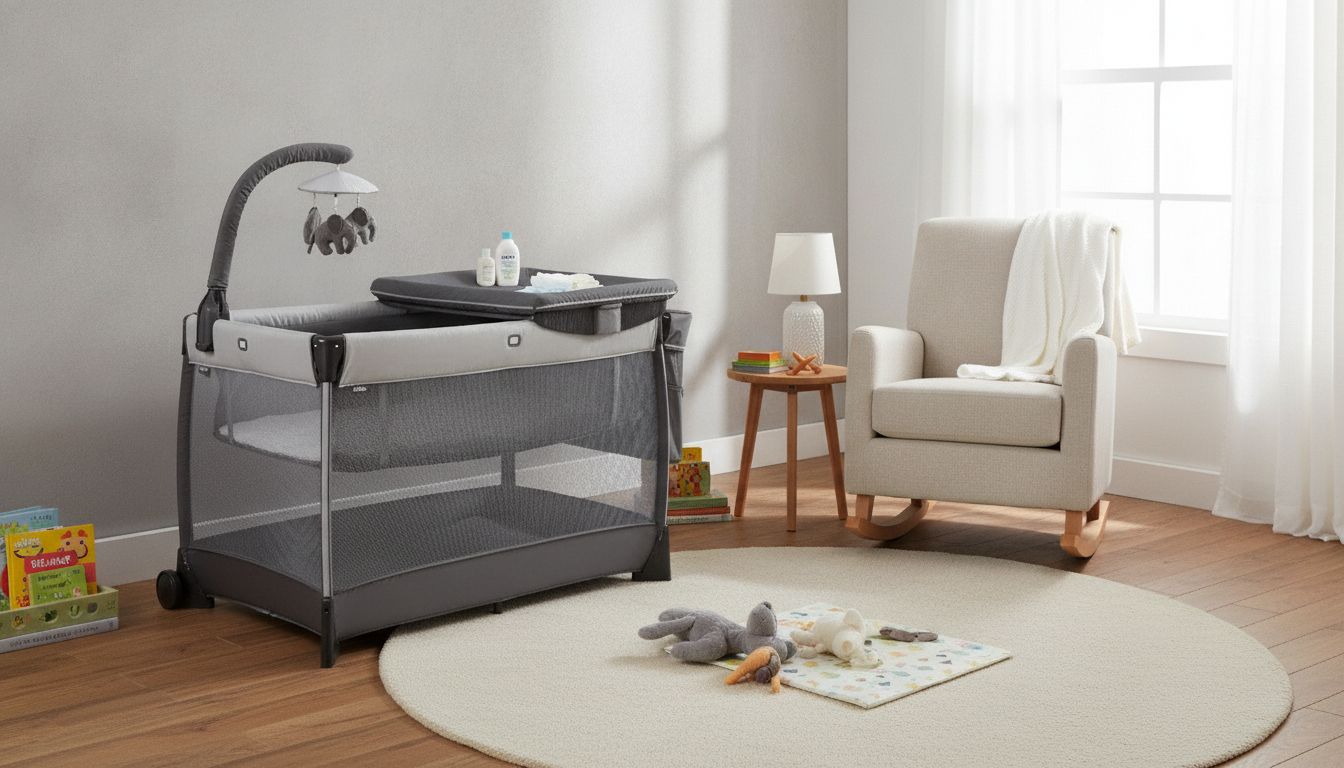
What an all-in-one playard set typically includes
An all-in-one baby playard is designed to consolidate several everyday baby “stations” into one footprint. While exact features vary by brand and model, most bundles combine a secure playard frame with newborn-focused add-ons that can be removed as your child grows.
- Main playard frame: the enclosed space used for supervised play and, in many models, sleep (follow the manufacturer’s sleep guidance).
- Bassinet insert: a raised sleep surface designed to reduce bending during the newborn stage; weight/age limits vary by model.
- Changing station: a dedicated diapering surface that can reduce the need to move baby to another room; usually has a separate limit and must be used with a hand on baby.
- Toy bar: overhead or arched attachment for visual engagement and reaching practice; should be used only as directed and removed when baby can pull up if required by the manual.
- Storage features: side pockets or compartments for wipes, diapers, creams, and spare clothes to keep essentials within reach.
- Fold/transport system: a collapse mechanism and often a carry bag for room-to-room movement or travel.
Common components and when they’re most useful
| Component | Best stage/use | Notes to check before buying |
|---|---|---|
| Bassinet | Newborn to early months | Weight limit, firm flat surface, attachment stability, breathable sides if applicable |
| Changing station | Diaper changes from day one | Safety strap presence, surface wipe-clean materials, height comfort, limit and stability |
| Toy bar | Early play and reaching | Secure attachment, removable toys, when it must be removed for safety |
| Main playard | Supervised play; some models support sleep | Sleep rating/labeling, mattress pad firmness, mesh visibility, lock indicators |
Everyday routines this setup can simplify
When a playard includes a bassinet, changing station, and storage, it can reduce the number of separate baby items spread across your home. That matters most during the newborn phase, when frequent feeding and diaper changes make convenience feel like a safety feature.
- One-zone newborn care: bassinet + changer + storage can turn a bedroom corner into a practical care station.
- Faster night changes: a nearby changing surface can reduce walking to a separate changing table (keep supplies stocked).
- Safer transitions: fewer trips while holding baby can reduce accidental bumps or slips, especially during nighttime.
- Contained play space: a playard can create a safe boundary for brief, supervised moments when caregivers need hands-free time.
- Guest room and travel flexibility: folding and moving one unit is often easier than transporting a crib plus separate changing setup.
Safety and comfort checks that matter most
Multi-function gear is only helpful when it’s used as intended. Before using any accessory (and periodically over time), confirm you’re within the stated limits and that every attachment is stable and level.
- Firm, flat sleep surface: avoid adding extra padding, pillows, or soft bedding beyond what the manufacturer allows. The American Academy of Pediatrics safe sleep recommendations are a helpful baseline for keeping sleep spaces clear and firm.
- Attachment security: confirm the bassinet and changer lock in place and remain level; never use if any connector is loose or damaged.
- Use limits: follow weight/height and milestone limits (rolling, pushing up, sitting, pulling to stand) for each accessory.
- Side visibility and airflow: mesh sides can help caregivers monitor baby and may improve airflow; ensure there are no tears or gaps.
- Stability and locking: verify legs are fully opened and locks are engaged before placing baby inside; avoid placing near cords, blinds, or heaters.
- Changing station supervision: keep one hand on baby and have supplies prepped; discontinue use when baby exceeds limits or becomes too mobile.
For additional technical guidance, it can be reassuring to know play yards sold in the U.S. align with safety requirements such as the CPSC play yard safety standard (16 CFR Part 1221) and voluntary standards like ASTM F406.
Fit for small spaces and travel
All-in-one playards are especially useful when you’re balancing a compact home layout with the need for a dependable baby setup. A little measuring and planning upfront can prevent “it fits, but it’s awkward” frustrations later.
- Footprint planning: measure the intended spot (including space to walk around it and open nearby doors/drawers).
- Fold frequency: if it will be folded daily, prioritize simple mechanisms and a manageable carry weight.
- Room-to-room movement: wheels (if included) can help, but the unit should only be moved when empty and locked in place after positioning.
- Cleaning practicality: look for wipeable changer surfaces, removable fabrics when possible, and accessible corners for crumbs and dust.
- Noise and light: choose placement to reduce disruptions (away from TVs, bright windows, and high-traffic paths).
How to set up and use it confidently
Featured option
Product snapshot
| Item | Price | Availability |
|---|---|---|
| All-in-One Baby Playard with Bassinet, Changer & Toy Bar | $321.01 | In stock |
More in-stock picks for growing families
- Girls Knit Sweater Dress with Heart Print & Ruffle Collar
- Kids’ 12V Ride On Land Rover with Remote Control and LED Lights
FAQ
Can a baby sleep in a playard bassinet insert?
It depends on the specific model and its instructions/labels. Confirm the bassinet insert is intended for sleep, use only the supplied sleep surface, and stop using the insert once your baby reaches the listed limit or milestone (such as rolling).
When should the toy bar be removed?
Remove it when the manual says to—commonly once baby can push up, sit, or pull up enough to grab or pull on it. If the manufacturer requires a clear sleep space, remove the toy bar before any sleep use.
How do you clean a playard with a changing station?
Wipe the changing surface with a baby-safe cleaner, let it dry fully, and follow fabric-wash instructions for removable parts. Avoid soaking mechanisms and make sure everything is completely dry before reassembly.









Leave a comment