AI-Supported Bilingual Routine for Kids (10–20 Min/Day)
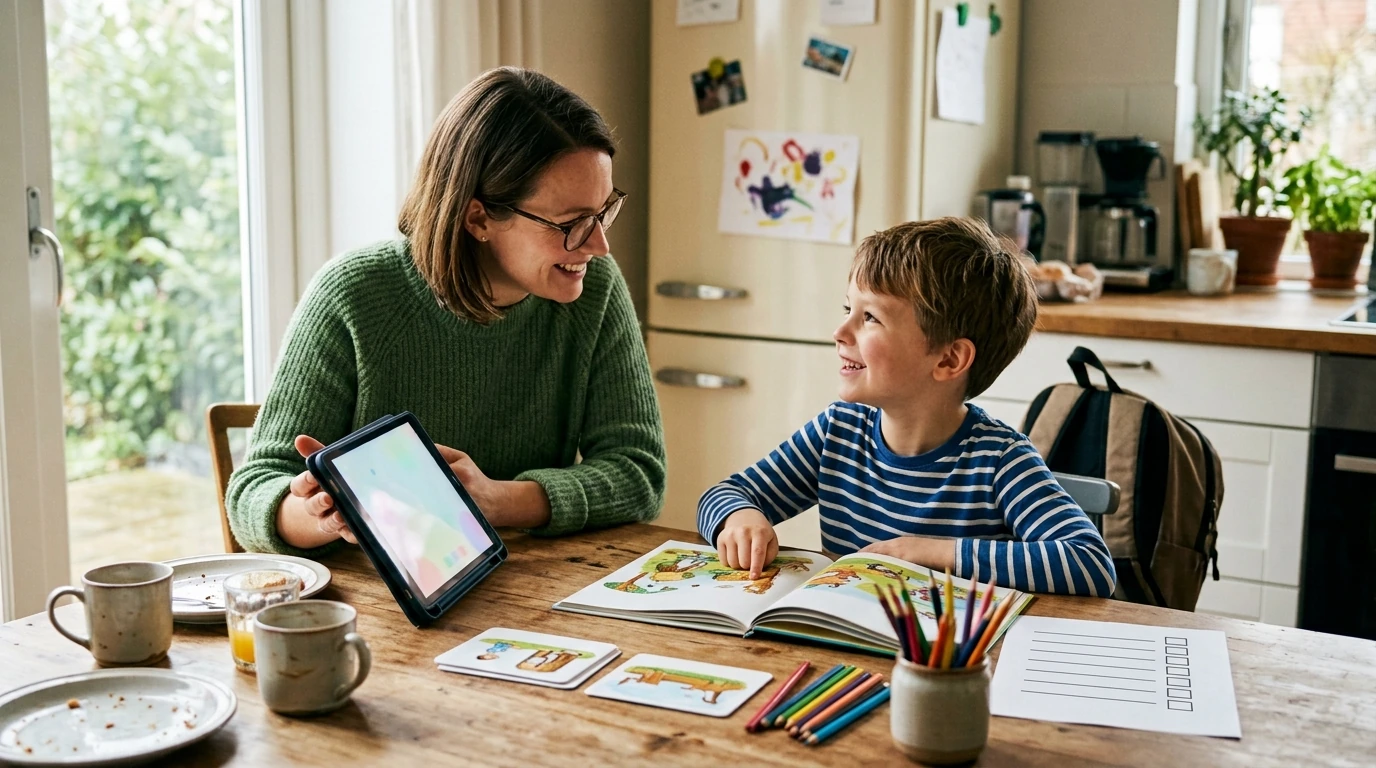
Bilingual Kids at Home: An AI-Supported Routine Parents Can Actually Keep Up With
Building bilingual skills at home works best with consistency, meaningful conversation, and age-appropriate practice. An AI-supported routine can reduce planning time and help families create more listening, speaking, reading, and writing moments—without turning language into a daily battle. The guide below maps out a practical home system using checklists and activities that fit real schedules.
What “AI-supported bilingual learning” looks like in daily family life
At home, AI works best as a quick idea-generator that helps you show up more consistently—especially on days when your brain is full. Instead of searching for worksheets or inventing games on the spot, you can use AI to generate prompts, short stories, role-plays, and simple language games that match your child’s age and interests.
Parents stay in control. AI can suggest practice ideas, but caregivers decide what fits family values, cultural expectations, and a child’s temperament. The goal isn’t perfect output—it’s frequent, low-pressure interaction.
Prioritize interaction over drills: a few minutes of back-and-forth conversation (even with mistakes) usually beats a longer “lesson” that everyone dreads. For younger kids, build a base with listening and speaking first; add reading and writing as readiness grows and frustration stays low.
Set up the home language plan in 20 minutes
1) Pick one clear goal
Choose something you can actually notice week to week: “understands daily routines,” “can narrate a simple story,” or “can chat with grandparents for five minutes.” A concrete goal makes it easier to pick activities and celebrate progress.
2) Decide how each language shows up at home
Common options include one-parent-one-language, time-and-place (e.g., the minority language at breakfast and bedtime), or activity blocks (e.g., cooking and board games in the target language). Pick the pattern that feels sustainable—not idealized.
3) Attach practice to routines you already have
Choose three recurring moments (breakfast, bath time, bedtime) rather than adding a brand-new “lesson slot.” A small, repeatable habit is easier to protect when life gets busy.
4) Create a family phrase bank
Write down the 30–50 sentences you say every day: requests, transitions, feelings, manners, and common reminders. This is your gold—because it’s immediately useful. Keep it visible on the fridge or in a notes app, and reuse the same phrases until they feel automatic.
5) Plan for reality (not perfect weeks)
Decide what counts on a packed day: a 5-minute audio story plus three simple questions still counts. Keeping the streak alive matters more than doing everything.
Simple AI activities that build real language (not just vocabulary lists)
Story co-creation
Role-play scripts (short and reusable)
Picture talk with your own photos
Sound and rhythm for younger kids
Micro-writing for older kids
A weekly bilingual routine you can repeat
Repeatable Weekly Plan (adjust times to your child’s age)
| Day | Main focus | 10-minute activity | Quick parent check |
|---|---|---|---|
| Mon | Listening | Short story + 3 comprehension questions | Child answers with words/gestures without frustration |
| Tue | Speaking | Role-play (shop/restaurant) with 5 repeatable lines | Child attempts full phrases, not only single words |
| Wed | Reading | Shared reading: 1 page at a time + point-and-say | Child recognizes a few repeated words |
| Thu | Pronunciation & fluency | Chant/rhyme + playful repetition | Child stays engaged; stop before fatigue |
| Fri | Conversation | Photo talk: describe a picture with prompts | Child uses 1–2 connectors (and/because/then) |
| Sat | Family activity | Cook, craft, or game in the target language | Caregivers model phrases and praise effort |
| Sun | Review & celebrate | Mini recap: favorite words + one short retell | Track wins; choose next week’s theme |
Parent checklists that keep progress visible (and reduce stress)
How to use AI responsibly with kids
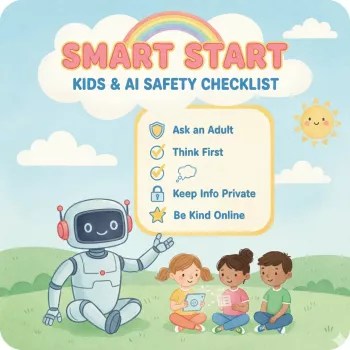
- Keep personal information out of tools: avoid names, addresses, school details, or identifiable photos.
- Use AI as a helper, not a judge: corrections should be gentle, focused on meaning first, and limited in quantity.
- Verify language quality: if something sounds unnatural, simplify and rewrite using common, conversational phrases.
- Balance screen time: many activities can be printed, spoken aloud, or used as offline scripts for pretend play. The American Academy of Pediatrics offers practical guidance for building healthy media habits: Media and Children Communication Toolkit.
- Watch for overwhelm: end sessions on a win and return later rather than pushing through fatigue.
For reassurance about bilingual development milestones and what’s typical, ASHA’s overview is a helpful reference: Learning More Than One Language.
A ready-to-use digital guide for parents
If you want a planning shortcut with repeatable routines, checklists, and family-friendly practice ideas, Bilingual Kids – AI-Powered Guide (Digital Download) is designed for home use. It’s easy to revisit on a phone or tablet, and you can print the pages you’ll actually use (like the weekly plan and phrase bank).
For families building cozy reading rituals into bedtime or story time, a comfortable outfit can help make the routine feel special—like the Girls Knit Sweater Dress with Heart Print & Ruffle Collar.
FAQ
What age is best to start bilingual learning at home?
Earlier exposure can make bilingual input feel normal, but starting later still works when kids get consistent, positive interaction. Keep expectations age-appropriate and focus on meaningful use in daily life.
How much daily time is enough for steady progress?
For many families, 5–20 minutes a day (depending on age) is enough when it happens frequently and includes real conversation. On busy days, a “minimum viable” routine—one short story and a few questions—still supports progress.
Can AI replace a bilingual teacher or tutor?
AI can support planning and provide extra practice ideas, but it doesn’t replace human connection, responsive feedback, and cultural context. When possible, use AI to supplement real conversations with family, community, or a tutor.








Leave a comment