How Long Does a Baby’s First Tooth Take to Break Through?
15% off on product page · save $2.12
How Long Does a Baby’s First Tooth Take to Break Through?
When does the first tooth appear?
Most babies get their first tooth around 6 months of age, although some have one earlier and others do not see a tooth until closer to their first birthday or later. The lower front teeth are often the first to appear, but the order and timing can vary from baby to baby.
Once you notice a swollen gum or a small white edge, there is no reliable countdown to when the tooth will fully emerge: it may become visible over days or take longer to move through the gum. Teething signs can come and go, so a few days of drooling or chewing do not necessarily mean a tooth will appear immediately.
What might you notice while you wait?
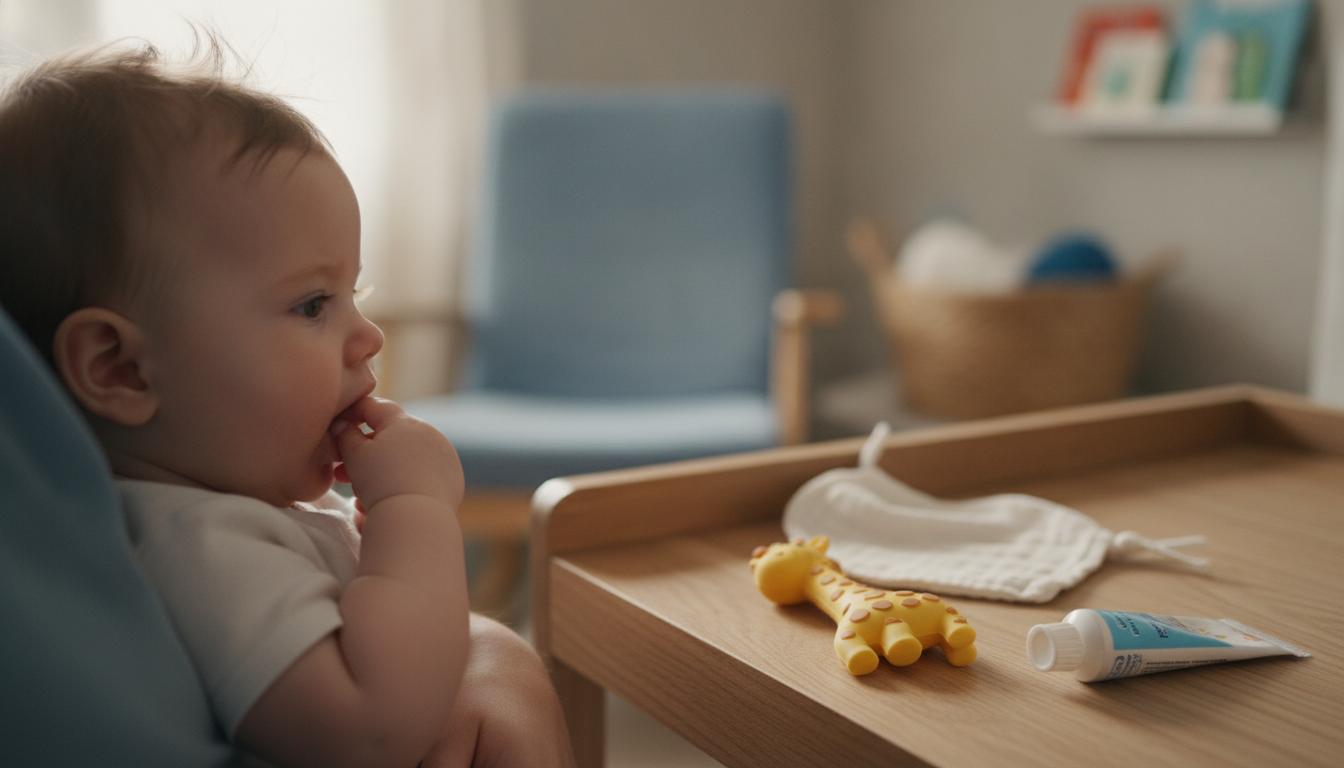
Your baby may drool more, want to chew, or seem a little fussier than usual as a tooth approaches the surface. You might also feel a firm edge along the gum before you can clearly see the tooth, though some babies show few obvious signs.
Teething should not cause a high fever, persistent diarrhea, or a baby to seem seriously ill. If your baby has these symptoms, is difficult to comfort, or is not feeding well, contact your pediatrician rather than assuming teething is the cause.
Check the product’s listed specifications when evaluating what might you notice while you wait.

Featured in this guide
Baby’s First Tooth Tips Ebook | Helpful Guide for Parents | Tips for Managing Baby’s First Tooth
How can you make your baby more comfortable?
Try gently rubbing your baby’s gums with a clean finger, or offer a solid teething ring chilled in the refrigerator rather than the freezer. Stay nearby while your baby uses it, and avoid teething necklaces and bracelets because they can pose choking or strangulation risks.
If your baby seems especially uncomfortable, ask your pediatrician about an appropriate pain reliever and dose for your baby’s age and weight. Avoid numbing gels containing benzocaine or lidocaine unless specifically directed by a clinician, because they can be dangerous for young children.
What should you do when the tooth appears?
As soon as a tooth breaks through, brush it twice a day with a small, soft toothbrush and a smear of fluoride toothpaste about the size of a grain of rice. Arrange your baby’s first dental visit by their first birthday or within six months of the first tooth appearing, whichever comes first.
For more practical guidance, explore our guide to first-tooth timing and teething care. We also offer our Baby’s First Tooth Tips Ebook as a parenting guide for families navigating this milestone.
FAQ
How long does it take for a baby’s first tooth to pop through?
There is no set number of days between noticing teething signs and seeing the tooth emerge. A white edge may appear within days, or the tooth may take longer, and symptoms can come and go along the way.
Are babies still in pain after tooth breaks through?
Some babies may still have tender gums for a short time as the tooth continues to emerge, while others seem comfortable soon afterward. If discomfort is severe, persists, or comes with illness symptoms or feeding problems, contact your pediatrician.
See if Baby’s First Tooth Tips Ebook | Helpful Guide for Parents | Tips for Managing Baby’s First Tooth fits your setup









Leave a comment