5 DIY Science Toys Kids Can Build at Home
What are some fun DIY science toys for kids?
DIY science toys turn everyday supplies into hands-on experiments kids can build, test, and improve. The best projects are simple enough to assemble at home but surprising enough to spark questions. Try these ideas with an adult nearby, especially when scissors, small parts, or water are involved.
Balloon-powered rocket
Thread a piece of string through a drinking straw and stretch the string between two supports. Blow up a balloon without tying it, tape it to the straw, then let go. The escaping air pushes the balloon along the line. Kids can change the balloon size or string angle and compare how far it travels.
Paper helicopter
Cut a simple helicopter shape from lightweight paper, fold its two top blades in opposite directions, and add a small paper clip at the bottom. Drop it from a safe height and watch it spin as it falls. Experiment with blade length or paper type to see how design affects the descent.
Orbiting satellite model
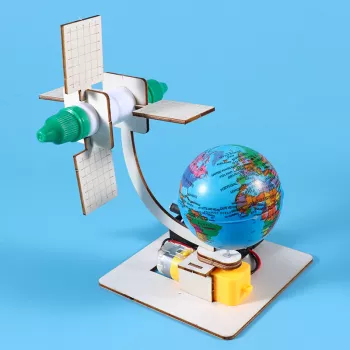
Make a miniature satellite with a small cardboard body and foil-covered panels. Attach it to a string or a lightweight handle and swing it gently around a stationary “Earth” made from a ball. This playful model can introduce orbits, gravity, and how satellites move around our planet. For a guided building activity, explore the DIY orbiting satellite kit for kids mini mission.
Color-layer density jar
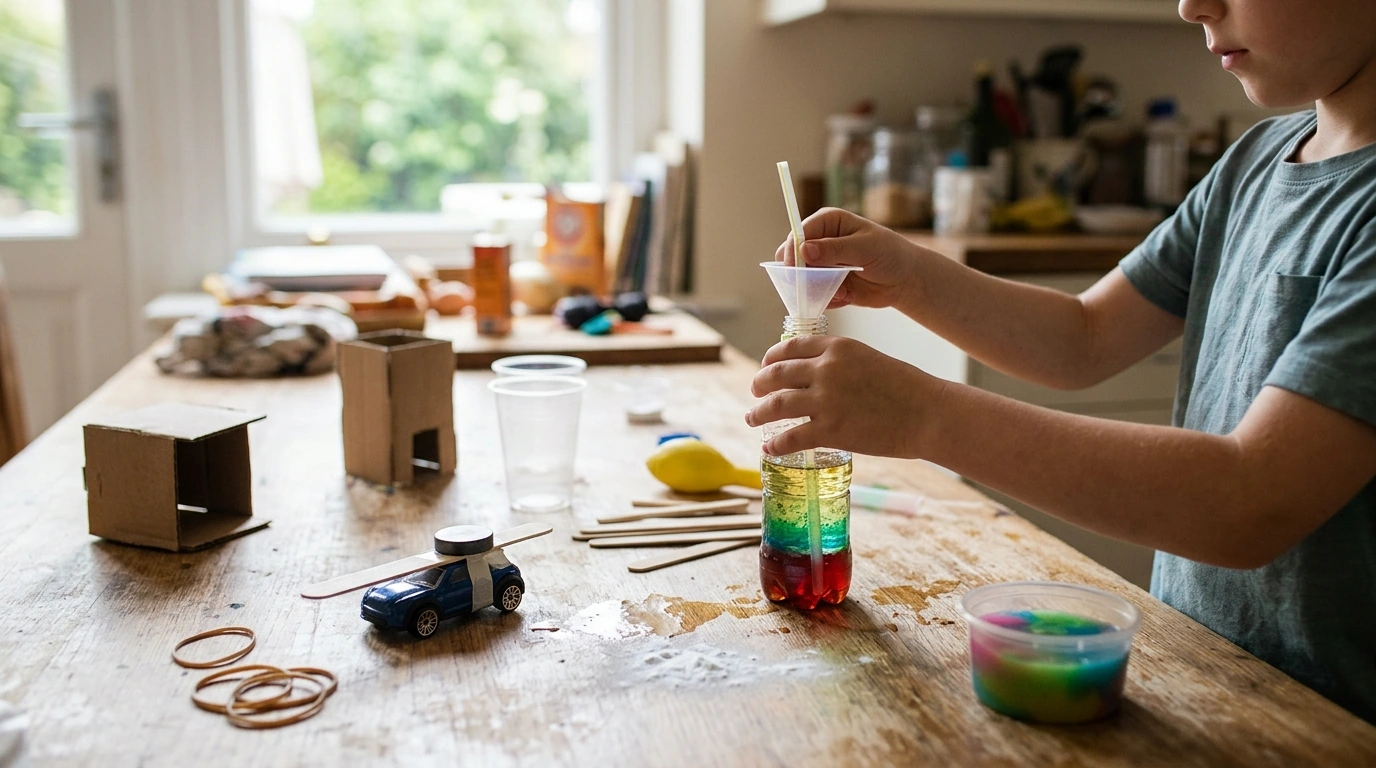
Pour a few different liquids, such as honey, dish soap, and water tinted with food coloring, into a clear jar. Add them slowly and observe how some settle into separate layers. Keep the jar sealed during the activity, and don’t drink the mixture. This is an easy way to explore density and notice how liquids behave differently.
Static-electricity butterfly
Cut a lightweight butterfly from tissue paper and place it on a table. Rub an inflated balloon against a clean, dry piece of fabric, then hold it just above the butterfly. The wings may lift toward the balloon, giving kids a quick demonstration of static electricity.
Let kids predict what will happen before each test, then change one thing at a time. That turns a fun build into a simple experiment and helps them connect what they see with how the toy works. Choose age-appropriate materials and keep small pieces away from children who may put them in their mouths.
FAQ
How can I make a science activity safe for younger kids?
Choose large, non-toxic materials, skip sharp tools and small parts, and supervise the activity from start to finish. Follow age guidance on any kit and keep experiment materials out of mouths and eyes.









Leave a comment