5 Fun Gratitude Activities Kids Will Actually Enjoy
What are some fun activities to express gratitude?
Gratitude doesn’t have to feel formal or “serious” to be meaningful. Turning thankfulness into small, playful routines makes it easier for kids (and adults) to notice the good stuff and share it out loud.
1) Make a “thank-you treasure hunt”
Pick a room (or the whole house) and hunt for 5–10 items you can appreciate: a cozy blanket, a favorite book, a family photo, clean water, a pet’s toy. For each find, say one specific reason it matters (“I’m thankful for this cup because it helps me drink water after playing”).
2) Start a gratitude jar (with a twist)
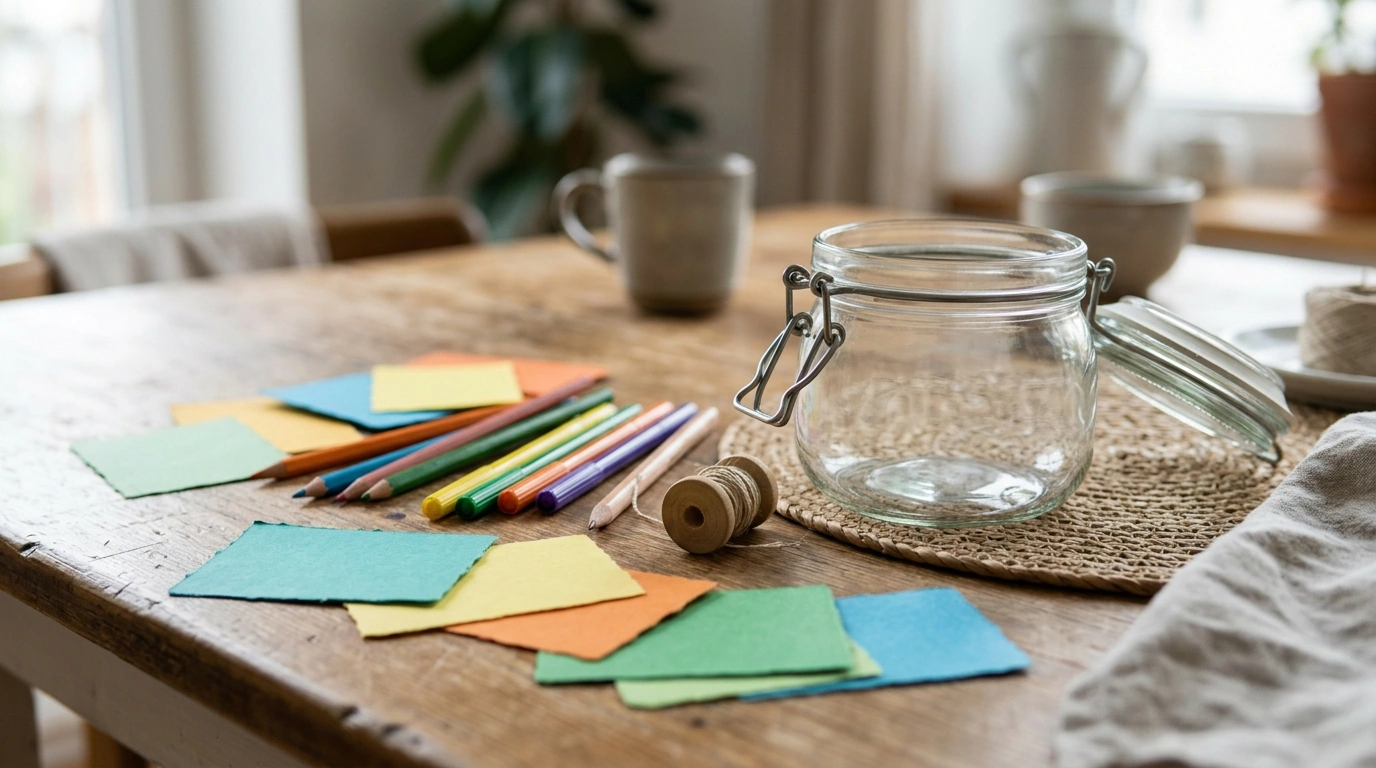
Keep a jar and small slips of paper on a shelf. Each day, everyone adds one note of thanks. Once a week, pull a few notes and read them in silly voices, or act them out like charades. The laughter helps the habit stick.
3) Write “tiny thank-you” notes
Leave short notes for teachers, neighbors, siblings, delivery drivers, or anyone who helps your family. Keep it simple: one sentence of appreciation and one detail (“Thanks for reading with me. I liked the funny voices!”).
4) Do a gratitude art challenge
Draw a “thankful rainbow” where each color stands for something different (people, places, food, activities, things you can do). Or create a collage from old magazines and label each picture with “Thank you for…”
5) Play the “rose, bud, thorn” game at dinner
Share one “rose” (best part of the day), one “bud” (something you’re looking forward to), and one “thorn” (a challenge). Then name one thing you’re grateful for that helped you handle the thorn.
For more kid-friendly ideas and a simple routine you can use every day, visit this helpful guide: Gratitude checklist for kids: easy daily thankful habits.
FAQ
How can kids build a daily gratitude habit?
Keep it short and consistent: choose one cue (breakfast or bedtime) and ask one question like “What’s one good thing today?” Pair it with a quick action—writing a note, adding to a jar, or naming a helper—to make it feel real.








Leave a comment