BPA-Free Baby Silicone Spoon & Fork Set with Steel Core
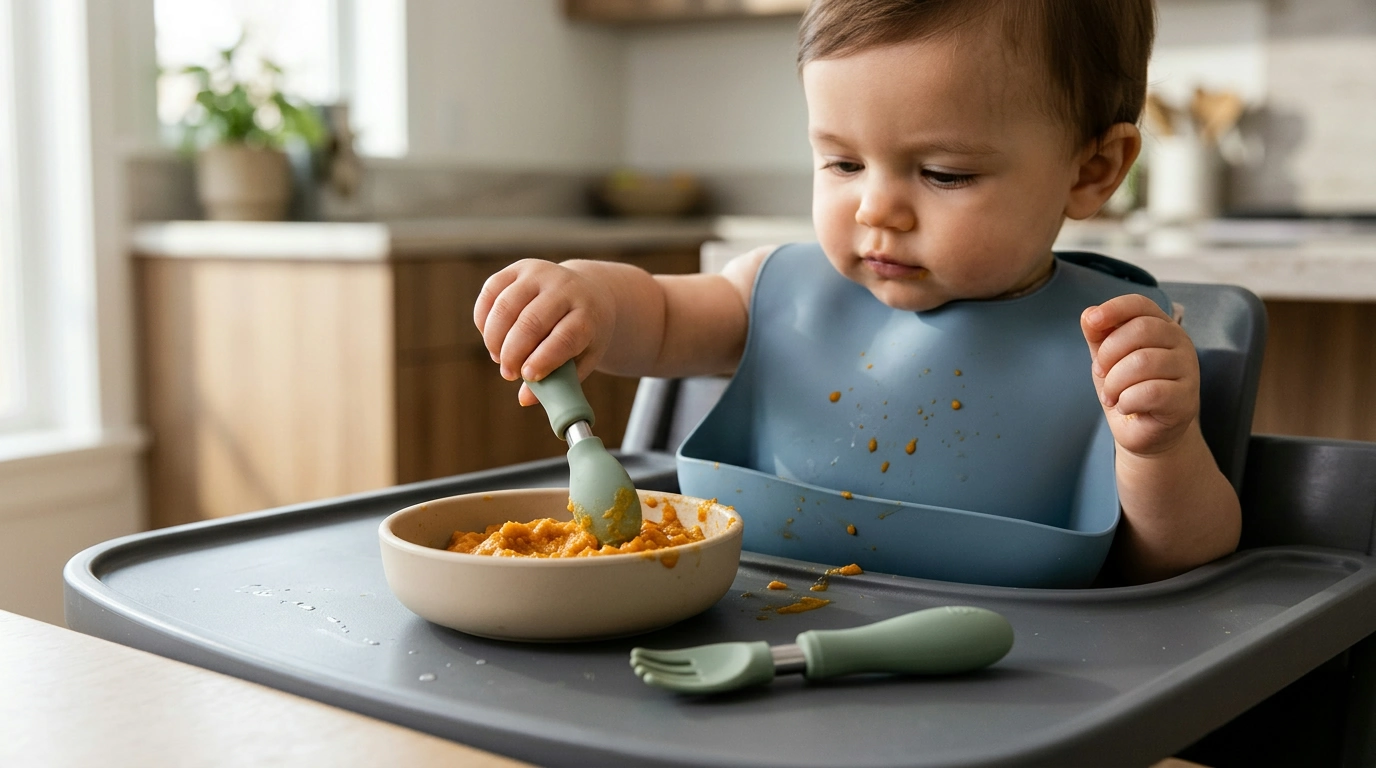
Baby Silicone Spoon and Fork Set – BPA-Free Stainless Steel Training Utensils
Mealtime skills grow quickly once babies begin exploring solids and learning to feed themselves. The right training utensils can make scooping, dipping, and early “fork practice” feel more doable—without sacrificing comfort or safety. Sets that combine soft-touch silicone with a sturdy stainless steel core aim to support early coordination while staying gentle on tender gums and growing mouths. For more guidance, see 4 Best Baby Utensils + Feeding Tips from an OT.
For guidance on when and how babies typically transition to solids, see the American Academy of Pediatrics resource on starting solid foods.
What makes a good training utensil set
Training utensils work best when they match how babies actually move: gripping with the whole hand at first, then gradually refining control. A strong set usually checks these boxes:
- Comfort-first grip: Short, easy-to-hold handles help small hands control angle and pressure.
- Gentle contact surfaces: Soft silicone helps protect tender gums during early feeding stages.
- Stable, durable core: Stainless steel adds rigidity for better scooping and less bending over time.
- Safe materials: BPA-free, food-grade components reduce exposure to unwanted chemicals.
- Right size for stages: Shallow spoon bowls and rounded fork tines support beginner coordination.
Materials and safety essentials (silicone + stainless steel)
Material choices matter because babies mouth utensils, bang them on trays, and use them in messy, high-wear ways. A silicone-and-stainless pairing is popular because each material covers the other’s weak spots.
- Silicone benefits: Naturally soft, non-splintering, and comfortable for teething-aged babies who mouth utensils.
- Stainless steel benefits: Helps the spoon bowl and fork hold shape, improving function as textures get thicker.
- What “BPA-free” covers: It indicates bisphenol A isn’t used in plastic components; it’s still smart to look for overall food-contact safety practices. The FDA provides background on BPA in food contact applications.
- What to look for beyond BPA-free: Food-grade silicone, smooth seams, and no sharp edges or burrs.
- Odor and stain management: Silicone can hold onto strong food smells (like garlic or curry); thorough washing helps.
Because babies are at higher risk for foodborne illness, keep utensils clean and handle foods safely; the CDC has practical tips for food safety for infants and children.
Design features that support self-feeding
Even small design details can change how successful a baby feels at the high chair. Consider how each feature supports learning:
- Short handle length: Encourages an early palmar grasp and eases the transition to a more mature grip later.
- Non-slip feel: Silicone coating can improve traction for wet hands and messy meals.
- Spoon shape: A shallow bowl helps babies bring food to the mouth with fewer “dump and drip” moments.
- Fork usability: Rounded, baby-appropriate tines are meant to balance learning with gentle contact.
- Weight and balance: A bit of heft from stainless steel can steady motion compared with ultra-light plastic.
For early practice, thicker textures (like oatmeal, yogurt, mashed sweet potato, or thicker purées) can be easier to scoop and keep on the spoon than very thin purées.
Care, cleaning, and everyday use
Daily routines keep training utensils fresher and reduce the chance of odors lingering in silicone. Build quick habits that fit real life:
| Routine | What to do | Why it matters |
|---|---|---|
| Before first use | Wash and inspect seams/edges | Confirms cleanliness and checks for defects |
| After each meal | Clean promptly; rinse thoroughly | Reduces bacteria buildup and odors |
| Weekly | Inspect silicone for tears and looseness | Prevents choking hazards and exposed metal edges |
| As needed | Soak to remove odors; air-dry fully | Helps keep silicone fresh and prevents mildew smells |
When to introduce a spoon and fork set
Product spotlight: Baby Silicone Spoon and Fork Set – BPA-Free Stainless Steel Training Utensils
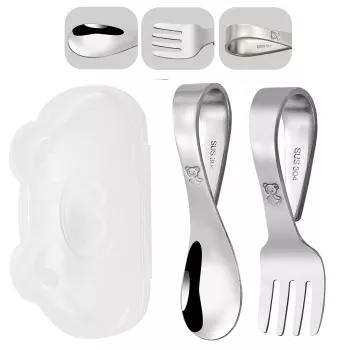
If a simple, budget-friendly training set is the goal, the Baby Silicone Spoon and Fork Set – BPA-Free Stainless Steel Training Utensils is designed to support early self-feeding practice with a two-piece spoon-and-fork pairing.
| Item | Details |
|---|---|
| Product | Baby Silicone Spoon and Fork Set – BPA-Free Stainless Steel Training Utensils |
| Price | 3.67 USD |
| Availability | In stock |
| Product page | https://babyjoyboutique.com/baby-silicone-spoon-and-fork-set-bpa-free-stainless-steel-training-utensils/ |
More in-stock picks for growing families
- Girls Knit Sweater Dress with Heart Print & Ruffle Collar for cozy, pull-together seasonal outfits.
- High-Speed 1/8 Scale Monster Tank RC Car for big-kid playtime when older siblings want something special too.
Common questions parents have before buying
FAQ
Are silicone training utensils safe for babies to chew on while learning?
Food-grade silicone is commonly used for baby feeding items, but utensils should still be used with close supervision during meals. Check regularly for tears or loose areas, and replace any utensil that shows damage or exposed metal.
How do stainless steel core utensils help compared with all-silicone or all-plastic utensils?
A stainless steel core adds rigidity, which can make scooping and lifting thicker foods easier and helps the utensil keep its shape over time. The key is ensuring the metal remains fully covered and all edges stay smooth and intact.
How should a baby spoon and fork set be cleaned to reduce odors and stains?
Wash promptly with warm water and mild soap, rinse thoroughly, and let the utensils air dry completely. If silicone holds onto odors, soak in warm soapy water, rinse well, and follow the seller’s guidance for dishwasher or sterilizer use.








Leave a comment