Electronic Rhythm Puzzle Game for Kids: Timing & Focus
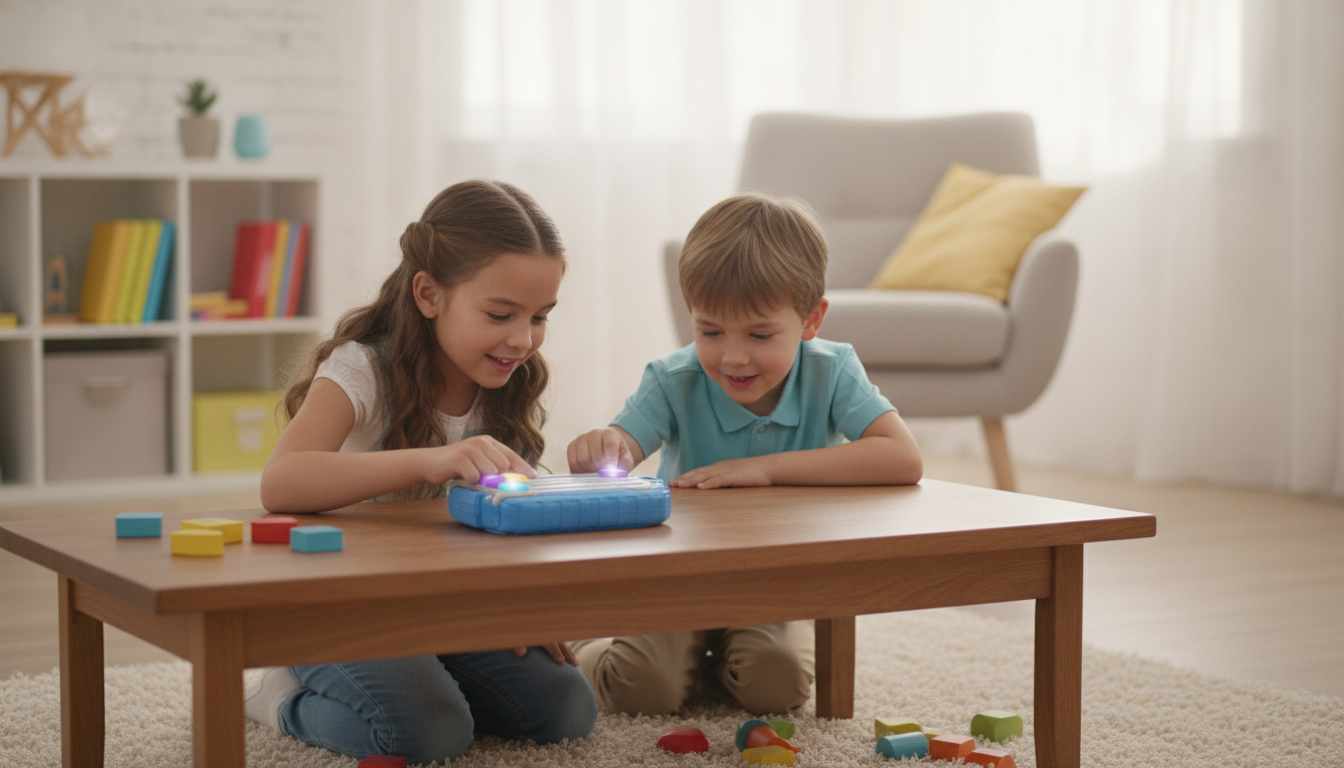
Electronic Rhythm Puzzle Game: Fast-Paced Play That Builds Timing and Focus
An electronic rhythm puzzle game turns simple button-and-signal play into a quick challenge of timing, attention, and pattern recognition. With short rounds and immediate feedback, these games can fit neatly into after-school downtime, travel, or family game time—without a big setup. Below is a practical guide to how rhythm puzzle games typically work, what skills they encourage, and how to help kids enjoy the challenge without turning it into a frustration spiral.
What an electronic rhythm puzzle game is
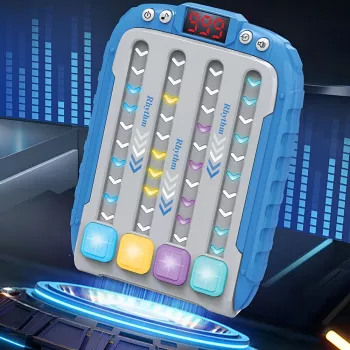
An electronic rhythm puzzle game is usually a handheld or tabletop toy that uses lights, tones, and/or rhythmic sequences to prompt a player to press buttons or tap touch areas. The goal is simple: respond correctly, in the right order, at the right time.
- Sound/light cues + input: The toy “signals,” and the player repeats the pattern with button presses or taps.
- Short rounds that ramp up: Difficulty often increases by speeding up, adding steps, or changing the pattern rules.
- Flexible play styles: Many are great for solo practice, turn-taking with friends, or family score challenges.
For a compact option that’s easy to pull out anytime, see the Electronic Rhythm Puzzle Game.
How the gameplay usually works
Most rhythm puzzle games follow a familiar loop: start a mode, watch/listen closely, then respond as accurately as possible.
- Pick a mode or level: Some modes focus on memory (repeat the growing sequence), while others focus on reaction time (hit the correct cue quickly).
- Follow cues in order and timing: Lights, tones, or a rhythmic pattern tell you what to press and when to press it.
- Mistakes lead to quick resets: A wrong input may reset the sequence, reduce lives, or end the round—making “try again” part of the fun.
- Progress is tracked: Scores, time survived, longest sequence, or completed levels give kids a clear target for “one more try.”
That tight feedback loop is a big reason these toys feel so engaging—kids instantly learn what worked and what didn’t, then adjust on the next run.
Skills kids practice during play
Rhythm puzzle games are primarily about timing and pattern response, but several “behind the scenes” skills get exercised along the way:
- Timing and rhythm: Matching cues to a beat supports coordination and pacing, especially when the toy speeds up.
- Working memory: Kids hold short sequences in mind and reproduce them accurately, building “keep track of steps” stamina.
- Attention and impulse control: Many rounds reward waiting for the correct cue—tapping early can end a run fast.
- Resilience: Because rounds are short, kids get lots of low-stakes practice retrying calmly and improving gradually.
For context on how children’s skills develop over time, the CDC’s developmental milestones resource is a helpful reference: https://www.cdc.gov/ncbddd/actearly/milestones/index.html.
Quick guide to choosing a good fit
Not all rhythm puzzle games “feel” the same. The best match depends on a child’s patience, sound sensitivity, and love of repetition.
- Difficulty curve: Adjustable levels or multiple modes help the game grow with the child.
- Feedback style: Clear lights/sounds reduce beginner frustration; stricter timing windows often appeal to older kids.
- Volume options: A mute or low setting can be a lifesaver for shared spaces and quiet play.
- Portability: Compact builds are ideal for travel, restaurants, and waiting rooms.
- Power and battery safety: Look for a secured battery compartment and handle batteries carefully.
Feature checklist for rhythm puzzle games
| What to look for | Why it helps | Best for |
|---|---|---|
| Multiple modes or levels | Keeps play fresh and prevents quick boredom | Kids who like variety |
| Clear visual cues | Easier learning and fewer early frustrations | Younger beginners |
| Adjustable volume or mute | More flexible for home, school, or travel | Families and classrooms |
| Comfortable buttons/touch areas | Reduces mis-presses and improves accuracy | Longer play sessions |
| Sturdy build and secured battery door | Better durability and safer handling | Everyday use |
Age guidance and safety notes
Age fit is less about reading level and more about pace tolerance and sensory comfort. Younger kids often do best with slower, repeatable rounds and very obvious cues, while older kids tend to enjoy faster modes and score-chasing challenges.
For official safety guidance, see the U.S. Consumer Product Safety Commission’s battery safety page: https://www.cpsc.gov/Safety-Education/Safety-Education-Centers/Battery-Safety.
Simple ways to make the game more fun
To balance focused indoor play with something higher-energy, pairing a quick electronic game with an outdoor-style toy can work well. For big movement and speed, consider the High-Speed 1/8 Scale Monster Tank RC Car for wide-open, active play sessions.
Care, storage, and troubleshooting basics
Related gift ideas for active, hands-on play
FAQ
What age is an electronic rhythm puzzle game best for?
Younger kids typically do best with slower modes, fewer steps, and very clear lights or tones, while older kids often enjoy faster timing windows and score challenges. Always check the manufacturer’s age labeling and supervise if the toy includes batteries or small parts.
Are rhythm puzzle games good for attention and memory?
They can support working memory and sustained attention by asking kids to hold a sequence in mind and repeat it accurately under time pressure. The biggest gains usually come from short, regular play with a positive challenge level rather than long sessions.
What should be checked for battery safety?
Look for a secured battery compartment that requires a tool (or child-resistant closure) and keep spare batteries out of reach. If a battery is swallowed or placed in the nose/ear, treat it as an emergency and seek immediate medical help.







Leave a comment