Kids’ Anger Tools: Calm-Down Skills, Scripts, and Repair
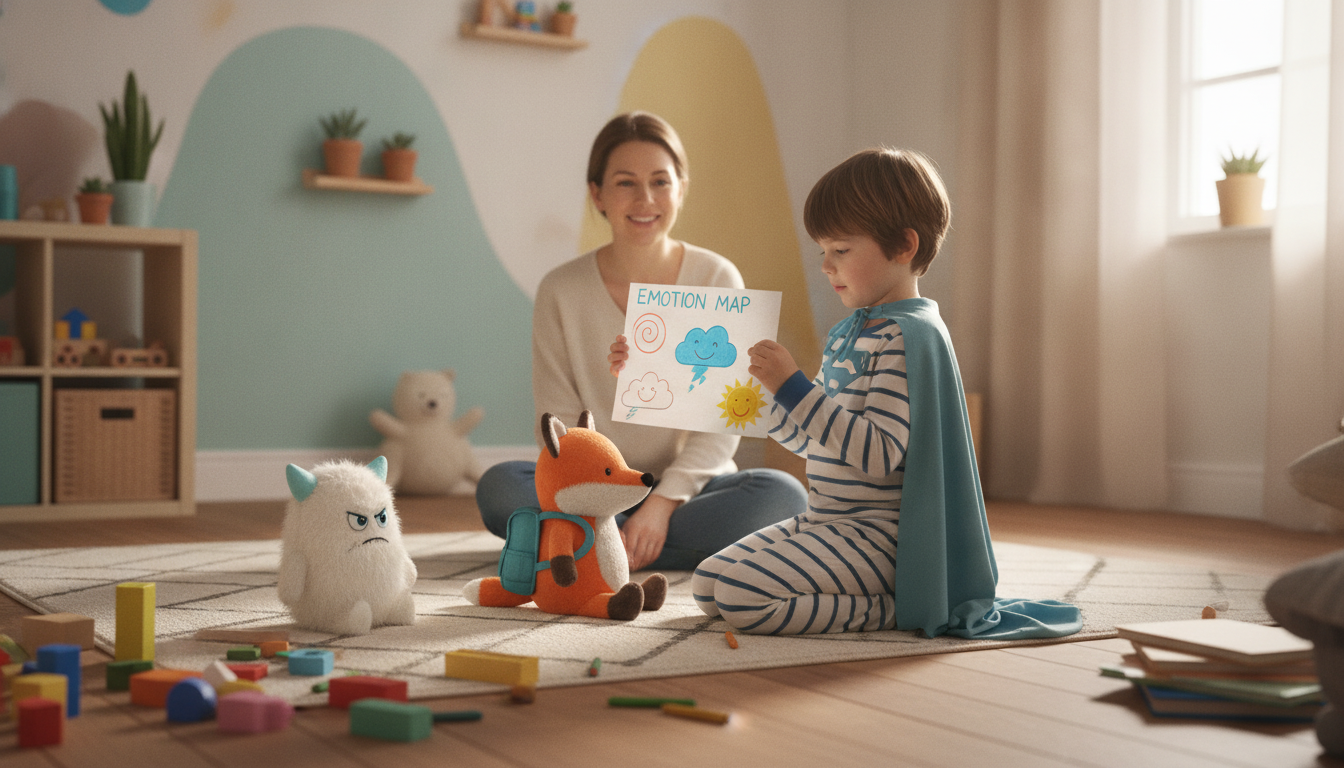
Helping Kids Handle Anger with Confidence: Practical Strategies and Family Support
Anger is a normal emotion, but kids often need coaching to recognize it early, express it safely, and repair after a blow-up. With steady boundaries and a few repeatable tools, children can learn to calm their bodies, use words, and build confidence over time—at home, at school, and on the go. For more guidance, see Angry Kids: Dealing With Explosive Behavior.
What anger looks like in kids (and what it’s trying to say)
In children, anger is often a “secondary emotion”—it shows up after something more vulnerable like fear, embarrassment, disappointment, hunger, or feeling powerless. That’s why the same small problem (a sibling touching a toy, a “no” at the store, losing a game) can trigger a big reaction. For further reading, see Here’s advice from psychologists on how to help kids cope ….
Common signs include clenched fists, yelling, arguing, slamming doors, sudden tears, sarcasm, or shutting down. These behaviors are signals, not character flaws. The long-term goal is helping a child build skills—naming feelings, calming the body, and problem-solving—instead of focusing only on stopping the moment.
Set the foundation: calm, predictable boundaries
Kids do best with clear expectations that separate feelings from actions. A simple family rule can carry you far: “All feelings are okay; hurting people is not okay.” That message protects emotional honesty while keeping safety non-negotiable.
Predictable routines also reduce blow-ups. When sleep, meals, transitions, and screen time are inconsistent, many kids become dysregulated faster. A short heads-up before changes (“Five more minutes, then we’re leaving”) can prevent a red-zone reaction.
Make “repair” a normal step after anger. Keep it brief and specific: a short apology, restitution (help fix what was damaged), and a simple reset plan (“Next time I’ll go to the calm corner first”). Most importantly, model what you want to see by narrating your own regulation: “I’m getting frustrated, so I’m taking three slow breaths before I respond.”
Teach kids to spot early warning signs
Anger is easiest to manage early. Help children identify body clues such as a hot face, fast heart, tight jaw, “volcano” feeling, shaky hands, or a buzzing head. When kids can name what’s happening inside, they can act sooner—before the peak.
Try a simple 0–5 scale (0 = calm, 5 = out of control) or a traffic light check-in (green/yellow/red). Practice during neutral times, not during conflict. Expand emotion vocabulary beyond “mad” to include annoyed, jealous, disappointed, worried, overwhelmed, and left out. More precise words often lead to smaller explosions.
Calm-down tools that build confidence (not shame)
Offer a short “menu” of regulation options and let your child choose. Choice supports autonomy and reduces power struggles—especially for kids who feel bossed around when they’re already upset.
Body-based options
Mind-based options
Environment options
After calming: coach the next step
| Age range | What helps most | Sample phrases to coach |
|---|---|---|
| 3–5 | Simple body calming + short redirection | “Show me balloon breaths. Hands are for helping. Tell me: mad or sad?” |
| 6–8 | Visual tools + choice of two strategies | “Are you yellow or red? Pick: squeeze ball or calm corner for 3 minutes.” |
| 9–12 | Problem-solving after regulation + journaling/drawing | “Let’s reset your body first, then we’ll talk about what felt unfair and what to do next.” |
| Teens | Privacy + collaborative planning | “Do you want space or support? What would help you cool down before we revisit this?” |
What to do during an outburst (a simple step-by-step)
Family support that makes skills stick
When anger shows up at school, coordinate with teachers or counselors on a shared plan: a signal, a calm-down routine, and a predictable repair step. Tracking patterns can also reduce preventable blow-ups—sleep debt, hunger, rough transitions, sensory overload, or too much screen time. For evidence-based parenting guidance, the CDC’s Positive Parenting Tips and American Academy of Pediatrics resources on HealthyChildren.org are helpful starting points.
A ready-to-use printable resource for home routines
Look for tools that include feelings vocabulary, early-warning signs, calm-down choices, adult scripts, and repair steps after conflict. For a guided, downloadable approach with practical tips and family support strategies, see: Helping Kids Handle Anger with Confidence Guide (digital download).
Simple “reset” ideas for on-the-go moments
- For active kids who calm through motion, consider an outdoor play reset like the High-Speed 1/8 Scale Monster Tank RC Car (structured, goal-focused play can be a helpful cool-down).
- For fresh-air “drive and breathe” breaks in the yard, a supervised ride option like the Kids’ 12V Ride On Land Rover with Remote Control and LED Lights can support a calm reset routine before talking things through.
FAQ
Is anger normal for kids, or does it mean something is wrong?
Anger is a normal emotion and doesn’t automatically mean something is wrong. If anger is very frequent, intense, unsafe (hitting, property destruction), or regularly interferes with school, friendships, or family life, it can be a sign your child needs extra support from a pediatrician or mental health professional.
What should a parent say in the moment when a child is yelling or hitting?
Use a short script that sets safety and offers reassurance: “I won’t let you hit. I’m here. You’re safe. We’ll talk when your body is calm.” Then offer a regulated alternative like squeezing a pillow or going to the calm corner, and return to repair once the peak passes.
How can families prevent angry outbursts before they start?
Steady routines for sleep and meals, transition warnings, and teaching early body-warning signs can reduce outbursts. Practice coping skills during calm times and keep caregiver language consistent so kids know exactly what to do when they start feeling “yellow” or “red.”










Leave a comment