Soft Silicone Toddler Tea Set for Pretend Tea Parties
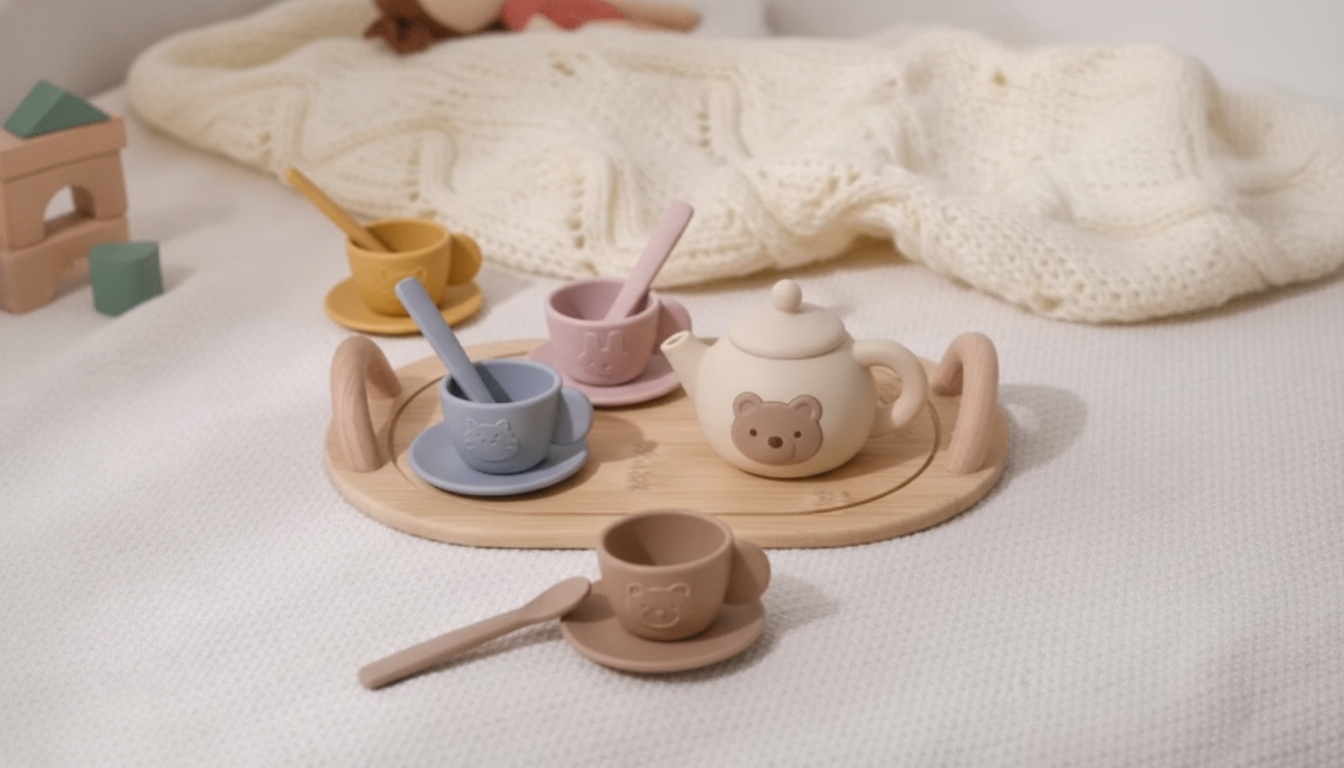
Silicone Tea Party Play Set for Toddlers: Soft Pretend Play for Little Hosts
A toddler tea party is equal parts imagination, social learning, and hands-on practice with everyday routines. A silicone tea set keeps play gentle and durable—easy to grip, quieter when dropped, and simple to clean—so caregivers can focus on the fun while little ones pour, “serve,” and share. Whether your child is hosting stuffed animals on the rug or “opening a café” in the play kitchen, silicone pieces help make tea-time pretend play feel calmer and more comfortable for small hands.
What Makes a Silicone Tea Set Toddler-Friendly
Silicone is a popular material for early childhood items because it’s flexible, soft to the touch, and typically holds up well to the everyday chaos of toddler play. For tea party toys, those qualities translate into a smoother play experience and fewer “oops” moments that end the game early.
- Soft, flexible pieces that are more forgiving on small hands and around siblings.
- More drop-resistant than many rigid plastic sets and less noisy on hard floors.
- Grippy texture that supports early fine-motor control during pouring and stacking.
- Easy wipe-down and rinse after snack-style play (or pretend “milk” mishaps).
- Bright, simple shapes that encourage open-ended play without complicated parts.
For general toy safety reminders and age guidance, it’s always worth reviewing trusted resources like the U.S. Consumer Product Safety Commission and the American Academy of Pediatrics.
Skills Toddlers Practice During Tea Party Play
Pretend play can look simple from the outside—pour, sip, repeat—but toddlers are doing a lot of learning while they “host.” A tea party theme is especially helpful because it mirrors real-life routines and social scripts kids see at home.
- Language growth: naming items, practicing greetings, and learning turn-taking phrases like “your turn” and “thank you.”
- Social-emotional skills: sharing, hosting, and gentle negotiation (“one more cup,” “two cookies”).
- Fine-motor practice: grasping cups, placing lids, aligning pieces, and controlled “pouring” motions.
- Early math concepts: counting cups/plates, comparing sizes, and sorting by color.
- Imaginative thinking: role-play scenarios such as café, picnic, birthday party, or storybook tea.
One easy way to stretch the play: introduce simple prompts like “Can you make one cup for each teddy?” or “What does your café serve today?” These small additions build confidence without turning play into a lesson.
A Quick Look at This Silicone Tea Party Play Set
If you’re looking for a gentle, toddler-ready tea set that fits into everyday play, the Silicone Tea Party Play Set for Toddlers is designed for pretend pouring, serving, and sharing with soft silicone pieces and familiar tea-time shapes. The theme is calm and versatile—great for independent play, sibling play, or a quick playdate setup when you need an activity that doesn’t require lots of instructions.
- Designed for toddler pretend play with soft silicone pieces and simple, familiar tea-time shapes.
- A calm, everyday-play theme that works for solo play, sibling play, and playdates.
- A practical gift option for birthdays, holidays, and rainy-day activities.
- Pairs well with play kitchens, doll strollers, and pretend food sets already at home.
At-a-Glance Details
| Item | Details |
|---|---|
| Product | Silicone Tea Party Play Set for Toddlers |
| Price | 38.51 USD |
| Availability | In stock |
| Best for | Pretend play, sharing, fine-motor practice |
| Product page | View product |
How to Set Up a Toddler Tea Party (No Fancy Prep Needed)
A toddler tea party works best when it’s simple, repeatable, and easy to reset. The goal isn’t perfection—it’s creating a little “stage” where your child can practice being the host.
- Choose a stable play surface: a low table, a play kitchen counter, or a picnic blanket on the floor.
- Keep the “menu” simple: pretend tea, pretend snacks, or real dry snacks for older toddlers with supervision.
- Model one short routine: pour, offer, sip, and place the cup back—then let toddlers take over.
- Add a guest list: stuffed animals, dolls, or family members to encourage conversation and turn-taking.
- Rotate roles: host, guest, server, or “dishwasher” to extend play and reduce conflicts.
If you want to make it feel extra “special” without extra work, consider a simple dress-up moment. A cozy outfit like the Girls Knit Sweater Dress with Heart Print & Ruffle Collar can turn everyday pretend play into a mini occasion—especially for kids who love to play host.
Cleaning and Care Tips for Silicone Play Tea Sets
Silicone is generally low-maintenance, which is ideal for toys that end up on the floor, under the couch, or “washed” in a toy sink. Still, a consistent routine keeps pieces fresh and ready for the next party.
Safety and Quality Checks Caregivers Can Do at Home
Toddlers explore with their hands and mouths, so it’s smart to build quick safety checks into your routine—especially for toys used often. Beyond everyday supervision, look for products that are intended for young children and that align with recognized safety expectations such as ASTM F963 (toy safety standard overview).
FAQ
What age is a silicone tea party play set best for?
Most silicone tea party play sets are a great fit for toddlers around ages 1–4, depending on the child’s mouthing habits and coordination. Always follow the product’s listed age guidance and supervise younger toddlers during play.
How do you clean a silicone tea set used for pretend play?
Wash pieces with warm water and mild dish soap, rinse thoroughly, and let them air dry completely. If the set picks up odors, a brief soak in warm water with a little baking soda can help—then rinse again and dry.
Is silicone safer than plastic for toddler toys?
Safety depends more on the toy’s design and compliance than the material alone. Choose toys made for young children, avoid small parts for early toddlers, and regularly inspect items for damage or wear.








Leave a comment