Baby Fell Off the Bed? Calm 24–48 Hour Safety Checklist
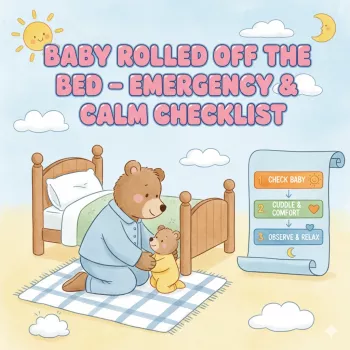
Baby Rolled Off the Bed: Emergency & Calm Checklist for New Parents
A fall from a bed is scary, but a clear plan helps protect a baby and keep caregivers focused. Use this calm, step-by-step checklist to quickly assess for red flags, decide when to seek urgent care, and monitor at home when it’s appropriate—plus practical ways to prevent it from happening again.
First 60 seconds: stay calm and make the area safe
The first minute is about preventing a second injury and quickly spotting emergencies.
- Take a breath and scan the scene. Move hazards out of the way (nightstand corners, cords, small objects) so nothing bumps or tangles during pickup.
- If the baby is not crying or is unusually quiet, check responsiveness immediately: look for normal breathing, normal color, and typical movement.
- If there is vomiting, seizure-like activity, trouble breathing, heavy bleeding, or the baby will not wake, call emergency services right away.
- If the baby is crying and breathing normally, gently pick up and hold the baby. Avoid shaking, bouncing, or rapid repositioning.
- Note the approximate fall height and what surface the baby landed on (carpet vs. hardwood). That detail helps a clinician assess risk.
For a one-page version you can keep by the bed or in a diaper bag, see Baby Rolled Off the Bed – Emergency & Calm Checklist (Printable Download).
Quick head-to-toe check (without panic)
Once breathing and responsiveness look normal, do a gentle scan from head to toe. The goal is to notice changes—no need to “test” painful areas aggressively.
- Head and face: look for swelling, bruising around the eyes/ears, bleeding from nose or ears, or a soft spot that seems bulging.
- Eyes: check for unequal pupils, unusual eye movements, or trouble focusing on a familiar face.
- Mouth and gums: look for bleeding, torn frenulum, or lip/tongue cuts (apply gentle pressure with clean gauze if needed).
- Neck and spine: if the baby shows severe pain, cannot move normally, or you suspect neck injury, keep the baby still and seek urgent help.
- Arms/legs: watch for favoring one limb, refusal to bear weight (older babies), or persistent crying when a specific area is touched.
- Skin: look for rapidly spreading bruising, large bumps, or swelling that grows over minutes.
- Behavior: compare to baseline—alertness, feeding interest, and ability to be consoled are key clues.
When to seek urgent help vs. monitor at home
| What you notice | What to do now |
|---|---|
| Loss of consciousness (even brief), seizure, trouble breathing, bluish color | Call emergency services immediately |
| Repeated vomiting, worsening headache/crying, increasing sleepiness, confusion, cannot be consoled | Go to emergency care now |
| Fluid or blood from ear/nose, bruising behind ears, bruising around eyes, bulging soft spot | Go to emergency care now |
| Weakness, unequal pupils, abnormal walking/crawling, not moving an arm/leg normally | Urgent evaluation today (ER/urgent care) |
| Small bump/bruise, baby returns to usual behavior, feeding mostly normal | Monitor closely at home and contact pediatrician for guidance |
| Any caregiver feels something is “not right” or baby is younger than 6 months | Call pediatrician or nurse line promptly; consider evaluation |
For additional background on head injury warning signs, see HealthyChildren.org (American Academy of Pediatrics) – Head Injuries in Children and the CDC – Traumatic Brain Injury (TBI): Facts and Prevention.
Home monitoring checklist for the next 24–48 hours
If the baby appears well and a clinician has not directed you to emergency care, close observation matters. Many parents find it easiest to “log” symptoms so nothing is missed during a tired night.
- Alertness: watch for difficulty waking, unusually limp body, or a persistent glassy stare.
- Vomiting: a single spit-up may be unrelated; repeated vomiting after a fall is a red flag.
- Feeding: refusal to feed, weak sucking, or repeated choking/coughing can signal a problem.
- Crying patterns: high-pitched, inconsolable crying or crying that worsens when moved can indicate pain or injury.
- Sleep: allow sleep, but confirm the baby can be awakened and responds normally. If your pediatrician recommends wake checks, follow that specific schedule.
- Pain/swelling: use a cool compress wrapped in cloth for short intervals; avoid pressure on soft spots.
- Document details: time of fall, surface, height, symptoms, and any medications given—helpful if evaluation is needed later.
What not to do after a fall
Prevention: reduce the chance of a repeat fall tonight
Printable emergency calm checklist (instant download)
Baby Rolled Off the Bed – Emergency & Calm Checklist | Instant Digital Download
Helpful parent tools (digital downloads)
- Using AI to Organize Kids’ Schedule (Digital Guide) — a practical way to streamline feeds, naps, and caregiver handoffs.
FAQ
Should a baby sleep after rolling off the bed?
Yes—sleep can be normal if the baby is otherwise acting like themselves. The key is that the baby can be awakened and responds normally; if your pediatrician advises wake checks, follow that plan and seek urgent care for any red-flag symptoms.
What symptoms can show up hours later after a fall?
Delayed warning signs can include repeated vomiting, increasing sleepiness, worsening irritability, feeding refusal, unequal pupils, weakness, or behavior that isn’t typical for your baby. If any of these appear, contact your pediatrician promptly or seek urgent evaluation.
When should a doctor be called even if the baby seems fine?
Call for guidance if the baby is under 6 months, the fall was from a higher height or onto a hard surface, or if anything about the baby’s behavior feels “off” compared to baseline. When in doubt, a quick call to a pediatrician or nurse line is a safe next step.










Leave a comment