Toddler Vocabulary Checklist: Printable Routine Word Builder
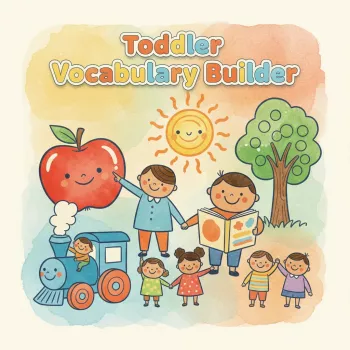
Toddler Vocabulary Builder Checklist: A Simple Printable Guide for Everyday Speech Growth
Toddlers learn new words fastest through warm, responsive daily routines—not drills. A simple printable checklist turns “Are they learning enough?” into clear, small steps that fit meals, play, books, and errands. Below you’ll find practical age-range targets (not tests), easy ways to model language naturally, and a low-pressure method to track progress you can actually keep up with.
What “building vocabulary” looks like in the toddler years
Toddler vocabulary growth includes both understanding words (receptive language) and using words (expressive language). Receptive language usually develops first, which means a child may understand far more than they can say. Early words often center on people (mama, dada), favorite objects (ball, cup), routines (bath, bed), actions (go, eat), and “power words” that get quick results (more, up, no).
Progress can arrive in bursts. It’s also common to see a temporary plateau during big motor leaps, new childcare routines, travel, or illness. Another helpful reminder: clear speech is not the same as strong language. Many toddlers have solid understanding and great communication intent even if pronunciation is still emerging.
A practical goal is steady expansion of everyday words plus increasing ability to combine words (for example, “more milk” or “daddy go”).
Ages and stages: practical language targets (not tests)
Kids develop on a wide timeline, so use these as direction—then lean on your child’s cues and interests. Functional words come first: words that help your toddler get needs met, share attention, and join routines.
- 12–18 months: responds to name, follows simple one-step directions, points to show/ask, uses a few consistent words or word-like sounds, imitates sounds.
- 18–24 months: word inventory grows quickly, labels familiar items, uses simple requests (“more,” “help”), begins 2-word combinations, enjoys simple songs and books.
- 24–36 months: combines 2–3+ words, uses more verbs and descriptive words, starts using pronouns, answers simple questions, participates in short back-and-forth conversations.
Everyday vocabulary targets by routine
| Routine | Words to model | Easy phrases to repeat | Playful prompts |
|---|---|---|---|
| Meals/snacks | more, all done, drink, hot, cold, apple, banana, spoon | More banana. Drink water. All done. | Offer two choices: Apple or banana? |
| Bath/diaper | wash, dry, bubbles, towel, clean, stinky, wet, splash | Wash hands. Big bubbles. Dry towel. | Pause and wait: Ready… splash! |
| Getting dressed | shirt, socks, shoes, on, off, zip, hat, help | Shoes on. Socks off. Help zip. | Let the child finish a phrase: Shoes… (on!) |
| Play (blocks/cars) | up, down, big, small, go, stop, crash, again | Car go. Big tower. Crash down. | Create turn-taking: My turn. Your turn. |
| Out and about | dog, bird, truck, loud, fast, open, close, bye | Big truck! Bye dog. Door open. | Follow the child’s gaze and label what they see. |
Checklist approach: small daily actions that add up
The most effective plan is the one that happens often. Aim for a few repeatable moments each day rather than long sessions—think 3–5 minutes, a few times daily. A checklist works best when it tracks behaviors that predict growth, not just “new words.” Consider marking:
- Pointing and showing
- Imitating sounds/words
- Taking turns (even for a few seconds)
- Using gestures with sounds/words
To keep repetition high, rotate word sets weekly: a short list for routines (food words, bath words, outdoor words). Try the simple pattern say it, show it, pause: model the word, point/act it out, then pause to invite a response. Celebrate attempts—partial words, approximations, and gestures all count as meaningful communication.
If your child is bilingual or multilingual, count words across languages. Total communication matters most.
Natural language strategies that work during busy days
Vocabulary grows when language feels useful and connected. These strategies fit real life—no flashcards required.
For milestone guidance you can compare against gently, see the American Speech-Language-Hearing Association (ASHA) communication milestones and the CDC developmental milestones.
Using the printable checklist without turning it into homework
If you’d like a ready-to-use weekly format, the Toddler Vocabulary Builder Checklist (Printable Speech Development Guide) is designed for quick printing and simple tracking.
When to get extra support
A simple weekly plan to keep momentum
To make routines easier to protect during busy weeks, the Using AI to Organize Kids’ Schedule (Digital Guide) can help map repeating pockets of time for snack talk, bath talk, and bedtime reading. And if mealtimes are a core language routine, the 6PCS Silicone Baby Feeding Set with Lion Plate, Bib, Cup, Spoon & Fork can support more consistent “more/all done/drink” practice with toddler-friendly tools.
FAQ
How many words should a toddler say at each age?
There’s a wide range, and understanding often comes before speaking. Many toddlers go from a small handful of words around 12–18 months to a fast-growing vocabulary in the second year, and combining words (like “more milk”) is a key milestone. If progress feels stalled or there are red flags, discuss it with your pediatrician or a speech-language pathologist.
What are the best activities to build toddler vocabulary naturally?
Use routine-based strategies: read interactively, narrate play, offer choices (“milk or water?”), expand what your child says, and repeat key words across the day. Songs, predictable books, and short daily moments work better than long sessions. Flashcard-style drilling usually isn’t necessary as the main approach.
When should a parent worry about a speech delay?
Consider extra support if you notice limited gestures/pointing, poor response to name or sound, few words by around 18 months, no word combinations by about age 2, or any regression (loss of words/skills). A hearing check is often an important first step, and an evaluation can clarify what help is needed.








Leave a comment