Toddler Not Walking Yet? Timelines, Tips & Red Flags

Tiny Steps, Big Milestones: What to Do When Your Toddler Isn’t Walking Yet
When a toddler isn’t walking yet, it can be hard to know what’s normal, what needs support, and what steps to take next. A steady approach helps: notice which skills are already there, add a little targeted play each day, and loop in your pediatrician when timing or movement patterns raise questions. The goal isn’t to “push” walking—it’s to build strength, balance, and confidence so walking can show up naturally.
Walking timelines: what “late” can look like
Many toddlers take their first independent steps around 12–15 months, but a wider range can still be typical. Some kids pour their energy into other areas first—more words, detailed fine-motor play, or fearless climbing—and then walking appears later without long-term issues. Timing can also be influenced by prematurity, temperament, how much floor time vs. “container time” (swings, bouncers, seats) a child gets, and how many opportunities they have to pull up and cruise along furniture.
If you want a reliable reference point for general development, the CDC developmental milestones and AAP HealthyChildren.org milestones pages can help you compare skills across domains.
Common movement milestones that often show up before independent walking
| Skill | Often appears | What it may look like at home |
|---|---|---|
| Pulling to stand | 9–12 months | Uses furniture to rise and stand while holding on |
| Cruising | 10–13 months | Side-steps along a couch or coffee table |
| Standing briefly without holding | 11–14 months | Lets go for 1–5 seconds, then sits or grabs support |
| Controlled lowering (stand to sit) | 10–14 months | Bends knees to sit instead of plopping down |
| Independent steps | 12–18 months | Takes a few steps toward a caregiver or toy |
A quick check: readiness signs to look for this week
Instead of watching the calendar, watch for these building blocks. A toddler can be “not walking yet” and still be right on the edge.
- Weight-bearing: comfortable standing with support and bearing weight evenly through both legs.
- Transitions: can move between sitting, hands-and-knees, kneeling, and standing with some control.
- Cruising and turning: moves sideways along furniture and can pivot around corners or change direction.
- Foot position: feet generally point forward; occasional toe-walking can happen, but persistent toe-walking is worth discussing with a clinician.
- Confidence: willing to let go for a moment or reach for a toy while standing.
Everyday play activities that support walking (no special equipment)
Small doses, repeated often, tend to work better than long practice sessions. Aim for “just challenging enough,” then stop while your toddler still feels successful.
- Sit-to-stand practice: from a low couch cushion or sturdy ottoman, encourage standing up to “high-five,” then sitting back down slowly.
- Cruising treasure hunt: place safe toys along a couch so cruising has a purpose (move, stop, reach, move again).
- Kneeling play: play at a low surface while kneeling to build hip and core strength; progress to half-kneel (one foot planted).
- Push play with stability: a weighted laundry basket or sturdy push toy can be used briefly if your child stays upright (avoid setups that encourage leaning far forward).
- Barefoot time on safe surfaces: helps with balance and foot strength; use flexible shoes only when needed outdoors.
Common “stuck points” and simple adjustments
When progress stalls, it’s often because one small piece of the puzzle needs practice—weight shifting, transfers, or confidence.
- Stands but won’t step: practice reaching slightly to the side while standing; place a favorite toy just out of reach so weight shifts from one leg to the other.
- Cruises but won’t let go: use two pieces of furniture close together (“bridge the gap”) so hands briefly release during transfers.
- Fear of falling: make the environment predictable—bare floors cleared, stable furniture, and a consistent practice spot.
- W-sitting or limited rotation: add play that encourages turning (rolling a ball side-to-side, reaching across the body) and vary sitting positions.
- Foot turns out or seems stiff: reduce slippery socks, try barefoot play, and note patterns to share with the pediatrician if persistent.
When to call the pediatrician or seek an evaluation
Checking in early doesn’t mean something is “wrong.” It means you’re getting clarity and support while your toddler’s brain and body are rapidly developing. Consider contacting your pediatrician or asking about early intervention/physical therapy if you notice:
A gentle 10-minute daily routine (sample)
Support for parents: lowering pressure while staying proactive
Printable guidance and step-by-step ideas
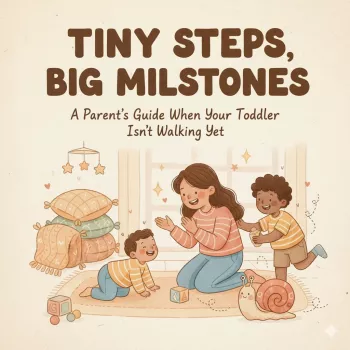
If it helps to have a structured set of tips and next-step suggestions, a digital guide can turn uncertainty into a simple weekly plan. For an easy, parent-friendly roadmap, see Tiny Steps, Big Milestones: A Parent’s Guide When Your Toddler Isn’t Walking Yet (Digital Download).
To reduce decision fatigue in busy seasons (appointments, playtime goals, daycare schedules), Using AI to Organize Kids’ Schedule (Digital Guide) can help streamline routines so daily movement play is easier to fit in.
FAQ
When is it considered late for a toddler to start walking?
Many toddlers walk around 12–15 months, and some healthy children start closer to 16–18 months. A common point to discuss evaluation is when a child has no independent steps by about 18 months or shows other movement concerns.
Should a toddler wear shoes to learn to walk?
Barefoot on safe indoor surfaces often supports balance and body awareness. For outdoors, choose flexible, thin-soled shoes for protection and avoid stiff soles that limit natural foot movement.
What are red flags if my toddler isn’t walking yet?
Concerns include not weight-bearing, not pulling to stand, clear asymmetry, persistent toe-walking, very stiff or very floppy tone, or loss of previously gained skills. If any of these show up—or worry persists—contact your pediatrician for screening or referral.









Leave a comment