Kid-Safe Kitchen & Bathroom Checklist for Busy Parents
Kid-Safe Kitchen & Bathroom Checklist: A Practical Home Safety Plan for Busy Parents
Kitchens and bathrooms are two of the most accident-prone rooms for little ones—full of heat, water, chemicals, sharp tools, and climbable cabinets. A simple room-by-room checklist helps you spot risks fast, install the right safeguards, and keep routines consistent as children grow more curious (and more capable of reaching “impossible” places).
How to use a room checklist without getting overwhelmed
- Do a quick “reach test.” Crouch to your child’s height and scan what can be grabbed, opened, climbed, or pulled down—especially anything on low shelves, the floor, and the first two drawers.
- Prioritize by severity. Address burns, poisoning, drowning risk, and falls first. Then move on to minor cuts, pinches, and bumps.
- Fix in short bursts. Aim for 15–30 minutes: one drawer, one cabinet, one countertop zone. Small wins add up quickly.
- Re-check after milestones. Crawling, cruising, climbing, and potty training can change access overnight.
- Keep a mini “safety kit” bin. Stock cabinet latches, outlet covers, corner guards, zip ties, label tape, and a small flashlight so you’re not hunting supplies mid-fix.
Kitchen safety walkthrough: the highest-risk zones
The kitchen is a high-reward room for learning, but it’s also packed with hazards that can escalate fast. A safer setup focuses on heat, sharp tools, choking hazards, and chemicals.
- Stove and oven: Use back burners when possible, turn pot handles inward, and consider stove knob covers (or removing knobs when not cooking if that works for your appliance).
- Hot liquids and appliances: Keep kettles, coffee makers, air fryers, and slow cookers pushed back. Manage cords so they can’t be tugged from the edge.
- Sharp tools: Store knives, peelers, graters, and scissors in a locked drawer/cabinet or in high, latched storage—especially “quick grab” drawers near prep areas.
- Choking hazards: Keep small items like batteries, magnets, small fridge clips, and measuring spoons out of reach and off low shelves.
- Cleaning products and pods: Store cleaners and detergents in a locked cabinet. Avoid leaving the under-sink area accessible without a latch.
- Trash and recycling: Use a locking lid or keep bins behind a latched door to reduce exposure to sharp lids, glass, and food waste.
Kitchen & bathroom hazards and quick fixes
| Area | Common risk | Simple safeguard | Weekly check |
|---|---|---|---|
| Kitchen stove/oven | Burns and tipping hot pots | Back burners, handles turned in, knob covers | Knobs covered and cookware pushed back |
| Under-sink cabinet | Poisoning from cleaners | Magnetic/strap lock; store chemicals up high | No products left loose after use |
| Countertop appliances | Cord-pull burns or cuts | Shorten cords; keep appliances back | Cords not dangling |
| Bathroom tub | Drowning risk in small amounts of water | Drain tub immediately; use a timer habit | No standing water left behind |
| Bathroom meds/cosmetics | Poisoning | Lockbox or high locked cabinet | Caps on; nothing left on vanity |
| Toilet | Drowning + germs | Toilet lock and closed lid | Lock still tight and used consistently |
Bathroom safety walkthrough: water, heat, and chemicals
Bathrooms combine slippery surfaces, water access, and concentrated personal-care products—so the goal is to reduce unsupervised access and remove “left out” temptations.
- Water safety: Never leave a child unattended in the bath, even briefly. Drain immediately after use and keep bathroom doors closed when not in use.
- Toilet safety: Add a toilet lock and keep the lid closed to reduce drowning risk and contamination.
- Hot water: Set the water heater to a child-safer temperature and test bath water before placing a child in the tub.
- Slip prevention: Use non-slip mats inside and outside the tub; wipe puddles right away, especially near the sink after toothbrushing.
- Medications and personal care: Use a locked cabinet or lockbox for prescriptions, vitamins, mouthwash, nail products, and perfumes.
- Small hazards: Secure razors, tweezers, nail clippers, hair tools, and button batteries (often found in scales or small devices).
For additional guidance on home safety and poisoning prevention, see the American Academy of Pediatrics home safety resources and the CDC poisoning prevention page. You can also review tips from the U.S. Consumer Product Safety Commission.
Childproofing hardware that helps the most (and where it matters)
A simple weekly safety routine that actually sticks
Printable plan: making childproofing easier for the whole family
Helpful in-stock downloads and tools
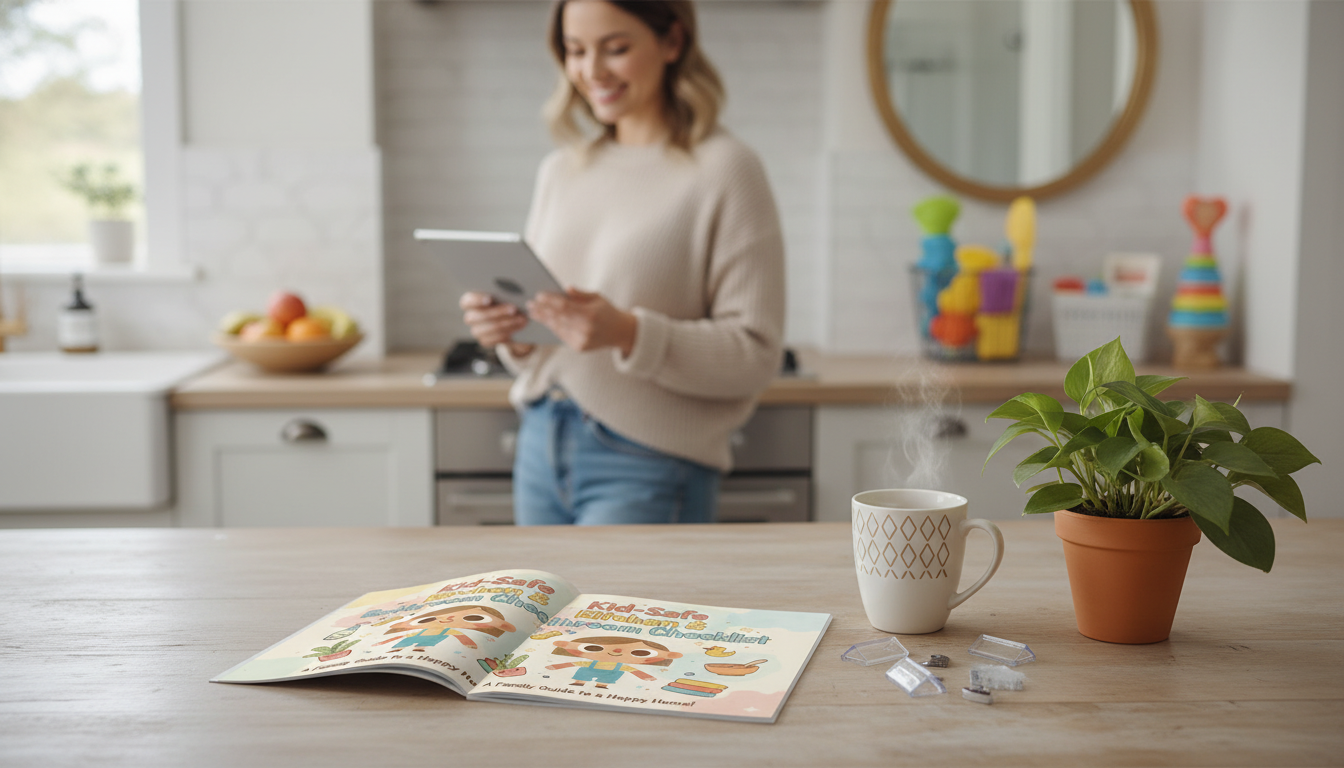
- Kid-Safe Kitchen & Bathroom Checklist (digital download) — a ready-to-print plan to divide fixes into quick, manageable zones.
- Using AI to Organize Kids’ Schedule (digital guide) — helpful for building reminders for weekly safety resets, medication-lock checks, and milestone re-checks.
- 6PCS Silicone Baby Feeding Set with Lion Plate, Bib, Cup, Spoon & Fork — supports safer mealtimes by reducing breakable dishware and simplifying cleanup routines.
FAQ
What should be childproofed first in the kitchen and bathroom?
Start with the highest-severity risks: poisons (cleaners, meds), hot surfaces and liquids (stove, kettle), water hazards (tub, toilet), and falls (slip mats). After that, move on to sharp tools and small choking hazards.
Do cabinet locks work for toddlers who can pull hard or climb?
Yes—when the lock style matches the cabinet and it’s installed correctly. For the best results, pair locks with smarter storage (move dangerous items up and back) and re-check lock tightness weekly.
What water temperature helps reduce scald risk for kids?
Use a child-safer household hot-water setting and always test bath water before putting a child in the tub. Follow pediatric and safety-agency guidance for scald prevention and your home’s specific water-heater recommendations.








Leave a comment