Crawling Baby Safety: A Room-by-Room Babyproofing Guide
25% off on product page · save $3.00
Crawling Baby Safety: A Room-by-Room Babyproofing Guide
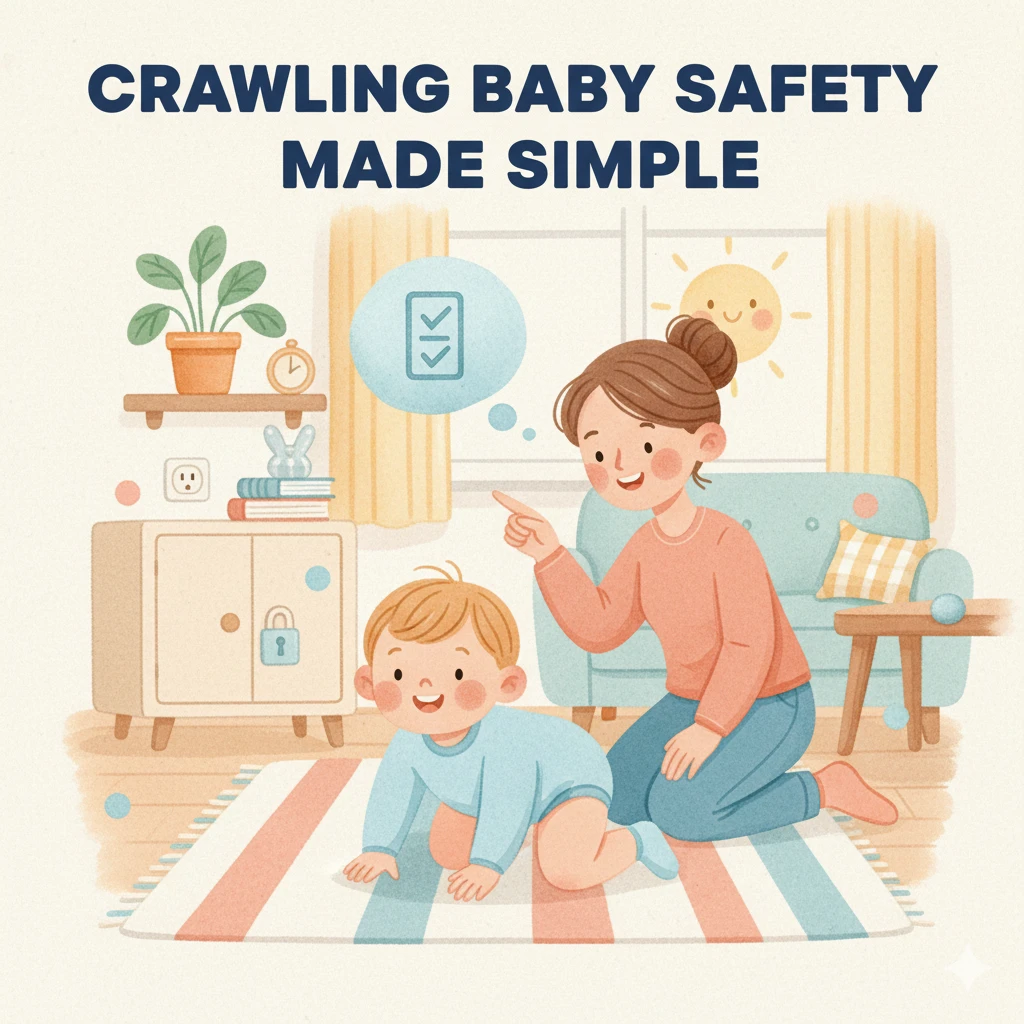
Start with a crawler’s-eye view
Get down on the floor and look around from your baby’s perspective. You may spot a dropped coin under the couch, a charging cord hanging within reach, or a shelf that could tip if someone pulls on it. Check behind doors and furniture, too, where small items can collect unnoticed.
Begin with the rooms your baby visits every day. Then repeat your inspection as your little one reaches farther, pulls up, and begins to climb. A surface that was out of reach last month may not stay that way for long.
Safety devices add a layer of protection, but they don’t replace active supervision. Stay close enough to respond, especially around stairs, water, pets, and unfamiliar spaces.
Living room and bedroom
Anchor dressers, bookcases, and televisions using appropriate restraints. Even a heavy piece can tip when a baby pulls on a drawer or shelf.
Keep blind cords, electrical cords, and chargers out of reach. Use suitable outlet covers or protective outlets, and clear coins, magnets, and other small objects from the floor. Keep loose button batteries and devices with unsecured battery compartments out of reach.
Featured in this guide
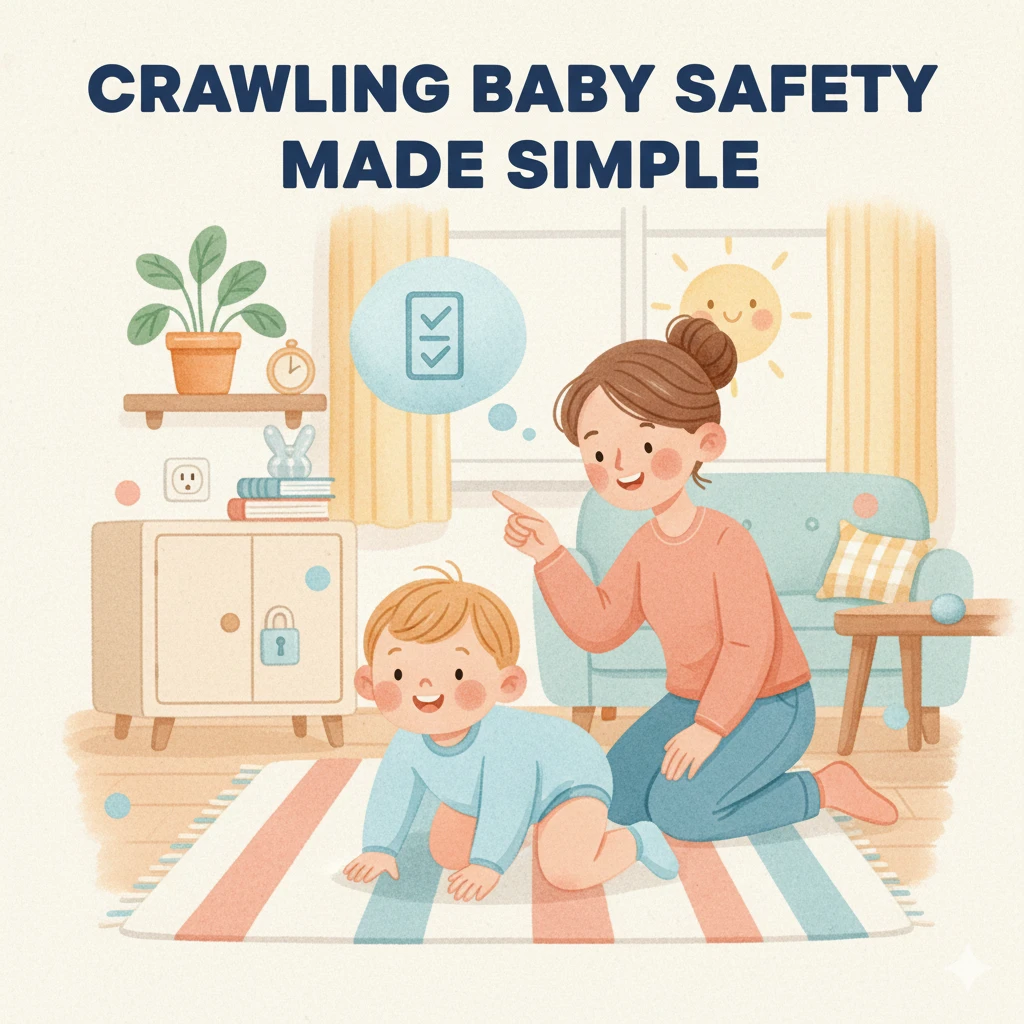
Crawling Baby Safety Made Simple | Babyproofing Guide | Best Way to Make Home Safe for Crawling Baby
Kitchen and bathroom
Lock medicines, cleaning products, and laundry packets away, preferably in their original containers. A high shelf alone may not remain inaccessible as your baby learns to climb. Keep handbags and visitors’ belongings out of reach, too.
Empty tubs and other containers after use. Never leave your baby alone near water, even briefly. Close the bathroom door when the room isn’t in use, but don’t rely on it as your only safeguard.
Stairs and transitions
Install properly fitted safety gates according to the manufacturer’s instructions. Use a hardware-mounted gate at the top of stairs, and check that gates are securely closed each time you pass through. Look for other changes in floor level and doorways leading to areas your baby shouldn’t explore.
Keep a safer play space ready
Choose a clear floor area away from stairs, heaters, cords, and household hazards. Check toys for loose or broken parts and follow their age recommendations. If older children share the space, make putting away small toys part of the routine.
Before floor play, scan the area again, especially after visitors leave. Share your safety plan with caregivers, including which gates must stay closed and which cabinets must stay locked.
Keep the U.S. Poison Control number handy: 1-800-222-1222 . If you suspect a button battery has been swallowed, seek emergency medical help immediately.
Choosing a guide for your home
Our Crawling Baby Safety Made Simple guide is a resource for parents preparing for a mobile baby. Consider it alongside your own room-by-room checks, starting with the spaces your little one uses most.
Build a simple safety routine
Before floor play, take a minute to scan low surfaces and the floor. Give the area another look after visitors leave or older children have been playing. Share your household safety plan with anyone who cares for your baby, including where gates should stay closed and which cabinets must remain locked.
Check the product’s listed specifications when evaluating build a simple safety routine.
Compare related options such as Double Layer Insulated Lunch Bag to match features, dimensions, and use case before choosing.
FAQ
Why did the CDC remove crawling?
The CDC’s revised milestone checklists focus on skills most children can be expected to reach by a given age; crawling varies in timing and style, and some children move differently or skip it. If you have concerns about your baby’s development, talk with their clinician.
What is the 3 6 9 rule for babies?
There isn’t one universal medical “3 6 9 rule” for babies; the phrase can refer to different age-based milestone summaries. Babies develop at different rates, so discuss questions about your child’s progress with their pediatrician.
At what age should babies stop crawling?
There is no single age when a baby must stop crawling. Many children alternate between crawling and walking as they gain confidence; talk with your pediatrician if you’re concerned about movement or development.
What happens if you don’t let a baby crawl?
Babies benefit from supervised opportunities for free movement and floor play, although crawling itself is not mandatory. If your baby has limited opportunities to move or you have developmental concerns, talk with their pediatrician.
See if Crawling Baby Safety Made Simple | Babyproofing Guide | Best Way to Make Home Safe for Crawling Baby fits your setup






Leave a comment