Baby’s First Tooth: Timing, Teething & Care Tips
15% off on product page · save $2.12
Baby’s First Tooth: Timing, Teething & Care Tips
When might the first tooth arrive?
Many babies get their first tooth around 6 months, but there is a wide range of normal. A tooth at 4 months can be normal, and another baby may start much later. The lower front teeth often arrive first, though the order can vary too. An eruption chart can give you a rough idea of what may come next; it is not a schedule your baby has to follow.
If you are unsure whether a small bump is an emerging tooth, or you have concerns about your baby’s development, ask your pediatrician or a pediatric dentist. The American Dental Association’s baby teeth guidance is another useful reference. We designed our guide to help you approach the milestone one day at a time, not to promise when your baby’s teeth will arrive.
Featured in this guide
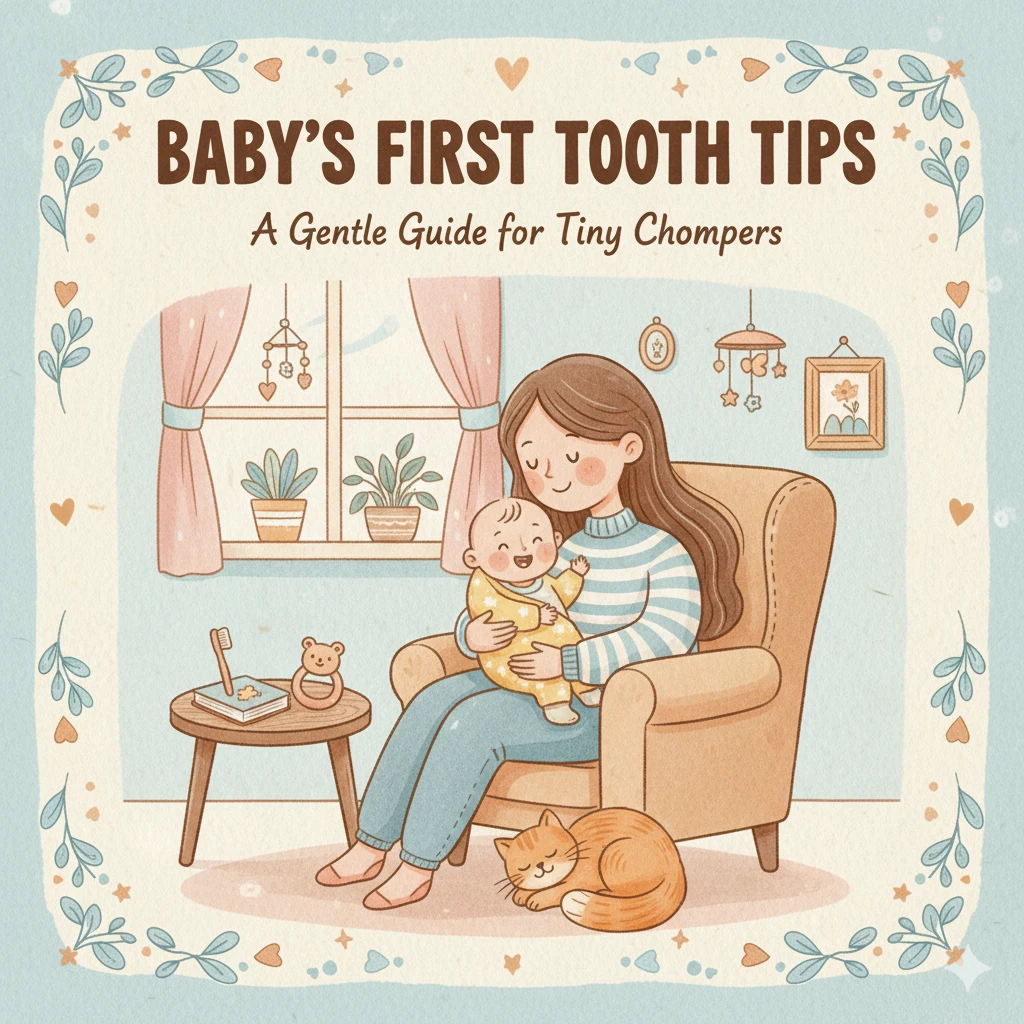
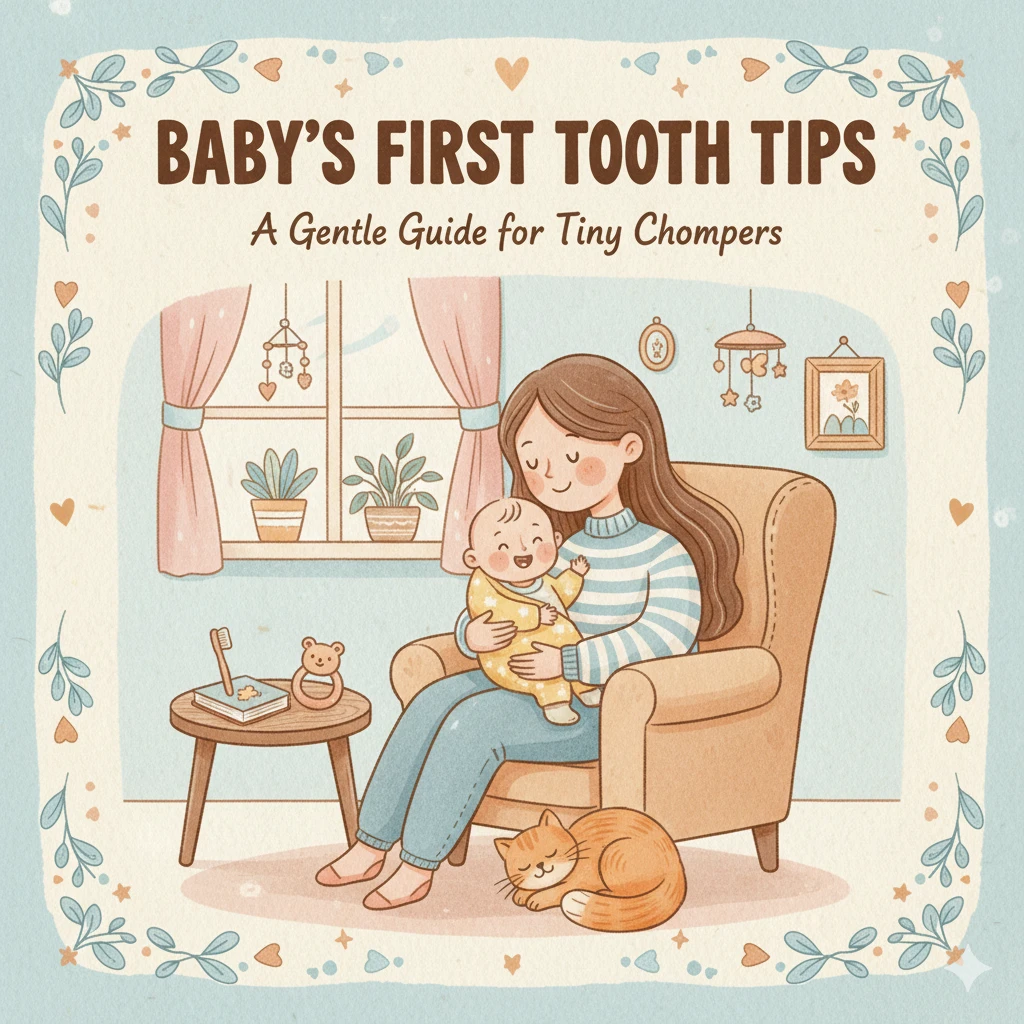
Baby’s First Tooth Tips Ebook | Helpful Guide for Parents | Tips for Managing Baby’s First Tooth
Comfort starts with simple, supervised options
Tender gums may lead to more chewing, drooling, or fussiness; some babies seem barely bothered. Wash your hands and gently massage the gums with a clean finger, or offer a clean, firm teething ring cooled in the refrigerator. Stay with your baby while they use a teether. Do not freeze the ring: it may be too hard on tender gums.
Skip teething necklaces because of choking and strangulation risks. Avoid numbing gels unless your pediatrician specifically recommends a treatment. If discomfort interferes with feeding or sleep, ask your pediatrician whether medicine is appropriate and how to dose it for your baby.
Build a small care routine
Before a tooth appears, you can gently wipe your baby’s gums with a clean, damp cloth. Once the first tooth comes through, brush twice daily with a soft, infant-size toothbrush and a rice-grain smear of fluoride toothpaste. Plan a dental visit when that first tooth appears or by your child’s first birthday.
If you would like a resource to revisit as questions change, our Baby’s First Tooth Tips Ebook can help you think through the milestone alongside advice from your baby’s health and dental professionals. You do not need a collection of products to respond attentively to your baby.
Keep a helpful guide close at hand
Questions can change quickly from “Is that a tooth?” to “What should we try tonight?” Our Baby’s First Tooth Tips Ebook is an easy-to-revisit parent resource for thinking through timing, everyday comfort, and early care. Use it alongside, not instead of, guidance from your baby’s health and dental professionals.
You can also keep the milestone simple. There is no need to buy a collection of teething products when a clean finger, an appropriate teether, and attentive care may be enough. If you are choosing something to mark the occasion rather than relieve discomfort, our Girls Knit Sweater Dress with Heart Print & Ruffle Collar is one outfit option; clothing does not treat teething. What matters most is responding to the baby in front of you, not following someone else’s timeline.
Before choosing, compare the product details with your daily routine, available space, care needs, and preferred setup. The strongest option is usually the one that fits the intended use clearly and remains simple to clean, store, and check before repeat use.
FAQ
How painful is a baby’s first tooth?
It varies. Some babies seem barely bothered, while others have tender gums and fussiness; if pain seems significant or your baby seems ill, contact your pediatrician.
What is the 7 4 rule for tooth eruption?
It is a rough mnemonic that places the first tooth around 7 months and suggests about four more teeth every four months. Tooth timing varies widely, so it is not a reliable way to predict your baby’s teeth or assess a health concern.
When should a baby get his first tooth?
Around 6 months is common, but earlier or later can be normal. If no teeth have appeared by your child’s first birthday, bring it up with a pediatrician or pediatric dentist.
Is 4 months too early for the first tooth?
No. Four months is early but can be within the normal range; if you are unsure what you see, ask your pediatrician, and begin gentle brushing once a tooth appears.
See if Baby’s First Tooth Tips Ebook | Helpful Guide for Parents | Tips for Managing Baby’s First Tooth fits your setup







Leave a comment