Simple Grounding Techniques to Help Children Feel Calm
What are some effective grounding techniques for children?
Grounding helps a child shift attention from a stressful thought or feeling to what’s happening in the present moment. Keep activities simple, offer choices, and join in if that feels reassuring. A child may need your calm presence before they’re ready to try a technique.
Try a senses check-in
Invite your child to notice things around them using their senses. For example, name five things they can see, four they can feel, three they can hear, two they can smell, and one they can taste. Adjust the numbers or skip any sense that feels uncomfortable. Younger children might prefer a quick game, such as spotting three blue objects.
Press feet or hands
Ask your child to press their feet gently into the floor, push their palms together, or squeeze a soft pillow. Then notice the pressure and release it. These movements can help bring attention back to the body without requiring a child to sit still.
Describe a nearby object
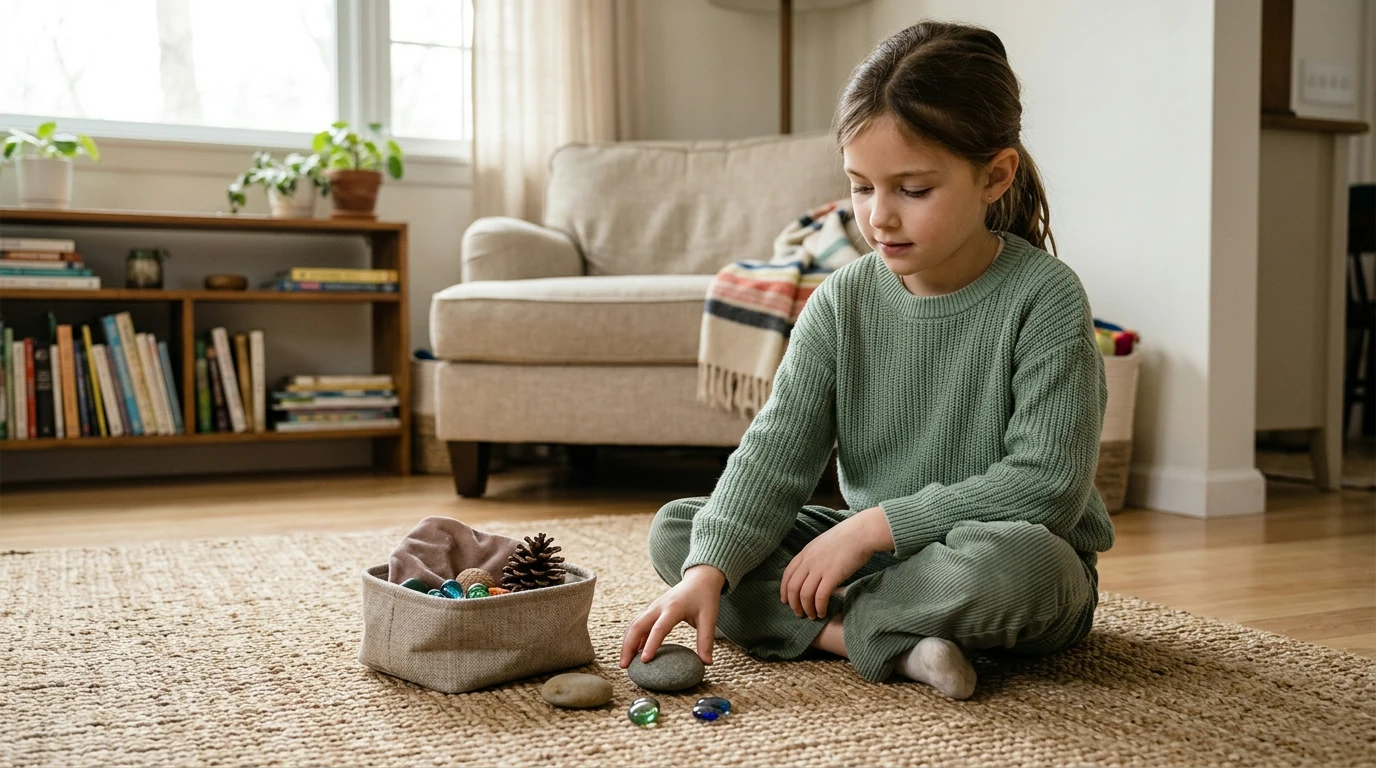
Choose a familiar object and take turns describing its color, shape, texture, and details. A smooth stone, stuffed animal, or favorite book can make a useful focus. Let the child lead; there’s no need to quiz them or insist on a particular answer.
Make breathing playful
If breathing exercises feel comfortable, try pretending to smell a flower and slowly cool a cup of cocoa. Keep breaths gentle, and stop if your child feels dizzy or more upset. Breathing is one option, not a requirement.
Help the technique feel familiar
Practice during calm moments so the activity feels recognizable when stress rises. During a hard moment, use a warm, steady voice and offer two simple choices. If a technique frustrates your child, pause and try something else. For more ideas for daily resets and routines, read our guide to calming anxious children.
FAQ
When should a child use a grounding exercise?
A child can try one when they feel overwhelmed, worried, or disconnected, as long as it feels comfortable to them. Grounding can also be practiced during calm moments so it’s easier to remember later.










Leave a comment