Flying with a Baby: Calm, Confident Flight Day Tips
Flying Easy with Your Little One: A Parent’s Guide to Calm, Confident Flights with a Baby
Air travel with a baby can feel unpredictable, but a smooth flight usually comes down to a few practical choices: timing, smart packing, and a simple plan for feeding, sleep, and comfort during takeoff and landing. Use the steps below to reduce stress at each stage—from booking to baggage claim—so the trip feels manageable, even with delays and surprises.
Before Booking: Set Yourself Up for an Easier Day
Long before you pack a single diaper, the easiest wins come from how you book. If possible, pick flight times that match your baby’s best stretch (early mornings tend to work well for many families) and skip tight connections so you’re not sprinting between gates.
Seats matter more than most parents expect. An aisle seat makes quick aisle access easier for bouncing, diaper runs, and grabbing items. A window seat can mean fewer bumps from carts and passersby. Some airlines offer bassinets for certain bulkhead rows, but the rules vary—call or check the airline’s specific bassinet and seat eligibility before paying extra.
Also consider whether purchasing a separate seat is worth it. Using an FAA-approved child restraint (car seat) in its own seat can add safety and often helps with naps and containment. For official guidance, the FAA’s page on flying with children is a solid reference.
If you’re flying with a partner, coordinate roles ahead of time: who carries documents, who manages the carry-on, and who focuses on soothing. That small bit of planning can reduce decision fatigue at the gate.
Documents, Health, and Timing: What to Confirm in Advance
Rules can change based on whether you’re traveling domestic or international, and some airlines have their own documentation requirements for infants. Confirm what ID is needed and keep both digital and paper backups when appropriate.
If your baby is very young, recently sick, or dealing with congestion or ear issues, check with the pediatrician before flying. Pressure changes can be tougher on little ears, especially after ear infections. The American Academy of Pediatrics overview on air travel is a helpful starting point for general considerations.
Timing at the airport is its own “hidden connection.” Add a buffer for diaper changes, feeding breaks, and surprise lines—30 to 60 minutes disappears quickly. One simple trick: pack a small “quick-grab” pouch just for security (bottles/formula or breast milk plan, wipes, and anything you’ll need to present). It keeps screening from turning into a full carry-on unpack.
Packing Strategy: A Calm Carry-On Beats an Overstuffed Bag
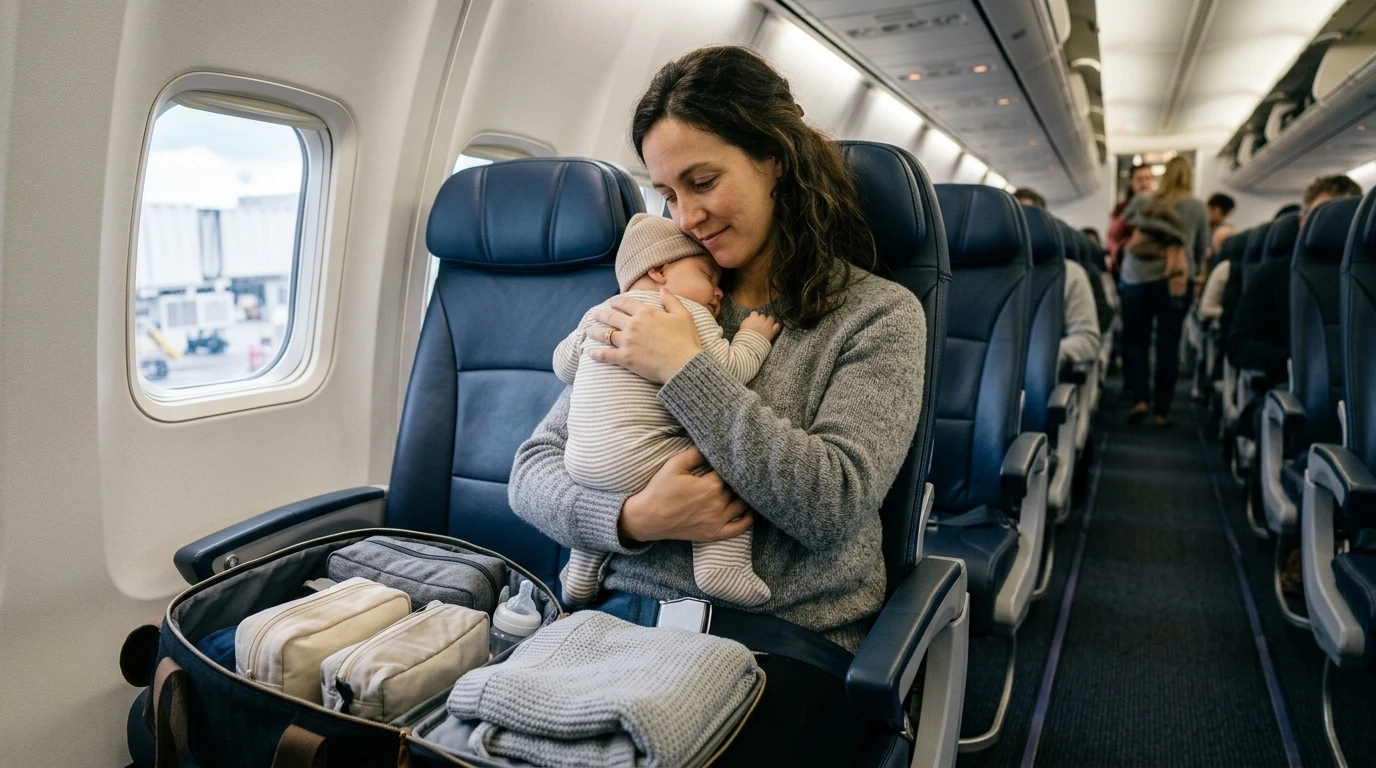
A great carry-on is less about bringing everything and more about being able to find anything with one hand. Think in mini-kits stored in zip pouches: diaper kit, feeding kit, sleep kit, cleanup kit. That way, when the seatbelt sign turns on, you’re not digging through a tangled bag.
Carry-On Packing Checklist (Baby Flight Essentials)
| Category | Must-Haves | Nice to Have |
|---|---|---|
| Diapering | Diapers (extra), wipes, diaper cream, changing pad, disposal bags | Portable changing clutch, diaper rash spray |
| Feeding | Bottles, formula/breast milk plan, burp cloths, bibs | Insulated bottle sleeve, extra nipples, travel drying rack |
| Comfort & Sleep | Pacifier(s), comfort item, light blanket | White noise app/device, compact swaddle |
| Clothing | 2 baby outfits, socks, layers | Spare adult shirt, lightweight hat |
| Clean-Up | Hand sanitizer, sanitizing wipes, tissues | Stain remover pen, small lint roller |
| Entertainment | Teether, a few quiet toys | New-to-baby toy for novelty |
Airport Game Plan: Security, Strollers, and Keeping Baby Content
Takeoff, Landing, and Ear Pressure: Comfort Steps That Often Help
In-Flight Rhythm: Feeding, Diapers, Sleep, and Gentle Movement
Handling the Unexpected: Delays, Missed Naps, and Spills
A Simple One-Page Plan for Flight Day
Extra Support When You Want It: Ready-to-Follow Travel Picks
Some trips go smoother with a checklist you can follow when you’re tired and multitasking. If you want a compact, step-by-step routine for booking, packing, airport flow, and in-seat soothing, this guide can help you stay organized: Flying Easy with Your Little One (travel guide).
And if you’re packing for a cooler destination (or just want an easy, polished outfit option once you arrive), consider a cozy layer like the Girls Knit Sweater Dress with Heart Print & Ruffle Collar.
For broader health and prep guidance when traveling with kids, the CDC’s traveling with children page is a reliable resource to consult before departure.
FAQ
Should a baby sit on a lap or in a separate seat on a plane?
Lap infant rules can be more affordable, but purchasing a separate seat lets you use an approved child restraint (car seat) for added safety and often better sleep. Check your airline’s lap-infant policy and confirm the car seat is labeled as approved for aircraft use.
How many diapers and outfits should be packed for a flight with a baby?
Pack based on total door-to-door travel time, then add a buffer for delays—many families aim for at least one diaper per 2–3 hours plus 2–3 extras. Bring two baby outfit changes and one spare adult top, and keep a small “delay reserve” set aside so you can grab essentials fast.
What helps with baby ear pressure during takeoff and landing?
Encourage swallowing during ascent and descent with breastfeeding, a bottle, or a pacifier, and have it ready before the seatbelt sign comes on. If your baby recently had an ear infection or significant congestion, ask your pediatrician for personalized guidance before flying.








Leave a comment