Toddler Preschool Prep: Routines & Printable Checklist
Getting Your Toddler Ready for Preschool: A Practical Checklist and Simple Routines
Preschool readiness is less about “testing” skills and more about building comfortable routines, basic self-help habits, and confidence with new caregivers and peers. The goal is a child who can separate with support, communicate simple needs, and settle into a predictable day. Use the sections below to focus on what matters most in the weeks leading up to the first day, with a printable checklist to keep everything organized. For more guidance, see How to know if your child is ready for preschool – Understood.org.
What “ready” can look like at toddler and early preschool ages
Preschool teachers expect a wide range of development—especially for toddlers and young preschoolers. “Ready” often looks like these practical foundations: For further reading, see Kindergarten Readiness Checklist for School Success | United Way ….
- Comfort with short separations: able to calm with a familiar routine, comfort object, or teacher support.
- Basic self-care foundations: attempts to wash hands, use tissues, help with clothing, and manage simple snack routines.
- Communication basics: can express needs (hungry, thirsty, bathroom, help) using words, gestures, or short phrases.
- Group readiness: can try sitting for short periods, follow one-step directions, and transition between activities with reminders.
- Emotional readiness: experiences big feelings but is beginning to use simple coping tools (breathing, asking for help, quiet corner).
If you’re unsure what’s typical at your child’s age, the CDC developmental milestones can help you sanity-check expectations without turning readiness into a test.
A quick preschool readiness snapshot (skills to practice this month)
Consistency beats intensity. Instead of drilling academics, aim for small wins inside real routines.
- Focus on progress, not perfection: consistent practice at home is more helpful than drills.
- Choose 2–3 skills per week: practice during getting dressed, meals, bedtime, and errands.
- If your child has support needs: coordinate early with the school (speech, sensory, motor) so transitions are smoother.
Readiness areas and easy practice ideas
| Readiness area | What to look for | Simple practice at home |
|---|---|---|
| Separation & transitions | Can say goodbye and move into an activity with support | Practice “two-minute goodbye”: hug, phrase, wave, then start a puzzle |
| Self-care | Attempts handwashing, helps with shoes/jacket | Create a 3-step bathroom/handwash picture routine near the sink |
| Communication | Asks for help or indicates needs | Role-play “How do you ask a teacher?” with stuffed animals |
| Social skills | Takes turns with support, tolerates sharing spaces | Play turn-taking games (rolling a ball, simple board games) |
| Listening & directions | Follows 1-step directions; sometimes 2-step | Use short directions: “Put blocks in the bin, then high five” |
| Fine motor | Tries crayons, stickers, page turning | Sticker lines, chunky crayons, ripping paper for a collage |
| Emotional regulation | Recovers from upset with help | Teach a calm-down script: “Stop, breathe, ask for help” |
Set up preschool routines that stick (without power struggles)
When mornings are predictable, toddlers spend less energy resisting and more energy adjusting to the day. Start smoothing your schedule 2–4 weeks out when possible.
- Shift bedtime gradually: move it earlier in 10–15 minute steps over 1–2 weeks so wake-up feels easier.
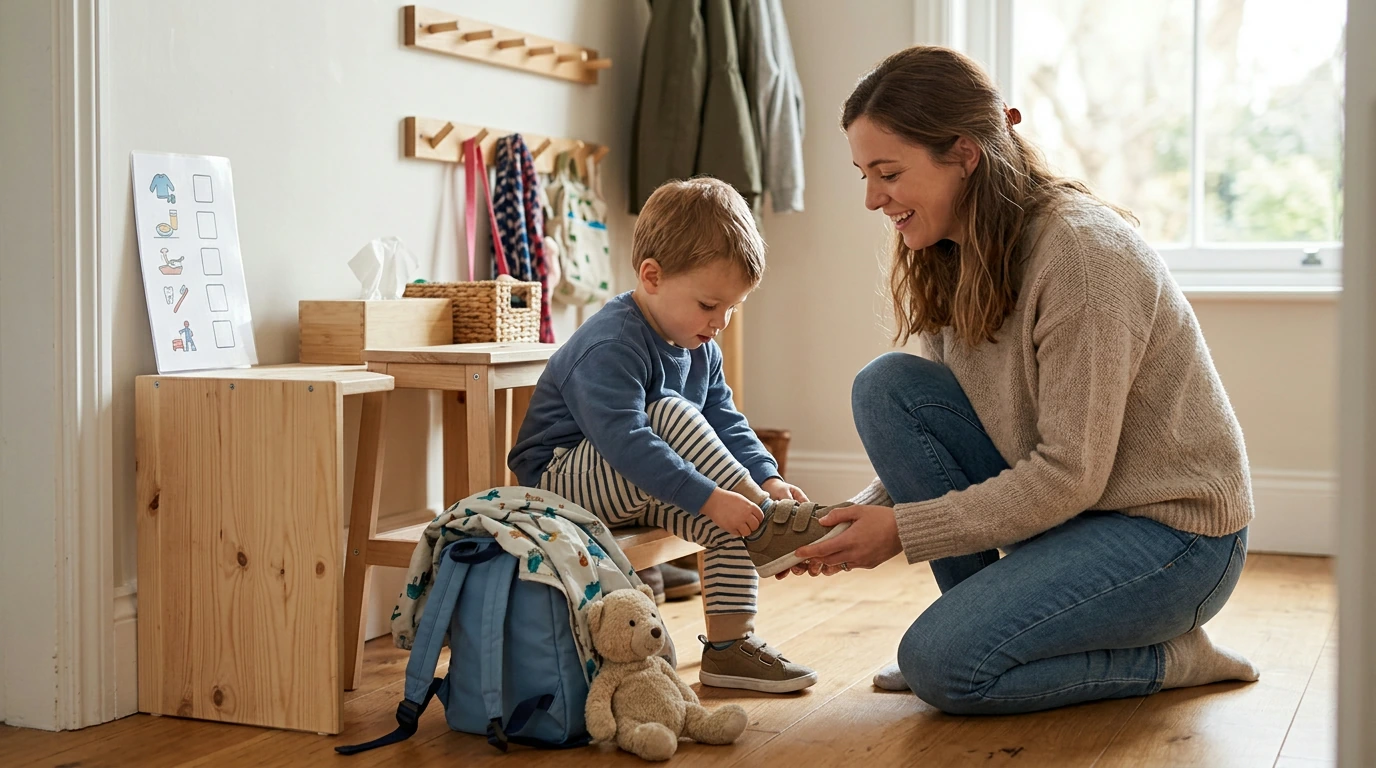
- Create a consistent morning flow: bathroom → dressed → breakfast → teeth → shoes → out the door.
- Use visual cues: a simple picture routine on the wall often works better than repeated reminders.
- Do a timing “practice run”: drive the route, park, walk to the door, and narrate what happens next.
- Build in transition time: many toddlers need an extra 10 minutes for shoes, coat, and last-minute emotions.
For more on the building blocks behind school readiness, the American Academy of Pediatrics guidance on school readiness is a helpful reality check: routines, relationships, and self-regulation matter.
Self-help skills that make the classroom day smoother
Independence doesn’t mean doing everything alone—it means trying and accepting help from a teacher.
- Clothing: choose easy-on pants and shoes; practice pulling up/down and basic fasteners.
- Toileting: confirm the school’s expectations (pull-ups allowed, bathroom schedule, extra clothes policy).
- Hand hygiene: practice wet–soap–scrub–rinse–dry; sing a short 20-second song to time scrubbing.
- Eating: practice opening containers and using utensils; pack familiar foods the first week.
- Belongings: practice putting items back in a backpack and carrying it short distances.
Small trick: set up one low hook or basket at home where the backpack always “lives.” That one-location habit reduces morning scrambling and helps your child learn the routine faster.
Social and emotional readiness: helping your child feel safe with new adults
Paperwork and practical prep that parents often forget
First-week game plan (keep it simple and familiar)
If you want a low-stress first-day look that still feels special, consider a cozy, easy-on option like the First-day outfit idea: girls knit sweater dress.
Printable preschool readiness checklist (digital download)
Grab the Printable preschool readiness checklist (digital download) to organize prep in a simple, repeatable way.
FAQ
What skills should a toddler have before starting preschool?
Look for comfort with short separations, basic communication for needs, the ability to try one-step directions, and beginner self-care like handwashing and helping with clothes. Expectations vary by school, so steady progress and routine practice matter more than perfection.
How can parents ease separation anxiety at preschool drop-off?
Use a short, consistent goodbye routine, practice drop-off steps at home, and hand your child to a teacher confidently rather than lingering. A comfort item (if allowed) and repeated reassurance about when you’ll return can also help.
How early should families start preparing for preschool?
Two to four weeks is usually enough to shift sleep schedules and build predictable morning and bedtime routines. Start earlier if your child has therapy supports, new childcare arrangements, or big schedule changes that will affect daily rhythm.








Leave a comment