Gaming PC Heat: How Hot It Gets and How to Reduce It
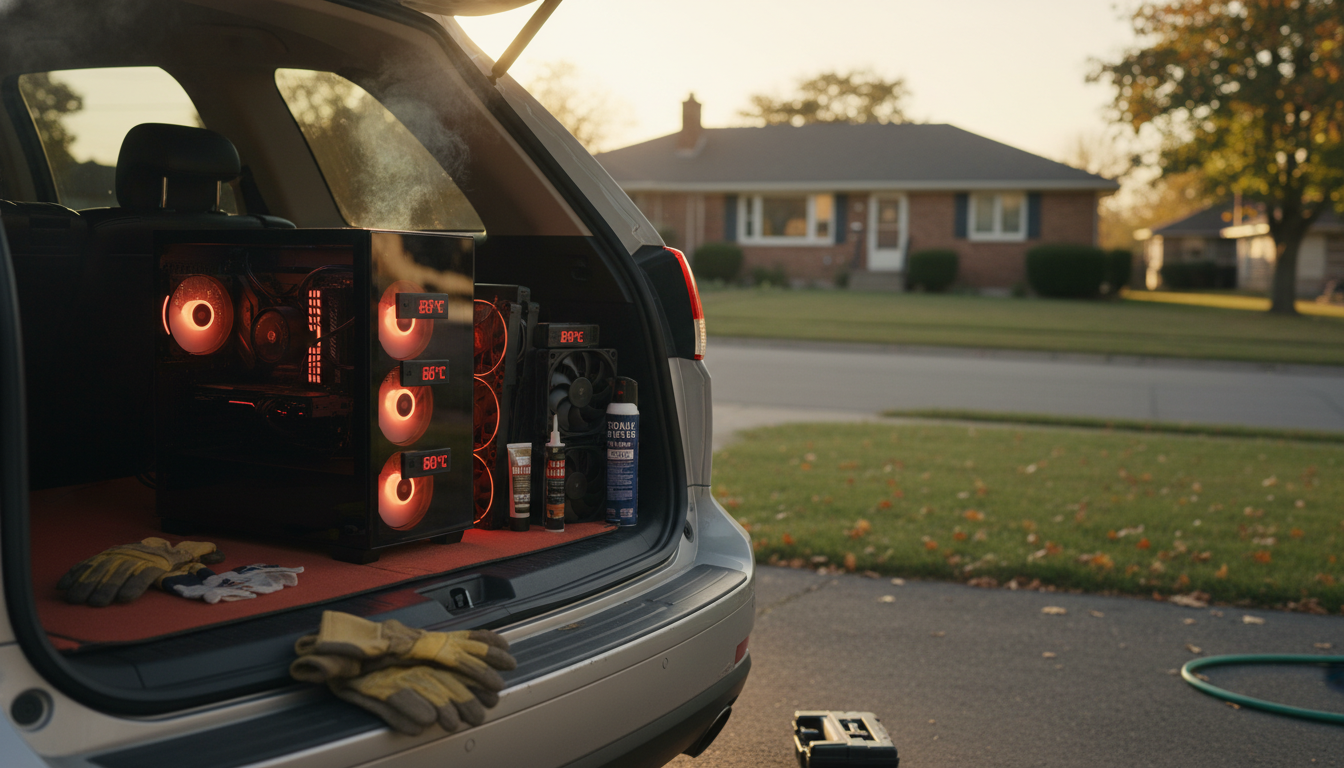
Do gaming PCs put off a lot of heat?
Gaming PCs can put off a noticeable amount of heat, especially during demanding games, streaming, or creative workloads. The heat you feel isn’t “extra” heat created out of nowhere—it’s the byproduct of electrical power being turned into performance, and most of that power ultimately becomes heat inside the case and then gets pushed into your room.
Why gaming PCs feel hotter than regular desktops
High-performance parts draw more watts. A midrange office PC might idle quietly at low power, while a gaming rig can jump dramatically under load because the GPU and CPU ramp up to maintain high frame rates. More power draw generally equals more heat output.
The biggest heat sources
Graphics card (GPU): Often the main heat producer in a gaming build. Modern GPUs can run at high wattage for long stretches, and the card’s cooler dumps that heat into the case (and then your room).
Processor (CPU): Also contributes significantly, especially with high-core-count chips or aggressive boost behavior.
Power supply and other components: Usually smaller contributors, but they add up—especially in compact cases with limited airflow.
How much heat are we talking about?
A simple way to think about it: the PC’s power draw under load is roughly the heat it releases into the room. A system pulling a few hundred watts during gaming can warm a small room over time, similar to running a small space heater on a low setting. Exact results depend on room size, insulation, and ventilation.
What affects how hot your room gets
Case airflow: Better airflow moves heat out faster, preventing it from lingering inside the case (though it still ends up in the room).
Cooling setup: Larger air coolers or AIO liquid coolers can lower component temperatures, but they don’t eliminate heat— they relocate it to the radiator/fans and exhaust it.
Ambient temperature: Warm rooms make everything feel hotter and can reduce cooling effectiveness.
Practical ways to reduce heat and discomfort
Limit FPS, enable eco modes, undervolt the GPU/CPU, clean dust filters, and improve ventilation (even a small fan moving air out of the room helps). If you’re choosing durable, heat-resistant everyday items for your home, this guide may also be useful: https://babyjoyboutique.com/guide-2pcs-stainless-steel-baby-feeding-set-bpa-free-heat-resistant/.
FAQ
Does undervolting reduce gaming PC heat without hurting performance?
Often, yes. A good undervolt can drop power draw and temperatures while keeping similar performance, especially on GPUs, though results vary by chip quality and settings.










Leave a comment