Big Kid Bed Transition Checklist (Printable) + Tips
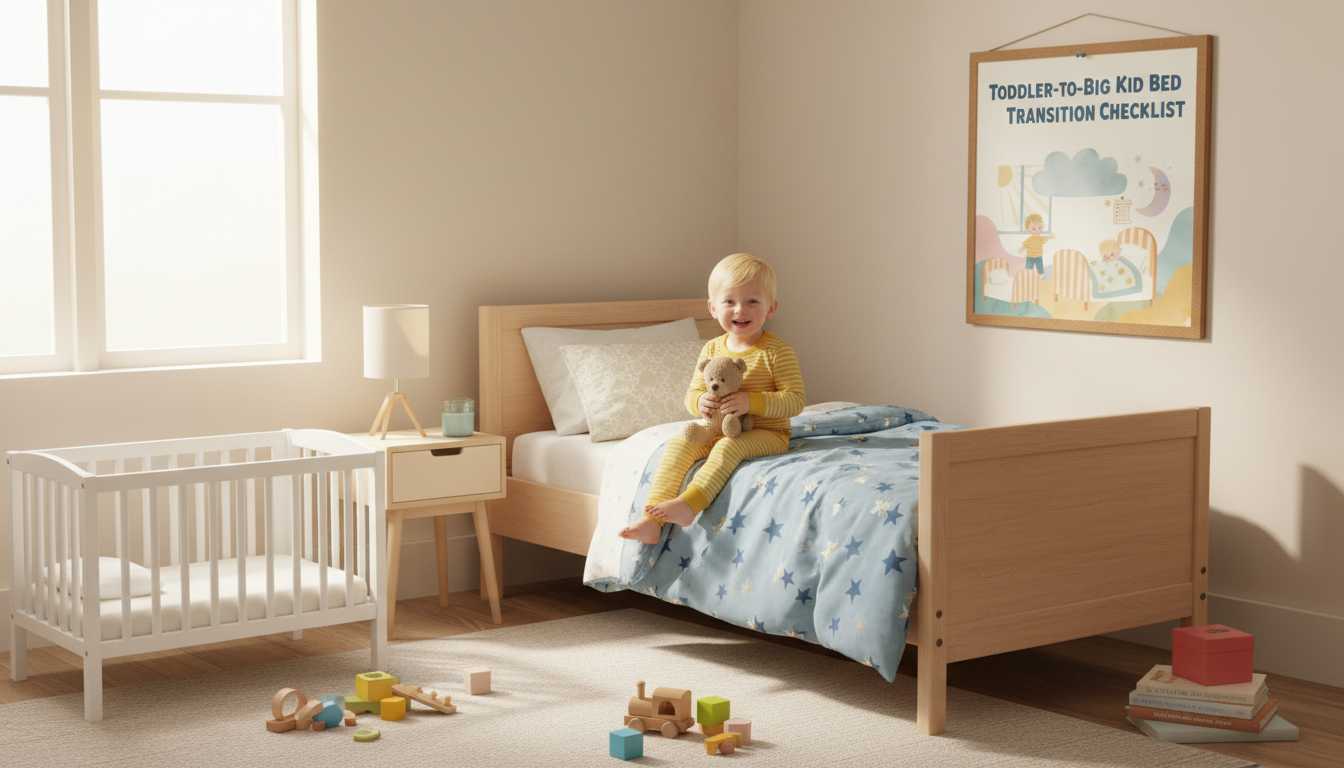
Toddler-to-Big Kid Bed Transition Checklist (Printable) + Practical Tips for Smoother Nights
Moving from a crib to a big kid bed is a major milestone—and it can come with excitement, bedtime negotiating, and a few bumpy nights. A smoother transition usually comes down to four things: choosing a safe (and realistic) time, setting up the room for a child who can get up, keeping the routine steady, and responding consistently when boundaries are tested. Below you’ll find practical, parent-tested steps plus a printable-style checklist you can post near the light switch so every caregiver follows the same plan.
When the Switch Makes Sense (and When to Wait)
Age matters far less than readiness and safety. Many families transition somewhere between 2 and 3.5 years, but a child who’s climbing (or close to it) may need to move sooner to prevent falls. Readiness often looks like: requesting a “big bed,” staying in place during naps, and understanding a simple safety rule such as “feet first” or “we stay in bed until morning.”
If it’s optional and the crib is still safe, it can help to avoid switching right before or after major changes—moving houses, a new baby, starting daycare/preschool, big travel, or a messy stretch of potty training. If timing isn’t ideal but climbing makes the crib unsafe, prioritize safety and plan extra supports (a gate, a simplified routine, and closer supervision for a couple of weeks).
| Green Light | Proceed With Extra Support | Consider Waiting (If Safe) |
|---|---|---|
| Child can follow simple rules (“stay in bed until morning”) most nights | Occasional bedtime wandering but responds to calm returns | Major life change happening within 2–4 weeks |
| No climbing attempts / crib still safe but child asks for a bed | Recently started testing boundaries at bedtime | Sleep is already very disrupted and no safety issue forcing the change |
| Comfort object and bedtime routine already established | Nap routine inconsistent | Crib is safe and child shows no interest in switching yet |
Choose the Sleep Setup: Bed Options and What to Prepare
The “best” bed is the one that keeps your child safe and makes staying put feel doable. Common setups include a toddler bed, a twin with a guardrail, a floor bed, or converting a crib to toddler-bed mode (if your crib supports it). For many families, a low-to-the-ground option reduces parent worry the first week.
- Safety basics: guardrail (or low height), sturdy frame, a non-slip rug, and a dim nightlight for orientation.
- Keep it familiar: use similar sheets or blankets, and keep the same comfort items (stuffed animal, sleep sack if still appropriate, etc.).
- Plan the layout: create a clear path to the door and bathroom, remove climbable furniture if possible, and secure cords away from reach.
If you’d like a simple, print-and-post plan for the whole process, the Toddler-to-Big Kid Bed Transition Checklist printable is designed to keep prep, night-one steps, and first-week follow-through consistent across caregivers.
Safety First: Childproofing for a Child Who Can Get Up
Once your child can freely leave the bed, the room needs to function like a safe “yes space,” especially at night when coordination is lower and curiosity is higher.
Make the Transition Feel Predictable (Preview, Practice, Praise)
Bedtime Routine That Supports the New Boundary
Consistency is easier when the whole household rhythm is organized. If you want a system for keeping bedtime steps, timers, and morning routines consistent day-to-day, consider the Digital guide for organizing a kids’ schedule.
Printable Checklist: What to Do Before, During, and After Night One
| Stage | Checklist Items | Done |
|---|---|---|
| Prep (3–7 days before) | Talk about the change; choose bed setup; childproof room; wash bedding; pick comfort item; plan boundary response | □ |
| Day of switch | Practice getting in/out; tidy floor; set nightlight; place water cup; set monitor (if used); confirm gate/door plan | □ |
| Bedtime routine | Same start time; bath/pajamas/teeth; 1–2 books; cuddle; lights out; consistent goodnight phrase | □ |
| If child gets up | Calm return to bed; minimal talking; repeat phrase; use timed checks only if helpful | □ |
| First 7–14 days | Track exits/wake-ups; reinforce praise; keep mornings consistent; adjust bedtime if overtired | □ |
For a ready-to-download version you can print and post (plus extra troubleshooting tips), use the Toddler-to-Big Kid Bed Transition Checklist printable.
Common Challenges and Simple Fixes
For additional guidance on healthy sleep routines, see the American Academy of Pediatrics sleep resources at HealthyChildren.org, and general positive parenting guidance from the CDC.
FAQ
What age should a toddler move to a big kid bed?
Many children transition between 2 and 3.5 years, but the better guide is readiness and safety. If your child is climbing or the crib is no longer safe, it’s usually time to switch even if the timing isn’t perfect.
What if my child keeps getting out of bed after the switch?
Testing is common for the first 1–2 weeks. Use a calm, consistent “silent return” (walk back, minimal talking), keep choices limited before lights out, and only add timed check-ins if they reduce anxiety rather than prolong wakefulness.
Is a guardrail necessary for a toddler transitioning to a twin bed?
A guardrail isn’t always required, but it often adds safety and peace of mind in the early weeks. A low-to-the-floor setup or a manufacturer-approved guardrail can help prevent falls, and keeping the floor clear reduces injury risk.










Leave a comment